US to remove wolves from protected species list

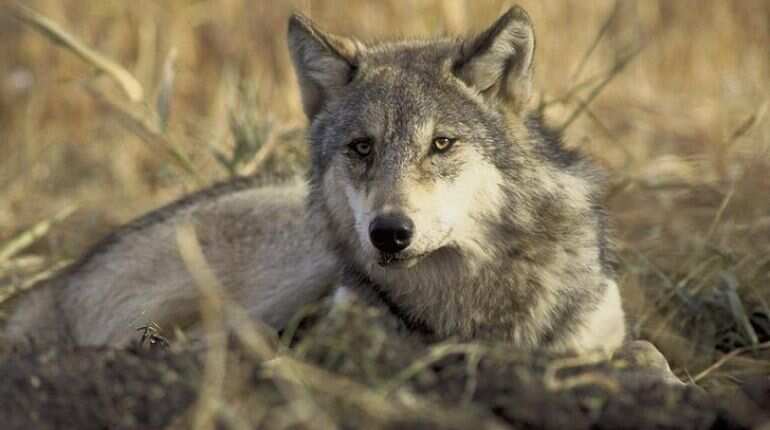
Gray wolves
Gray wolves, one of the first animals shielded by the Endangered Species Act after Americans all but exterminated them in the lower 48 states, will no longer receive federal protection, officials announced Thursday.
“After more than 45 years as a listed species, the gray wolf has exceeded all conservation goals for recovery,” Interior Secretary David Bernhardt said in a statement.
Environmentalists condemned the decision as dangerously premature and vowed to take the U.S. Fish and Wildlife Service back to court, where they have successfully blocked previous attempts to strip wolves of federal protections. “Wolves just occupy a fraction of their former range,” said Jamie Rappaport Clark, president and chief executive of Defenders of Wildlife, an environmental group. “There’s so much work that needs to be done.”
The new rule will officially publish Tuesday and become effective 60 days after that. Then, states and tribes will assume control of the nation’s wolves, except for a subspecies called the Mexican wolf that remains under federal protection.
Thursday’s decision came despite significant concerns raised by scientists who performed the independent review that is required before the Fish and Wildlife Service can delist a species. Four of the five researchers charged with reviewing the proposal raised substantive concerns.
“I thought it was critically flawed,” said Carlos Carroll, an independent biologist with the Klamath Center for Conservation Research who said the Fish and Wildlife Service proposal, which is based on the consensus that wolves now face a low risk of extinction, ignored the importance of genetic variation in species.
That variation will be critical to allowing the animals to adapt to future threats like climate change, Carroll said, and is essential for their long-term survival.
Another reviewer, Adrian Treves, a professor of environmental studies at the University of Wisconsin-Madison, said he was troubled that the Fish and Wildlife Service seemed to disregard his concerns that the proposal did not accurately estimate how many wolves would be killed by people.
“I predict that the consequence of the inaccurate risk assessment is that gray wolves are not secure in the Western Great Lakes,” he wrote last month in a follow-up memo to the federal Office of Management and Budget, “and the federal government will have to re-list them again, either by federal court mandate or after another wolf population crash.”