A cure for blindness developed in space? That might soon become true

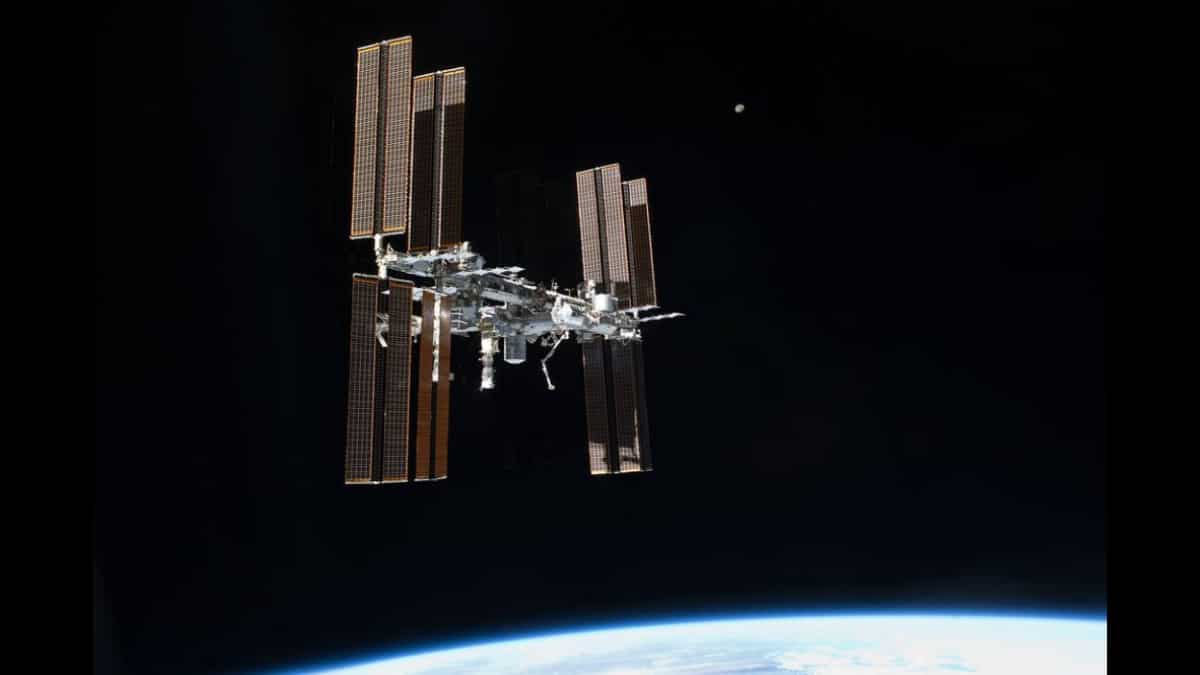
International Space Station
Drug start-up LambdaVision is in the midst of developing the world’s first protein-based artificial retina for patients with genetic blindness, but the uniquepart of the process? It is being developed in space! The company plans to use microgravity to manufacture the retina, the process of which was hard to get right on Earth.
World’s first artificial retina
LambdaVision is developing the first protein-based artificial retina to restore “meaningful vision” for people “who are blind or have lost significant sight due to advanced retinal degenerative diseases, including retinitis pigmentosa (RP) and age-related macular degeneration (AMD),” said the company on their website.

ALSO READ |Can a rogue star save Earth from its destined extinction? Scientists say...
The drug company was founded in 2009 with the mission to develop a protein-based artificial retina for patients with RP, a genetic cause of blindness and AMD, a leading cause of blindness in people over the age of 55, reported Bloomberg.
However, the manufacturing process of this retina which involves placing 200 paper-thin layers of a light-sensitive protein in a polymer mesh, that has to be perfectly even for it to work properly, is complicated, to say the least, and difficult to execute on Earth.
&im=FitAndFill=(700,400))
National Handloom Day 2026: From Alia Bhatt to Samantha Ruth Prabhu; Actresses who celebrated India's textile heritage as brides
)
The Royals enter the Doctor Who universe: King Charles and Queen Camilla beam into Commonwealth Games in TARDIS
)
Unitree Robotics targets $9 billion valuation in landmark IPO backed by DeepSeek and Tencent
)
India names 27 sites in Arunachal Pradesh
)
Bharat Bhhagya Viddhaata OTT: When will Kangana Ranaut's film stream online?
&im=FitAndFill=(700,400))
How many soldiers operate one S-400 battery?
)
Shakib Al Hasan ready to return to Bangladesh—under one condition
)
‘Fake news’: MEA rejects report claiming India sought defence pact with Israel after Pakistan, Saudi Arabia, Turkey deal
)
Rockstar to unveil GTA 6 extended look ahead of November launch
)
Russia forms Ukrainian Volunteer Spetsnaz Brigade to fight Ukraine
)
Drug-resistant fungus that hides in hair and enters bloodstream reported in 23 US states
)
Technology transfer deal boosts India's defence manufacturing ambitions
)
Border row erupts in Europe after Ceuta crossings, Spain imposes border controls on Italy
)
Morale plummets on USS Abraham Lincoln: Are US sailors reaching a breaking point? | GRAVITAS
)
'Security can't be bought with Pakistan, Turkey deal': Iran tells Saudi Arabia
)
Baba Vanga's 2026 prophecy: 2 predictions 'already came true', 3 terrifying ones remain. Details inside
)
Colombia’s new president Abelardo de la Espriella vows to ‘defeat narco-terrorists’, signals hardline shift
&im=FitAndFill=(700,400))
New Friday OTT releases (August 7, 2026): Operation Safed Sagar, Vadhandhi, Main Vaapis Aaunga- 6 movies and TV shows on Netflix, Prime Video and more
)
Squadron Leader Bhawana Kanth scripts history as Indian Air Force gets its first woman ‘Top Gun’ pilot
)
RSS says Gen Z protests reflect genuine distress
)
Trump says Iranian school bombing photos could be AI-generated - 'I don’t think...'
)
IAF officer held for sharing sensitive information in 'honey trap' case, booked under Official Secrets Act
)
Stray Kids under scrutiny? Fans react to Grammy submission silence after BTS boycott
&im=FitAndFill=(700,400))
Why the Su-30MKI doesn't need external fuel tanks to fly vast distances
)
Jugal Hansraj reunites with Shekhar Kapur after 40 years for Masoom: The Next Generation
)
New speed limits, automatic challans: Big traffic change coming to Delhi-Meerut Expressway. All you need to know
)
India officially names 27 places in Arunachal to counter China's renaming claims
)
Trump calls White House ballroom ruling a 'national disgrace' as court says Congress approval needed
)
US sanctions Iran’s crypto network after Strait of Hormuz attacks, offers $15m bounty for intel on IRGC finance
&im=FitAndFill=(700,400))
Why the Su-30MKI is one of the heaviest fighters ever built
)
Uttarakhand young innovator builds India's own flying vehicle, conducts first test flight: WATCH
)
Chilling video shows students take cover as teen opens fire at Thai school
)
Reese Witherspoon's father hospitalised after poolside incident in Nashville: Report
In late 2018, the company turned to the International Space Station in the hopes that the microgravity there could help, reported Bloomberg. LambdaVision has been working with the ISS, NASA, and Space Tango to explore how microgravity could improve their complex manufacturing process.
What are the difficulties?
Earth’s gravity has proven to be an obstacle in LambdaVision’s manufacturing process of the retina. This is because the gravity on Earth can cause particles to settle or liquids to evaporate, leading to imperfections and increasing the instability of the artificial retina.
According to a report by Bloomberg, the company has sent eight experiments to the ISS and so far, the quality of production has dramatically improved.
ALSO READ |Cleft palate, fused toes: Fentanyl likely causing certain birth defects in newborns
In space, “you get nice even layers” of the protein with less wasted material, Nicole Wagner, LambdaVision’s chief executive officer told Bloomberg. “The goal is to be one of the first products manufactured in space that would be used here on Earth,” she added.
The protein-based artificial retina would mimic the light-absorbing properties of human photoreceptors and replace the function of the damaged cells in the retinas of blind patients, said LambdaVision, on its website.
LambdaVision’s artificial retina is lightweight and only as big as a paper hole punch, reported Bloomberg, and if everything goes according to plan, it will be ready for human testing in three to four years.
(With inputs from agencies)