Siberian permafrost reveals nearly 32,000-year-old saber-tooth cat cub

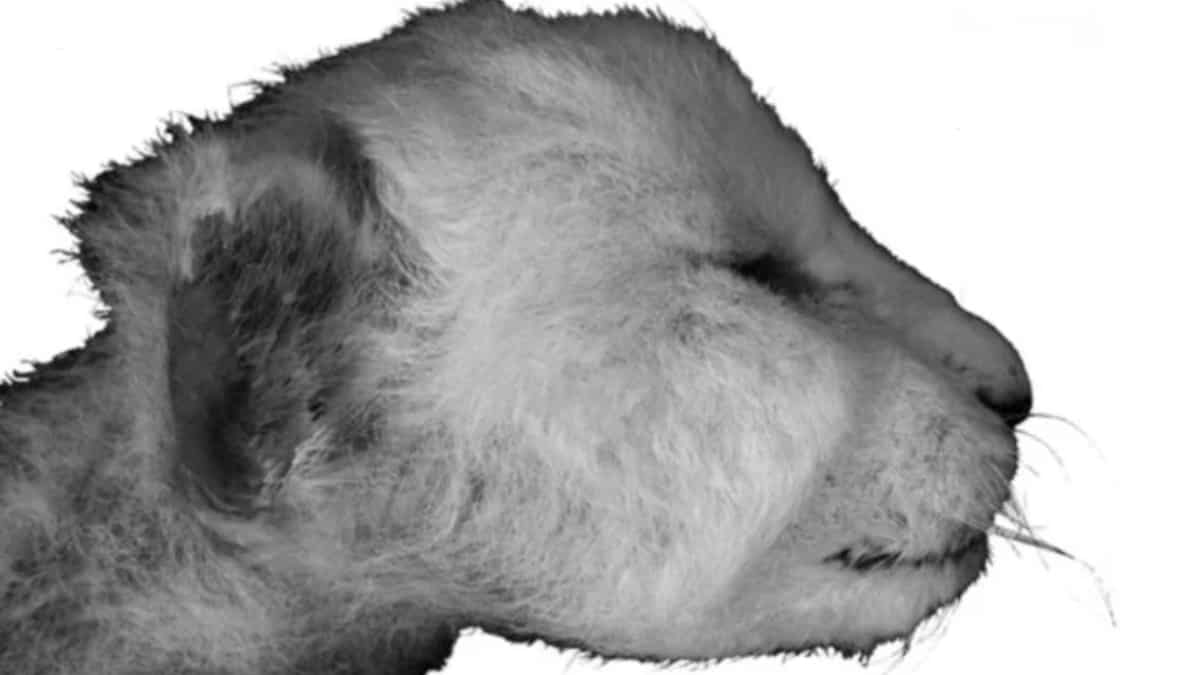
Saber-tooth cat cub
Siberianpermafrost has thrown up yet another surprise for scientists. In 2020, a saber-tooth cat cub was found preserved in the frozen soil. A team of researchers has now detailed their findings in a study published this week in the Nature journal Scientific Reports.
Notably, in 2018, the permafrost also revealed a remarkably preserved cave lion cub. It was almost in perfect condition.
The mummy of the saber-tooth cat includes the animal’s entire head and one forelimb, its shoulders and rib cage, and one of its hind legs. To understand which species of the saber-tooth cat it belonged to, the team decided to study the mummy's head and dental features.
The researchers say that the cat mummy is thousands of years older than the lion cub found two years prior to it. Radiocarbon dating conducted on the cat cub showed that it is approximately 31,800 years old.
This means that the cub had already been dead for nearly 15,000 years when the oldest cave paintings at Lascaux were being drawn by humans.
The research team carried out a comparative analysis using a three-week-old lion cub carcass, Gizmodo reported. They CT-scanned the mummy to reveal its skeletal structure non-invasively.
The researchers reconstructed the mummy's skull based on the slightly deformed but well-preserved right side of its skull.
About thesaber-tooth cat
The analysis showed that the saber-tooth cat was a Homotherium latidens specimen. It is also known as the scimitar-tooth cat. It was a saber-tooth predator with shorter incisors than other saber-tooths like Smilodon.
They could run for long distances and were leaner. The saber-tooth cat’s neck was more than twice as thick as that of the lion cub. The finding confirms that Homotherium roamed present-day Asia in the Late Pleistocene, the researchers wrote in the study.
“Thus, for the first time in the history of paleontological research, the external appearance of an extinct mammal that has no analogues in the modern fauna has been studied directly,” the team wrote.
Scientists believe the finding can lead them to learn more about the ancient times.

