Scientists reveal baby stars release cosmic 'sneezes' during development

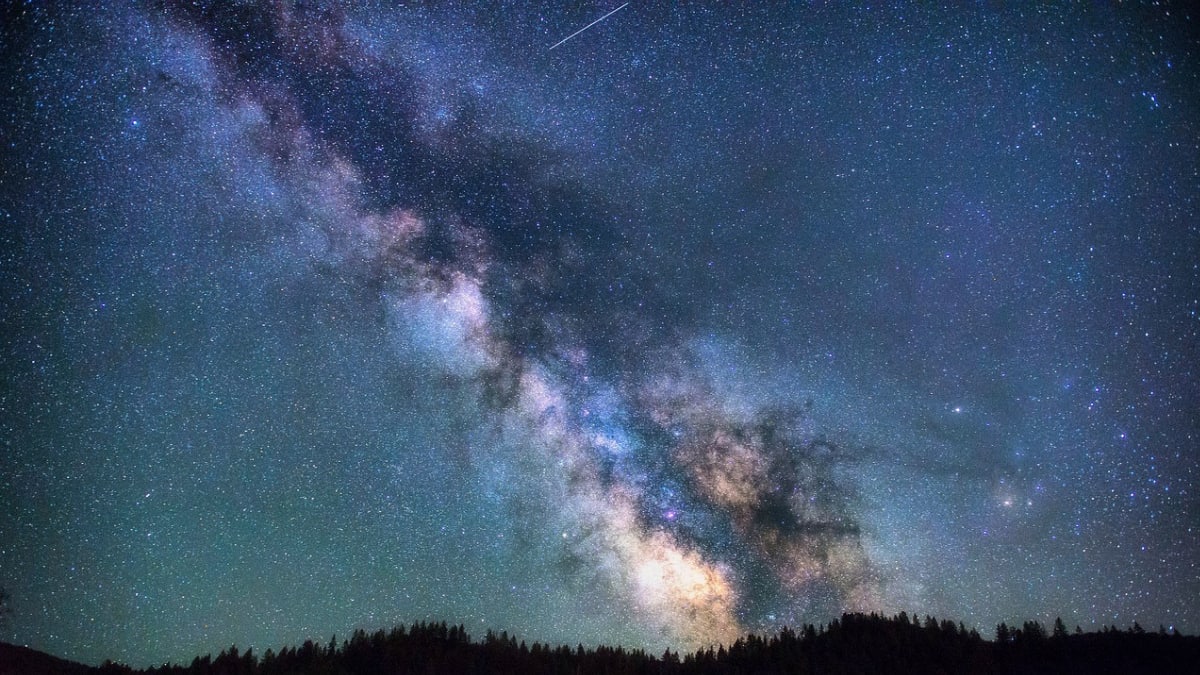
Representational image of stars in the universe.
New research by a team of scientists from Kyushu University in Japan has discovered that baby stars also 'sneeze'. Their powerful sneeze launches gas, dust, and magnetic energy into space.
These 'sneezes' or eruptions by baby stars or 'protostars' are an important part of their development, and can reveal a lot about the star. Scientists may also be able to determine whether the star will be surrounded by planets in future or not.
The Atacama Large Millimeter/submillimeter Array (ALMA) was used by the researchers to explore the gas and dust disks that surround baby stars which collapse to give birth to planets. These disks are called "protostellar disks."
Why do baby star sneeze?
When dense and cool patches of material gather in massive clouds of interstellar gas and dust, known as stellar nurseries, they gain mass and collapse to give a star to the cosmos. Every protostar is surrounded by a protostellar disk of matter.
"These structures are perpetually penetrated by magnetic fields, which brings with it magnetic flux. However, if all this magnetic flux were retained as the star developed, it would generate magnetic fields many orders of magnitude stronger than those observed in any known protostar," team leader and Kyushu University scientist Kazui Tokada said in a statement.
The research published in the Astrophysical Journal discovered that 'sneezing' is a mechanism during star development toremove that magnetic flux. Earlier, researchers believed that the magnetic field gradually weakened over time and there was no separate mechanism for it.
How did the researchers discover stars 'sneezing'?
The team observed MC 27, a stellar nursery located approximately 450 light-years from Earth, using the ALMA array, a collection of 66 high-precision radio telescopes constructed 5,000 metres above sea level in northern Chile.
"As we analysed our data, we found something quite unexpected. There were these 'spike-like' structures extending a few astronomical units from the protostellar disk. As we dug in deeper, we found that these were spikes of expelled magnetic flux, dust, and gas," Kazui Tokada added.
"This is a phenomenon called 'interchange instability' where instabilities in the magnetic field react with the different densities of the gases in the protostellar disk, resulting in an outward expelling of magnetic flux. We dubbed this a baby star's 'sneeze' as it reminded us of when we expel dust and air at high speeds," he explained.
