Stunning discovery: Scientists find half a million new stars in Omega Centauri cluster

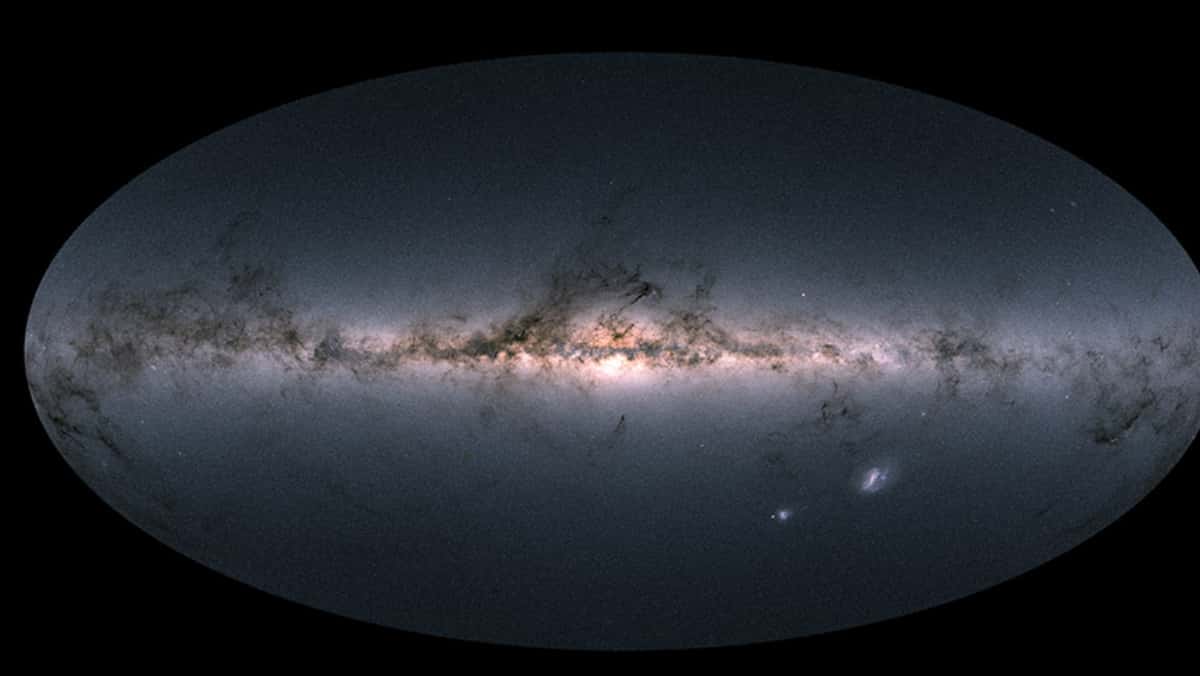
Gaia space mission was launched by the European Space Agency
Scientists at the European Space agency have made astunning discovery:half a million new stars within the Omega Centauri cluster.
Launched by the ESA a decade ago, the Gaia space mission set out to create a comprehensive 3D map of our Milky Way galaxy. After surveying approximately 1.8 billion stars and nearly completing their galactic map, scientists identified a significant gap in their data related to densely populated star regions in the sky. To address this shortfall, the team behind the Gaia space observatory decided to focus on globular clusters.
Globular clusters are popularly known for their dense concentrations of hundreds of thousands of stars. They represent some of the oldest objects in the universe. So, the scientists conducted a reanalysis of previously collected data.
This time, they turned their attention to a globular cluster known as Omega Centauri cluster. It is located some 17,090 light years away from Earth.
What revelations came out of Omega Centauri?
The study unveiledhalf a million new stars within the Omega Centauri cluster.
It also revealed the presence of cosmic objects so massive that they could bend light. This amazing phenomenon is called gravitational lensing.
By studying globular clusters, scientists gained insights into the structure of the Milky Way galaxy. They realised that the sun is not situated at the galaxy's centre.
Most globular clusters in the Milky Way are located near its core.
Gaia's observations enabled the determination that the sun, along with Earth, resides in one of the galaxy's spiral arms, which is known as the Sagittarius arm. The sheer abundance of stars in globular clusters sometimes overwhelmed telescopes and complicated accurate readings.
Bright stars can overshadow their fainter counterparts, and some stars are positioned so closely together that they cannot be individually defined. However, Gaia has now provided a clearer and more detailed view of these clusters.
Why Omega Centauri?
Omega Centauri holds the distinction of being the largest known globular cluster in the Milky Way visible from Earth. It appears nearly as large as a full moon when observed from remote, dark areas and boasts a vast diameter of 150 light years.
Watch |WhatsApp 'secret code' feature for easy access to locked chats
This massive cluster is estimated to be four million times heavier than the sun and consists of around 10 million stars. The revelation of half a million new stars in Omega Centauri is a significant finding and it marks it as the most densely populated region explored by Gaia to date.
WATCH WION LIVE HERE
You can now write for wionews.com and be a part of the community. Share your stories and opinions with us here.