Scientists find key process in cell death that stops progression of cancer

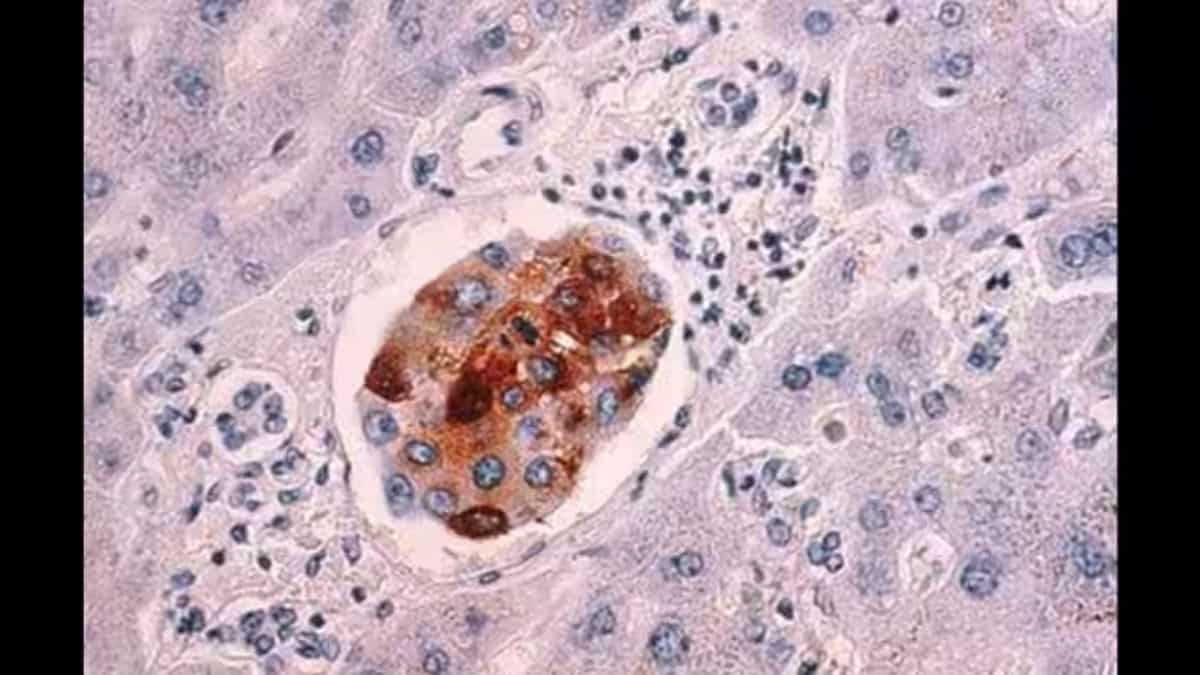
Cancer cell
In a first, scientists discovered new information abouta key process which is involved in the early phases of programmed cell death also known as apoptosis which also stops cancer from spreading. The findings of the study which was led by Dr Luke Clifton, of the Science and TechnologyFacilities Council’s ISIS Neutron and Muon Source in Oxfordshire were published last week in the journal Science Advances.
What do we need to know about the cells studied?
The researchers found the molecular mechanism in apoptosis where cells are no longer needed to undergo self-destruction by activating the so-called “death programme”. Apoptosis is crucial for human life and also plays an important role in biological processes like immune system regulation.
It also helps eliminate potentially harmful or cancerous cells from the body while its disruption can cause cancerous cells to grow and reject treatments. Typically, apoptosis in healthy cells is regulated by two proteins, Bax and Bcl-2.
Bax is a soluble protein which is responsible for getting rid of the old or diseased cells from the body, as it creates pierces through a cell’s mitochondrial membrane to form pores which trigger the programmed cell death or apoptosis.
Meanwhile, Bcl-2, which is embedded within the mitochondrial membrane, can offset this process in some cases which acts to prevent untimely cell death by capturing and sequestering Bax proteins. However, in cancerous cells, Bcl-2 is overproduced and leads to uninhibited cell growth and where normal cells stop dividing, cancer cells can keep on proliferating forming a growing tumour.
What did the scientists find?
For the first time, the researchers have found evidence of the involvement of mitochondrial lipids in the cell-death process, through a technique known as neutron reflectometry. It enabled scientists to study in real time the way that the Bax interacts with lipids present in the mitochondrial membrane during the initial stages of apoptosis.
“As far as we can tell, the mechanism by which Bax initiates cell death is previously unseen. Once we know more about the interplay between Bax and Bcl-2 and how it relates to this mechanism, we’ll have a more complete picture of a process that is fundamental to human life,” said Dr Clifton, as quoted by the Irish Examiner.
The scientists found that when Bax creates pores, it extracts lipids from the mitochondrial membrane to form clusters on the mitochondrial surface and with the help of time-resolved neutron reflectometry and surface infrared spectroscopy, they were able to see that in two stages.
First was the fast absorption of Bax onto the mitochondrial membrane surface which was followed by a slower formation of membrane-destroying pores and Bax-lipid clusters, which occurred simultaneously.
Similarly, Professor Gerhard Grobner of Umea University in Sweden and co-lead of the study said, “The unique findings here will not only have a significant impact in the field of apoptosis research but will also open gateways for exploring Bax and its relatives as interesting targets in cancer therapy such as by tuning up their cell-killing potential,” as per ANI.
WATCH WION LIVE HERE
You can now write for wionews.com and be a part of the community. Share your stories and opinions with us here.