Scientists discover giant plague grave with 1,000 skeletons in Germany

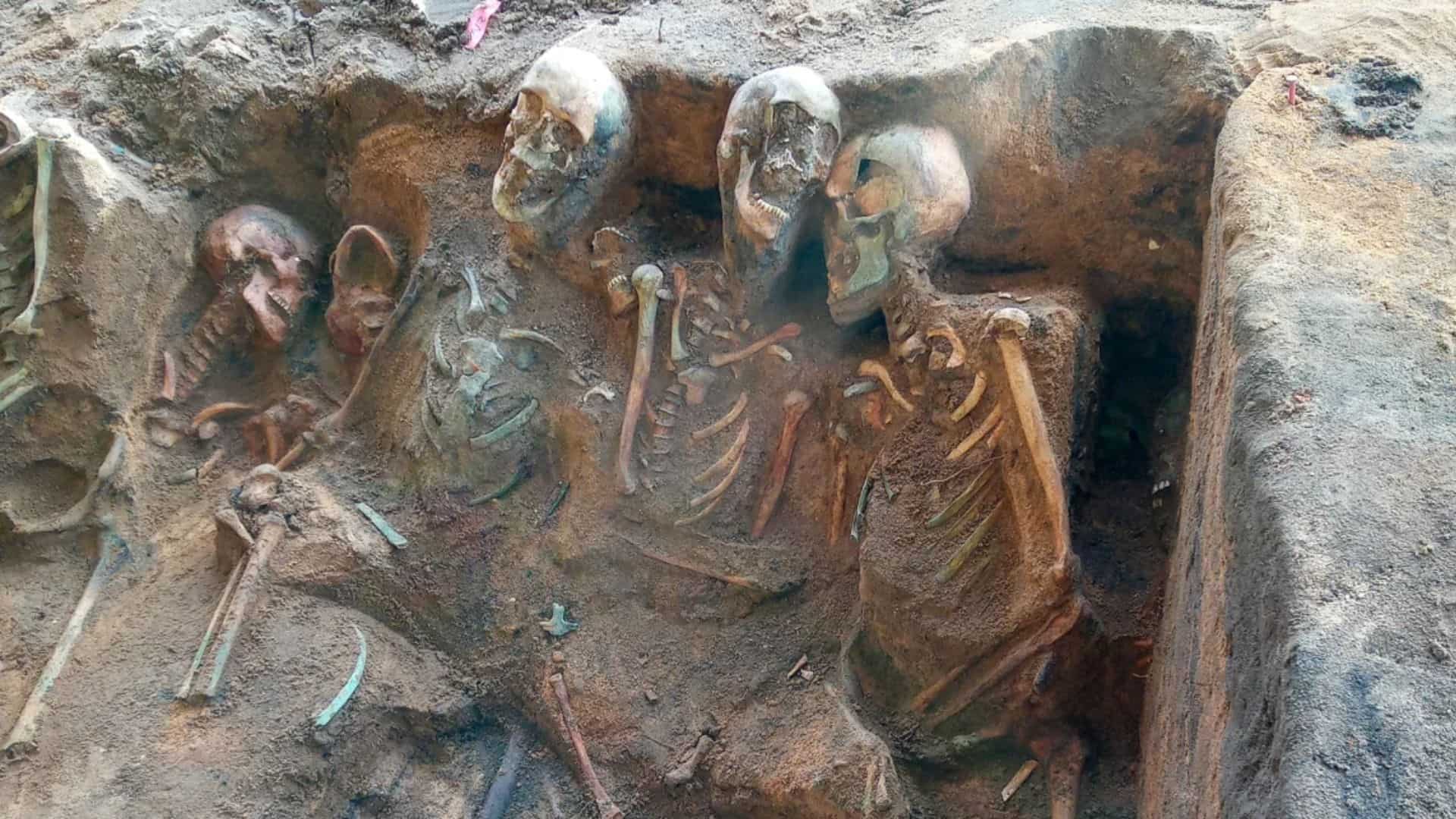
Closely huddled remains in the mass grave in Terra Veritas
Archaeologists in Nuremberg, Germany, have made a significant discovery during excavations preceding the construction of a retirement home. What they've uncovered may be the largest mass burial of plague victims ever found in Europe.
Roughly1,000 skeletons ofplague victimshave so far been found in mass graves in the centreof the city of Nuremberg, which archaeologists believe may contain a total of more than 1,500 people, according to a press release.
While precise dating is pending, initial assessments have suggested that the eight plague pits were established around the first half of the 17th century. Interestingly, some bones show a green tint, likely due to the site being used to dispose of waste from a nearby copper mill.
"We will secure and archive all human remains that are found in the future construction areas,"Nuremberg Department of Heritage Conservation archaeologist Melanie Langbein and chief anthropologist Florian Melzer, told Science Alert.
"We currently assume that once the work is completed in the spring, this will be the largest emergency cemetery for plague victims excavated in Europe," he added.
Why is this of archaeological significance?
Archaeologists are of the opinion that this discovery will be the largest emergency cemetery for plague victims excavated in Europe upon completion of the project in the spring.
Bubonic plague, infamous for devastating pandemics like the Black Death and the Justinian plague, recurred frequently throughout history. Local epidemics havepersisted for centuries after the Black Death, affecting cities like Nuremberg.
Unlike traditional plague cemeteries such as St. Rochus in Nuremberg, these victims were not buried according to Christian practices, indicating a dire need for rapid burial during outbreaks.
Further analysis, including DNA testing, is required to confirm the presence of the plague bacterium Yersinia Pestis.
Beyond understanding the circumstances of their deaths, excavating and studying these remains will provide valuable insights into the history of Nuremberg.
(With inputs from agencies)