Scientists debate over origin of 'alien' debris after startling claim

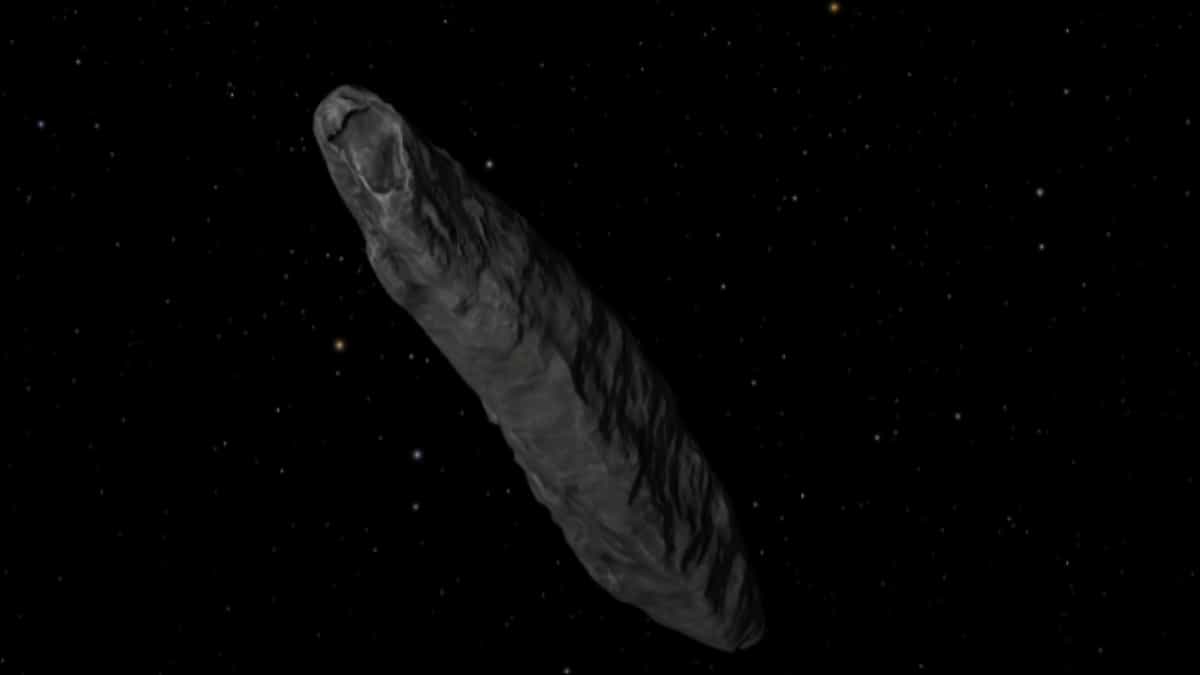
Oumuamua is the first known interstellar object to visit our solar system | NASA
The Lunar and Planetary Science Conference held in The Woodlands, Texas, became a battleground for a contentious debate surrounding an extraordinary claim made last year. The assertion that an 'alien' meteorite struck Earth near Papua New Guinea in 2014 received its first in-person scrutiny among the broader scientific community on March 12, Nature Journal reported.
At the center of the dispute was Hairuo Fu, a graduate student from Harvard University, presenting fragments allegedly from an extraterrestrial rock.
But it was the team leader Avi Loeb, absent from the conference, who had been known for his controversial assertions about extraterrestrial findings.
During the session, Fu showed metallic blobs retrieved from the seabed near Papua New Guinea, igniting skepticism among scientists. Many scientists doubted the material's extraterrestrial origin. Fu promptly defended reportedly stating that it was "something different from what we know."
In a preprint manuscript, astrophysicist Steve Desch argues that the debris collected resembles microtektites, suggesting they originated from an ancient asteroid impact on Earth.
Doubts and debate on Avi Loeb's 'alien' claim
Doubts were also cast on Loeb's trajectory claims over the meteor's origin. Despite the opposition, the scientific community has engaged with Loeb's claims to scrutinise extraordinary assertions.
The genesis of Loeb's pursuit traces back to 2017 with the discovery of 'Oumuamua' when it first sparked speculation about extraterrestrial artifacts. Oumuamua is the first known interstellar object to visit our solar system. It means "a messenger from afar arriving first" in Hawaiian.
Also watch |UFOs and aliens: What's the truth?
Ben Fernando, a seismologist from Johns Hopkins University, presented seismic data challenging the 2014 meteor claim.
While Fu remains committed to further analyses, including isotopic studies, the debate rages on.