Reversal of time? Scientists de-age human skin cells by 30 years in trial

Anti-aging
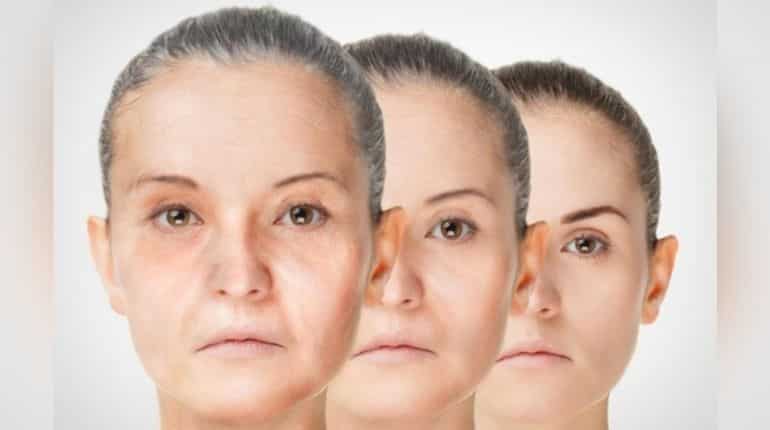
In a new trial conducted by the University of Cambridge, scientists were successfully able to de-age human skin cells by 30 years.
With age, the ability of cells to function properly declines. As a result, the NDA blueprint of people starts to accumulate signs of aging.
Researchers have used regenerative biology to create ''induced'' stem cells and produce fibroblasts that generates collagens that heal wounds and provide structure to tissues.
Through the Nobel-Prize winning technique, they were able to overcome the issue of entirely erasing cell identity as per a study been published in eLife.
“Our understanding of aging on a molecular level has progressed over the last decade, giving rise to techniques that allow researchers to measure age-related biological changes in human cells. We were able to apply this to our experiment to determine the extent of reprogramming our new method achieved,” said Dr Diljeet, a postdoctoral researcher at the Babraham Institute, who conducted the trial.
According to Professor Wolf Reik, who was involved in the trial, “This work has very exciting implications. Eventually, we may be able to identify genes that rejuvenate without reprogramming, and specifically target those to reduce the effects of aging. This approach holds promise for valuable discoveries that could open up an amazing therapeutic horizon.”
“Our results represent a big step forward in our understanding of cell reprogramming. We have proved that cells can be rejuvenated without losing their function and that rejuvenation looks to restore some function to old cells. The fact that we also saw a reverse of aging indicators in genes associated with diseases is particularly promising for the future of this work,” Diljeet said.
The findings could revolutionalise regenerative medicine as until now scientists were not able to recreate conditions to re-differentiate stem cells.
Shinya Yamanaka has was the first scientist to transform normal cells into any cell type in 2007. Usually, it takes around 50 days to reprogramme stem cells by using dour key molecules called Yamanaka factors.
(With inputs from agencies)