Researchers find proof of at least 9 hidden cultural groups during Ice Age Europe

Researchers find proof of at least 9 hidden cultural groups during Ice Age Europe
For millennia, humans have adorned themselves with personal ornaments. These serve as a connection to their communities and help in establishing a cultural identity that endures even after their lives, as proven by a recent archaeological find that points to multiple cultural groups among our ancient ancestors.
Early humans
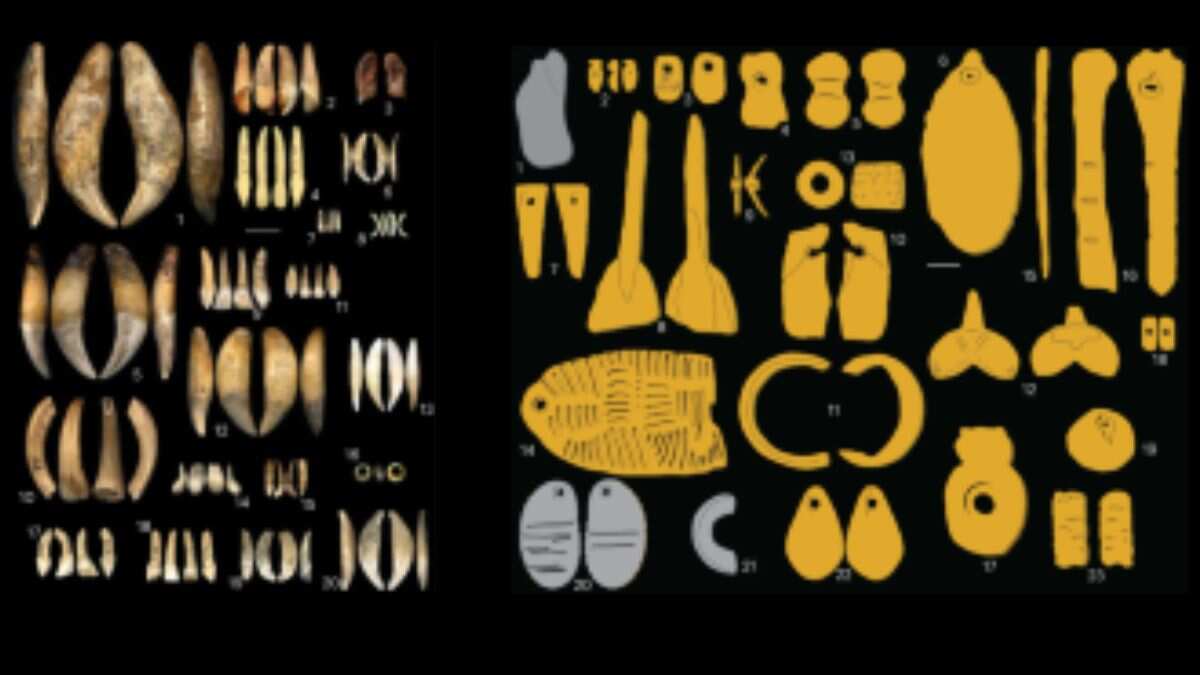
A recent study examining thousands of pendants from the ice age in Europe, dating between 34,000 and 24,000 years ago, has revealed the presence of at least nine distinct cultural groups within the broader Gravettian population. As per a study published in Nature Human Behavior, each of these groups exhibited relatively unique ornament styles.
The study, led by Jack Baker, an archaeology doctoral student at the University of Bordeaux, pointed out that these cultural associations do not always align with familial ties. Genetic analyses revealed that, in some cases, despite different ancestries, individuals shared cultural embellishments.
"We've shown that you can have two [distinct] genetic groups of people who actually share a culture," said Baker, in a conversation with Scientific American.
Wearing beads: The practice
As per Science Alert, the practice of adorning oneself with beads traces back approximately 140,000 years, with shell beads discovered in modern-day Morocco. However, the widespread use of beads intensified around 45,000 years ago, marking a period when ornamental traditions proliferated across Europe.
"This is the moment when personal ornaments acquire a degree of diversity, enabling researchers to more precisely investigate their role as cultural markers," explainedthe researchers in their paper.
As part of their investigation, Baker and his team compiled records of hand-chiselled beads and pendants from 112 sites across Europe. Most of these trinkets were discovered in Gravettian dwellings, with some excavated from burial sites where DNA samples were collected.
These ornaments, previously categorised under one culture, the Gravettian people, exhibited remarkable diversity when considered collectively. The researchers identified 134 different types of beads crafted from materials such as animal bones, teeth, shells, amber, and stone. Some resembled fishtails, while others took the form of owls.
Comparing ornaments across geographical distances revealed nine distinct cultural groups, each demonstrating unique preferences for specific bead types based on their locations.
Baker emphasised that these differences were crystalised in the artifacts found in graves, potentially serving as quick identifiers among people. However, the analysis also indicated fluid cultural boundaries, with neighbouring groups occasionally adopting each other's styles.
"The sense of belonging felt by all humans today is deeply rooted in our shared history and played an important role in determining how Gravettian people adorned themselves," concluded the team.
Archaeologist Peter Jordan lauded the study as a landmark, highlighting the importance of examining ancient artifacts and DNA in tandem to unveil intricate cultural behaviours and group relations.
(With inputs from agencies)

