Pristine Antarctica is hiding a 'dirty' secret, says study

Pristine Antarctica is hiding a 'dirty' secret, says study
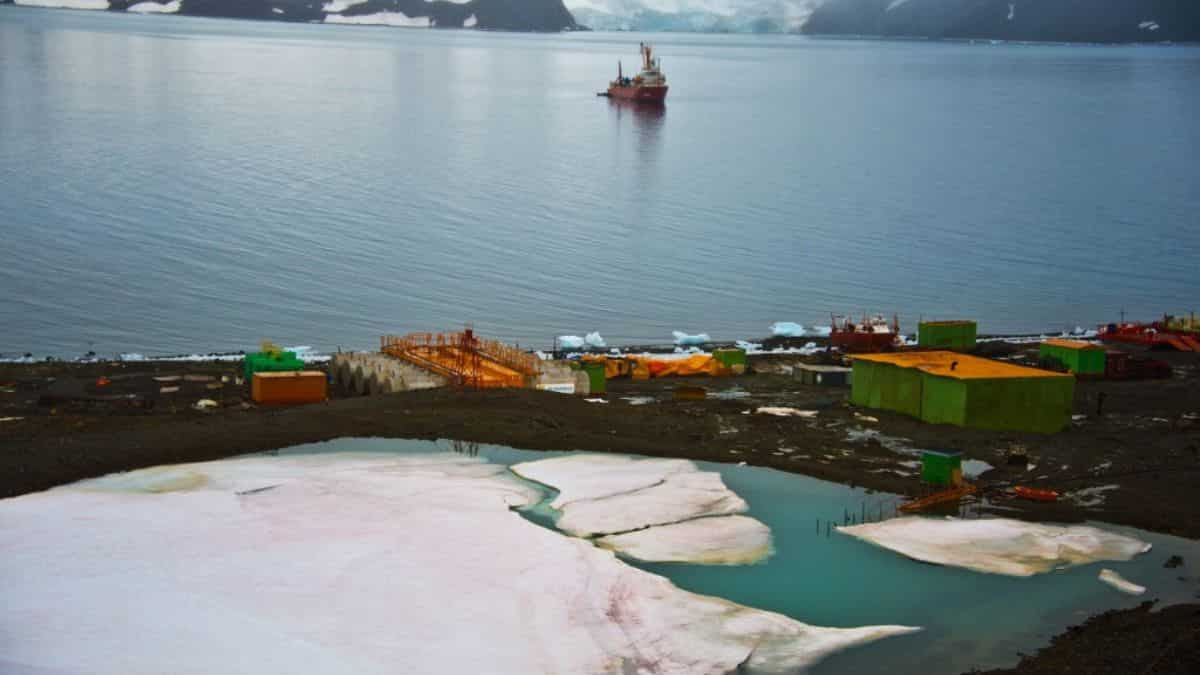
Antarctica, an icy expanse of land often hailed as one of the world's last pristine places, hides a 'dirty' secret. Recent research published in PLOS One in August has revealed that portions of the seafloor near Australia's Casey research station are as polluted as some urban waterways.
What's more is that the contamination is likely to be widespread across older research stations in Antarctica, warns study co-author Jonathan Stark as per Nature.
Pollution findings
Stark, who is a marine ecologist from the Australian Antarctic Division in Hobart, cautioned that these pollutants "accumulate over long time frames and don't just go away".
His team found high concentrations of hydrocarbons — which are typically found in fuels, as well as heavy metals like lead, copper, and zinc.
Many of the samples also contained polychlorinated biphenyls (PCBs), which are extremely carcinogenic chemical compounds that were banned internationally in 2001.
The team compared these samples to data from the World Harbour Project, an international initiative tracking large urban waterways. They found that some samples actually contained the same levels of lead, copper, and zinc as those recorded in parts of Sydney Harbour and Rio de Janeiro over the past two decades.
Widespread pollution across Antarctica
Ceisha Poirot, manager of policy, environment, and safety at Antarctica New Zealand in Christchurch, says that this pollution issue isn't unique to the Casey research station. She says that "All national programmes are dealing with this issue".
As per her, with the Earth warming up, historical contamination is coming to the surface. "Things that were once frozen in the soil are now becoming more mobile," she said.
Historically, poor waste management is the primary source of Antarctica's contamination, says Terence Palmer, a marine scientist at Texas A&M University–Corpus Christi.
Earlier studies of which Stark was a part have shown that polluted areas in Antarctica haveless biodiversity as compared tocontrol locations. These areas also have some resilient species emerging asdominant. "It will be interesting to see if these effects have persisted — or gotten worse — or if communities have adapted in any way,"asserts Stark.
As Antarctica becomes more crowded with over 100 research stations and national facilities, future pollution is a growing concern.
(With inputs from agencies)
WATCH WION LIVE HERE
You can now write for wionews.com and be a part of the community. Share your stories and opinions with us here.

