

&imwidth=800&imheight=600&format=webp&quality=medium "NASA's $30 million mission aims to rescue the Swift Observatory from orbital decay")
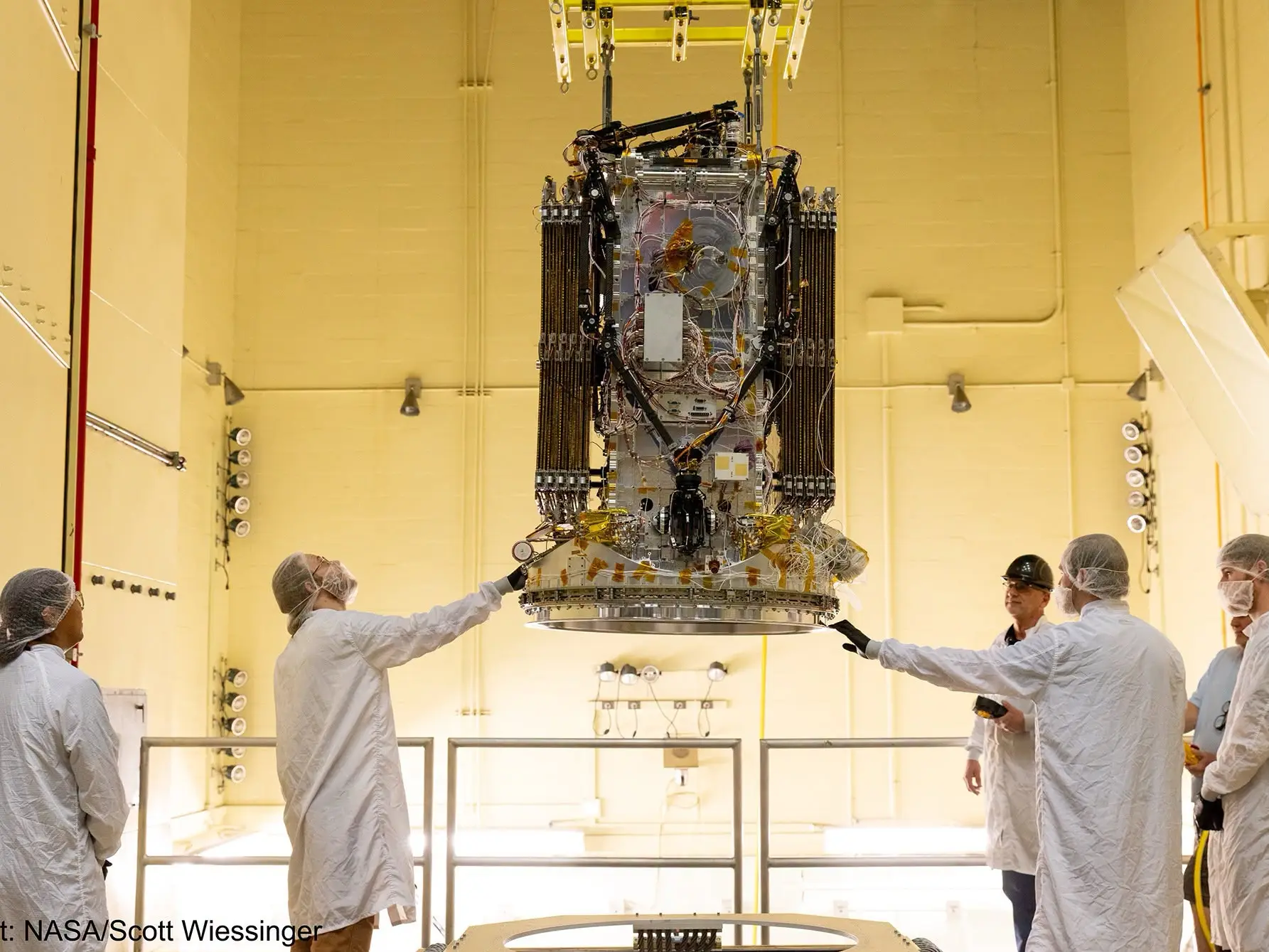
NASA is preparing for a $30 million robotic rescue mission to save the ageing Neil Gehrels Swift Observatory from falling back into Earth's atmosphere. In a post on social media, NASA called it -“The ultimate battle against time and gravity".The operation will be carried out by the startup Katalyst Space Technologies using its three-armed spacecraft named Link, which will chase the Swift Observatory once it takes off from an atoll in the Pacific's Marshall Islands aboard an aeroplane-launched Pegasus rocket. Lift off could occur as early as Tuesday. Link will chase Swift for about a month, latch onto it, and mechanically push the telescope into a higher, stable orbit. This will extend its operational life by five to ten years.
Katalyst Space CEO Ghonhee Lee said, "This is the first American space robot to go up and do anything like this," he added, “NASA has all these big senior observatories … all of them can benefit from a service like this. So what we're proving with this mission is this is a new play in the playbook that's available.”
The Swift Observatory has spent two decades scanning the cosmos, acting as space astronomy's "first responder for gamma-ray bursts, which are the universe's most violent and luminous explosions. It can autonomously reorient its entire body within 20 to 75 seconds. This allows it to capture afterglow. No other off-Earth observatory, not even the famed Hubble Space Telescope or James Webb Space Telescope, can perform such a feat of astronomy.
The Swift Observatory is suffering from Orbital decay. The intense solar activity of recent times has expanded the outer atmosphere of Earth, which acts as an atmospheric drag, causing Swift to sink faster than expected. It had already dropped an altitude of 600 kilometres to 370 kilometers. It faces an imminent destruction threat by the end of 2026 if left untreated. The Swift Observatory had an original cost of $250 million for the development of the telescope, and during its launch in 2004. It has a total lifetime operation cost of $500 million. NASA spent $6 million to keep the telescope running in fiscal year 2024, with planned budget step-downs to $4.5 million for 2026. Experts suggest NASA's Hubble Space Telescope is also at risk and could be next.

