Mysterious landforms are rising on Mars. Here's how

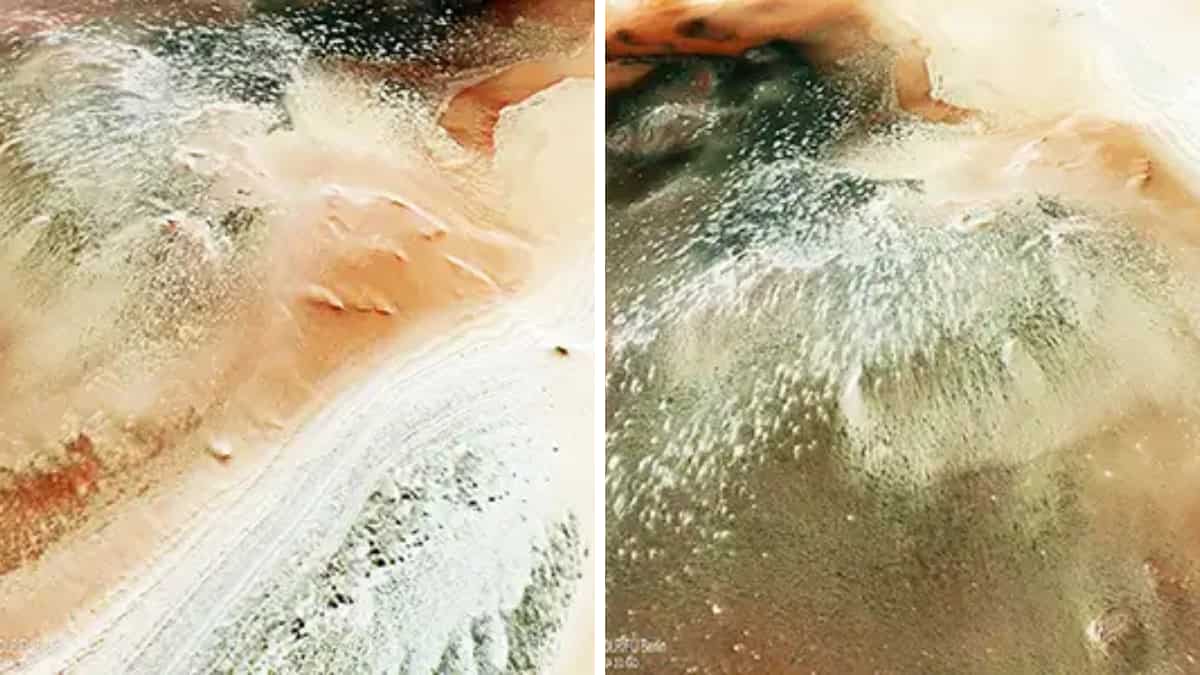
Image of south polar Australe Scopuli region on Mars. (Courtesy: ESA)
The European Space Agency’s (ESA) Mars Express has spotted some remarkable mysterious features in the south polar region of the Red Planet.
The landforms, which are surrounded by darker than the icy realms, have earned the title of ‘cryptic terrain’.
The planet's seasonal polar caps are filled with carbon dioxide ice and have a touch of water ice.
As the spring arrives, the ice is known to sublimate at a good pace and quickly turn from a solid state to vapour because of which a considerable amount of gas gets freed into the thin atmosphere of Mars.
The process is known to reverse during autumn as the vapour condenses and the caps continue to grow. In this process, these mysterious landforms are formed out of the freeze-thaw cycle.
This landform has been found in Australe Scopuli, which was captured by the High Resolution Stereo Camera (HRSC) onboardMars Expressduring spring in the Southern Hemisphere.
All about Australe Scopuli
The Australe Scopuli has layered deposits of ice which has different amounts of dust trapped beneath the smooth surface of the polar layered deposits.
In the centre of this region is the cryptic terrain, which is darker in comparison to the rest of the ice cap.
In the image captured, the dark centre stage was covered with different types of polygon shapes at various scales.
Meanwhile, the polygon edges appear to be trapped in bright frost, which is a pattern found in the Arctic and Antarctic regions on Earth.
Such patterns generally indicate the presence of water ice in the ground. In the image are bright and dark fan-shaped deposits that appear in the direction of prevailing winds.
In early spring, sunlight permeates across the translucent carbon dioxide ice layer and leads to warming of the underlying surface, where pressure is built by pockets of trapped gases that cause the overlying ice to crack.
Through the surface, the jets of gas burst and carry dark dust from below. When the dust settles back, it falls in the direction of the prevailing wind patterns.
(With inputs from agencies)