Move aside Mars, Ceres was once hot and alive, and hosted life in our solar system

&imwidth=600&imheight=450&format=webp&quality=medium "Move aside Mars, Ceres was once hot and alive, and hosted life in our solar system")
Dwarf planet Ceres once hosted alien life.
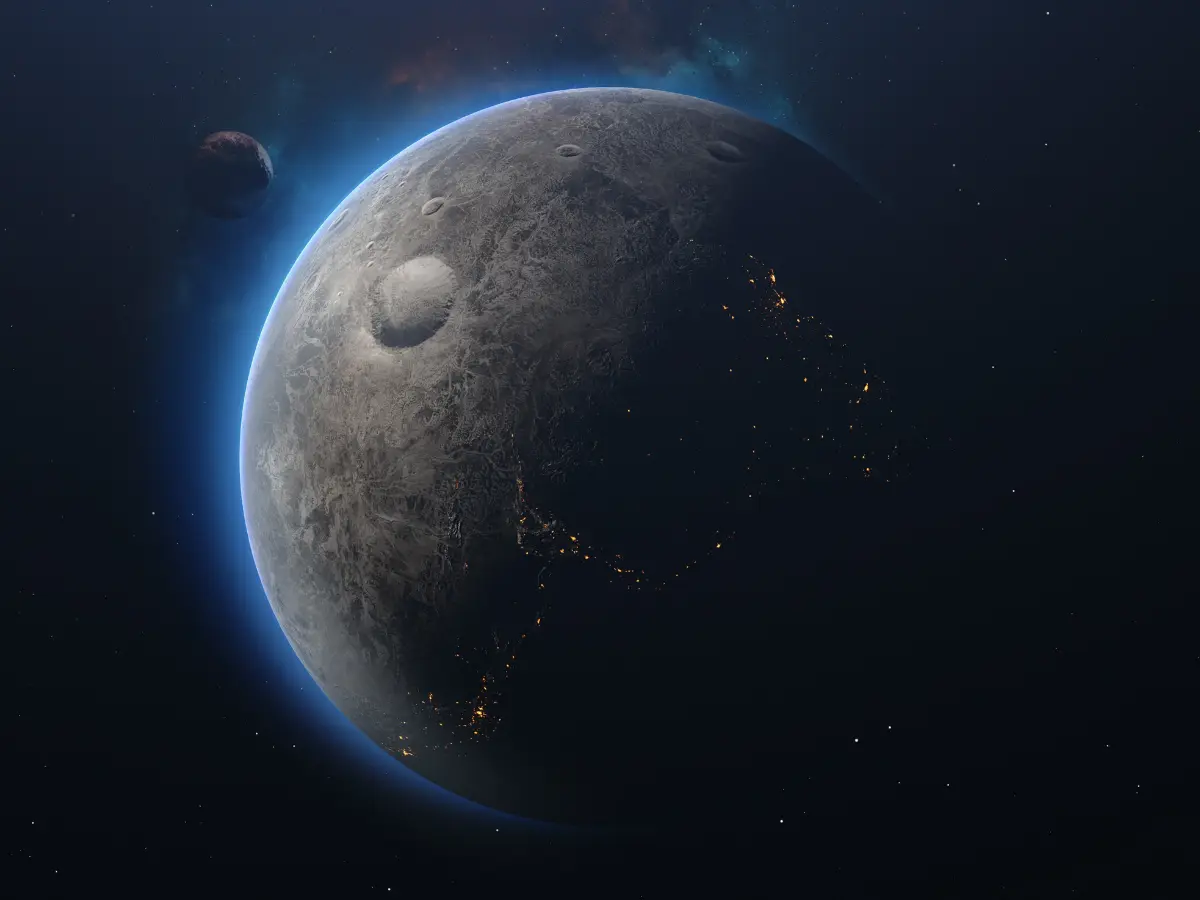
Ceres is the dwarf planet that orbits between Mars and Jupiter and is icy cold today. But 500 million to two billion years after it was born, conditions were ripe for life forms to thrive on Ceres. No sunlight was involved in the process.
Our solar system was likely once home to life besides the one it hosts on Earth. NASA scientists have found evidence that the dwarf planet Ceres was once home to microbial life. The icy body is believed to be harbouring saltwater lakes and organic carbon molecules under its surface, as shown by previous research. Today, it lacks any nutrients that microbes can utilise for food. But around 2.5 and four billion years ago, radioactivity likely created warm water conditions, or a "buffet," on Ceres that were fit for microbes to thrive. This is the same as on Earth, where the oceans once held much higher concentrations of radioactive isotopes, enabling widespread radiolysis-driven chemistry. The buffet for microbes refers to the presence of Hydrogen, oxidants, organic precursors and stable chemical gradients. These ingredients can support certain metabolic processes in the absence of sunlight. Also Read: Once-in-MULTIPLE-lifetimes comet is hurtling towards Earth. Here's when you can see it
Ceres lies between the orbits of Mars and Jupiter, and is barren. NASA's Dawn mission discovered in 2018 that something seemed to be reflecting light off its surface. This was found to be salt that was left behind by the liquid that oozed out of its surface. This was a lightbulb moment as the presence of salt means a saltwater source was present somewhere on the dwarf planet. Ceres is hiding vast reservoirs of brine that are minus 63°C today, too cold to support any form of life. But, NASA simulations show that 500 million to two billion years after Ceres formed, radioactive minerals began to decay inside its rocky interior, which would have produced a steady supply of hot water. Also Read: A message in Morse: Humans should reach out to interstellar 'mothership', scientist says
Hot water vents trigger life in oceans
The temperatures of the water near the core would have exceeded 270°C, NASA said, which then moved upwards where it mixed with the cold water, creating a stream comprising dissolved minerals and gases. These are known as hot water vents and help microbes and other life forms sustain and thrive on Earth deep inside oceans. If it all transpired in the same way on Ceres as shown by the simulation, then it would have given birth to a type of microbe known as a chemotroph. It is energised by chemical reactions and was capable of surviving on this hot water.
Lead researcher of the study, Sam Courville, a PhD candidate at Arizona State University, said, "On Earth, when hot water from deep underground mixes with the ocean, the result is often a buffet for microbes — a feast of chemical energy." He added that determining "whether Ceres’ ocean had an influx of hydrothermal fluid in the past" could have great implications. This discovery shows that is Ceres was capable of triggering life on its own, there could be other planets in the universe capable of a similar feat.

