

&imwidth=800&imheight=600&format=webp&quality=medium "3I/ATLAS Live Tracker: World awaits NASA photos as comet develops strange anti-tail")
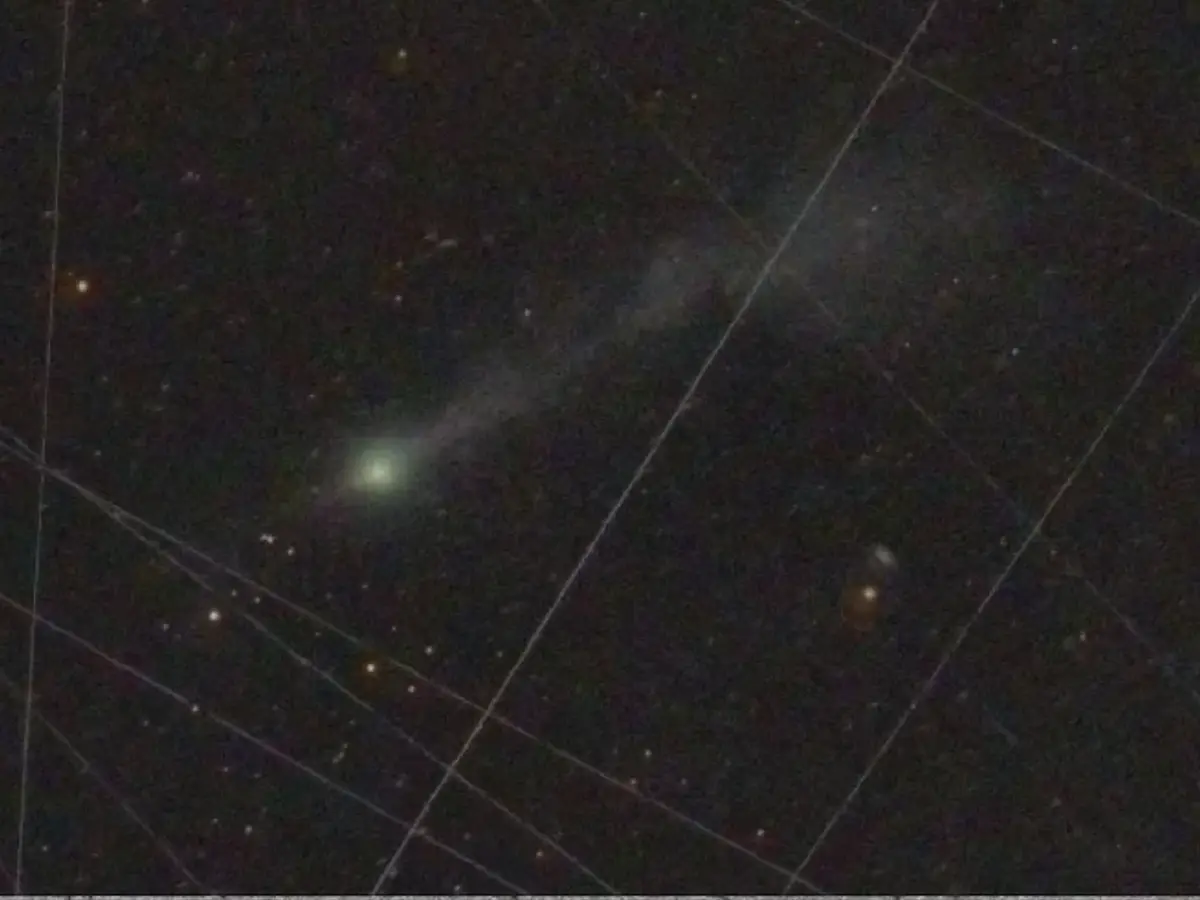
3I/ATLAS, the third interstellar object spotted in our solar system, continues to present signs that it is harbouring several mysteries, and it is more than what meets the eye (or telescopes). New images show it releasing jets, with at least two tails and one anti-tail. It started as a complex jet structure, with several astronomers around the world seeing the same thing. Scientists are now wondering what could be causing an anti-tail in 3I/ATLAS. Harvard scientist Avi Loeb has for the longest time talked about the anti-tail which telescopes saw during its earliest sighting. What is going on with the alien comet? Apart from this, the biggest news everyone is waiting for should come from NASA. Now that the government shutdown has ended, the space agency is expected to soon release photos of 3I/ATLAS it captured from Mars on October 2-3.
3I/ATLAS has jets shooting out in a strange pattern. There are tails and anti-tails, with every image released recently showing this complex structure. A typical comet should show only one tail, but the presence of these jets makes 3I/ATLAS mysterious and stands out from all the other comets.
The 12th anomaly, as per Loeb, is, "Its tightly collimated jets maintain orientation across a million kilometres in multiple directions relative to the Sun despite its measured rotation."
In July and August, scientists found that 3I/ATLAS was rotating every 16.16 hours. Now we have seen a network of jets around it, and both things together do not make sense, according to Avi Loeb. “These observed jets from 3I/ATLAS should have been smeared by the rotation,” he said. However, what we see are “tightly-collimated jets extending to distances larger than a million kilometres.” He asks, “How could these jets maintain their orientation if 3I/ATLAS is rotating every 16.16 hours?”
NASA, the European Space Agency and China's space agency all have orbiters on Mars scanning the Red Planet for signs of past life. All of them are positioned at different places. When 3i/ATLAS flew by Mars at its closest on October 2-3, it was 30 million km away from our neighbour. The orbiter closest to it is likely to have captured the best photos. NASA's Mars Reconnaissance Orbiter was at the perfect point in space to get the best look at 3I/ATLAS.
Astronomers across the world are clicking pictures of 3I/ATLAS as it becomes visible from Earth. You can also see this exotic visitor using your binoculars or telescope. Here is a handy guide to locate it in the sky, courtesy of The Sky Live.
NASA is expected to release pictures of 3I/ATLAS captured by its Mars orbiter soon. The government shutdown has ended, and we should soon be able to get a look at what the Mars Reconnaissance Orbiter saw on October 2-3, during the interstellar comet's closest approach to the Red Planet.
A typical comet should have one prominent tail. But 3I/ATLAS has two tails and one anti-tail, that is, one in the direction of the Sun. Scientists are trying to explain what could be causing this complex jet structure. Meanwhile, Avi Loeb thinks it is still possible that the jets are being caused by technological thrusters. Read the full explanation for 3I/ATLAS tails and the anti-tail here.

