This Japanese sea worm is so lazy that it detaches and sends off its butt to search for a mate

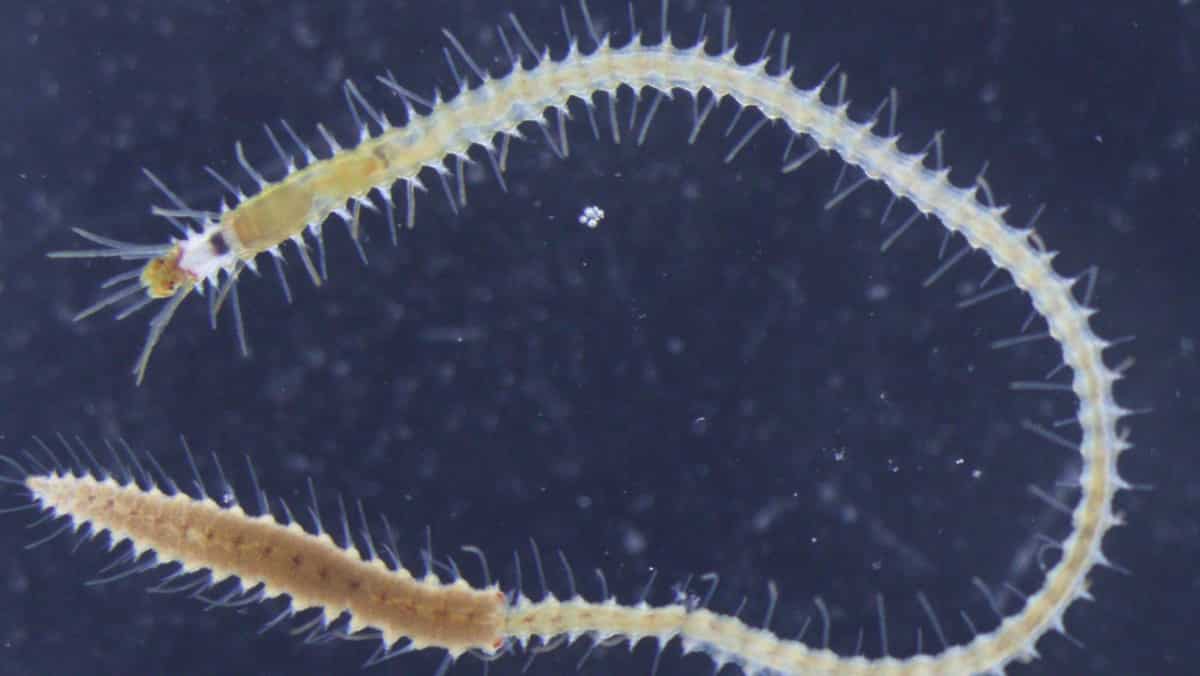
Sea worm
An interesting new research has decoded how Japanese sea worms have a unique way of mating with the opposite sex - by letting go of their butt. The reproduction process in itself is not as simple as it sounds and is rather a complex method of gene expression.
The study, conducted by a team led by University of Tokyo professor Toru Miura, revealed the way the Japanese green syllid worm (Megasyllis nipponica) detaches its rear end from its body and deploys it in the waters which then searches for the opposite sex. The research is a breakthrough because up until now the scientists were unable to comprehend how the reproductive process in these worms actually took place.
How does the reproductive process happen?
The worm's reproductive unit, scientifically known as the stolon, is grown fully once the organism hits maturity. Upon reaching maturity, it carries a load of gametes (either eggs or sperm) and, through the stolonization process, separates from the worm's main body.
At this point, it possesses fully developed bristles for swimming, as well as a complete set of eyes and antennae.
The new stolon sets out on a quest to find a stolon of the opposite sex for the release of its gametes. Once this is done, the worm will regenerate another stolon to deploy in a similar manner to mate again.
"This shows how normal developmental processes are modified to fit the life history of animals with unique reproductive styles," said Miura.
The researchers discovered that the Hox genes, which play a role in determining the general body plan and, in this instance, the segmentation of the worm, remain consistent throughout the animal.
Watch |UN: Clashes in Myanmar displaces 26,000 people
"Interestingly, the expressions of Hox genes that determine body-part identity were constant during the process," said Miura adding, "This indicates that only the head part is induced at the posterior body part to control spawning behavior for reproduction."
Presently, researchers are trying to find out the factors that determine whether the stolon will produce eggs or sperm, especially considering that the worm regenerates this segment throughout its life cycle.
(With inputs from agencies)