Giant atom-smasher proposal worth billions of dollars seeks to unravel universe's hidden 95%

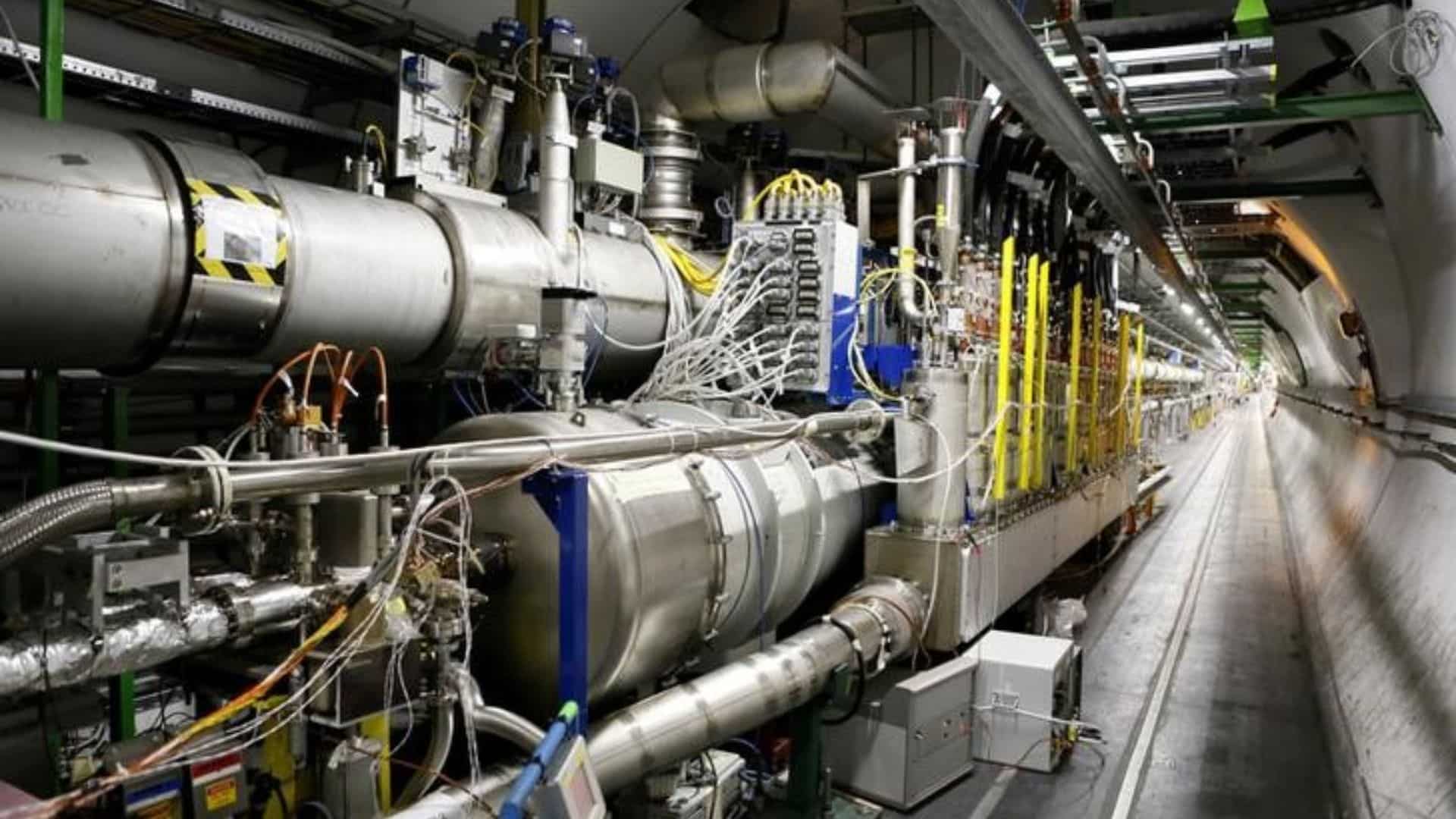
Large Hadron Collider (LHC)
Researchers at Cern, the world's largest particle accelerator in Switzerland, have put forth a proposal for the Future Circular Collider (FCC), a supersised successor to the Large Hadron Collider (LHC), as reported by the BBC.
With an estimated cost of $21 billion, the FCC aims to revolutionise physics by delving into the mysteries of dark matter, dark energy, and other particles that have eluded the LHC.
The FCC is envisioned to be three times biggerthan its predecessor, with a circumference of 91km and twice the depth.
Operating in two stages, the first phase, starting in the mid-2040s, will focus on colliding electrons to explore the Higgs particle in greater detail. The second phase, commencing in the 2070s, involves the use of more advanced magnets and heavier protons to search for new particles.
Challenges and innovations
The proposed collider's depth is crucial to contain the stronger radiation generated by higher energies. The advanced magnets required for the second phase are yet to be invented.
While the LHC made history with the discovery of the Higgs Boson in 2012, the FCC aims to address the remaining 95 per centof the cosmos by unlocking the secrets of dark energy and dark matter.
The $21 billion price tag has sparked skepticism, with critics, with many callingthe expenditure"reckless." Some argue that allocating funds to climate-related challenges might be more prudent.
Internal debates among particle physicists extend to the collider's design, with proponents of linear colliders citing potential cost advantages and quicker implementation.
Cern's director general, ProfFabiola Gianotti, told the BBC that she envisions the FCC as a powerful tool propelling humanity toward a more profound understanding of the universe.
Also watch |007's Udaipur, CERN Science Gateway, China Golden Week, Vampire Tourism
Despite debates and criticisms, Cern views the FCC as essential to address lingering cosmic mysteries, signalling a quantum leap in the pursuit of knowledge.
The proposal awaits approval from Cern's 70 member nations, which will collectively contribute to funding the ambitious project.
(With inputs from agencies)