From visionary to fallen biotech star: The rise and fall of Theranos founder Elizabeth Holmes

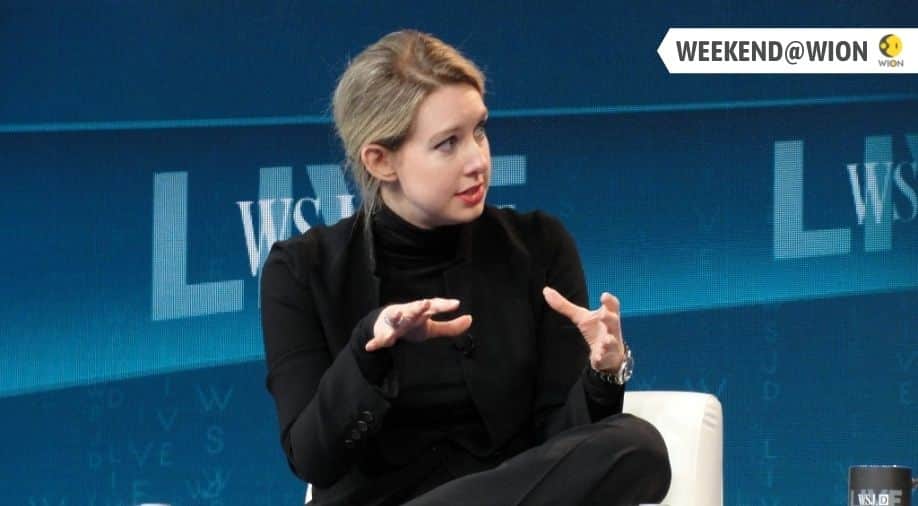
Elizabeth Holmes gestures as she speaks at a Wall Street Journal technology conference in Laguna Beach, California
Theranos founder Elizabeth Holmes, portrayed by her lawyers as a hard-working, young, and naive businesswoman whose company simply failed, is in the headlines yet again.
The former Silicon Valley star's trial on federal fraud charges involving the now-defunct blood-testing startup, once valued at $9 billion, has started again after being postponed several times.
Beginning of the end
Theranos, a fallen unicorn company, was founded by Elizabeth Holmes, a Stanford University dropout in 2003 at the age of 19.
The American corporation was touted as a breakthrough health tech company. It claimed of designing devices that will draw a drop of blood from a finger prick and could run a range of tests more quickly and accurately than conventional laboratory means.
Holmes was a tech world celebrity whose multi-billion-dollar start-up looked set to revolutionise medical testing before it crashed and burned in a blaze of fraud claims.
Sure-fire winner
Political grandees like Henry Kissinger and James Mattis were drawn to the company's board; media mogul Rupert Murdoch invested his cash in what seemed to be a sure-fire winner.
Holmes was hailed as a prodigy and lauded as a visionary for her extraordinary idea and was even compared to Steve Jobs.
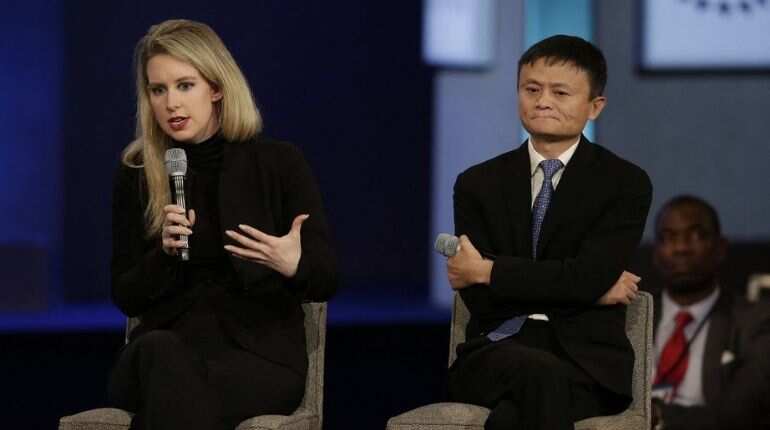
In picture:Theranos Founder and CEO Elizabeth Holmes (L) speaks next to Alibaba Group Executive Chairman Jack Ma during the Clinton Global Initiative annual meeting in New York/AFP
Youngest female billionaire
She had become the world's youngest female billionaire due to the bogus claims and gamut analysis made by the company.
At one point, she had a net worth estimated at $3.6 billion, according to Forbes magazine.

In picture:Elizabeth Holmes , Managing Editor, Time Magazine; Nancy Gibbs and Diane von Furstenberg attend the Time 100 Gala celebrating the Time 100 issue of the Most Influential People at The World/AFP
What went wrong?
But years of hype, and billions of dollars later, those promises unspooled; the miracle machines did not work.
Prosecutors say Holmes knew it, yet continued to lie to investors, doctors, and patients so she could raise more than $700 million.
They have alleged that Holmes and Balwani (full name and designation) defrauded investors between 2010 and 2015 and deceived patients when the company began making its tests commercially available, including via a partnership with the Walgreens drugstore chain.
The Wall Street Journal in 2015 reported that the Theranos devices were flawed and inaccurate, setting off a downward spiral for a company that had drawn investors including Murdoch and Oracle founder Larry Ellison.
Patients who were victims of the faulty tests received misdiagnoses of cancer, HIV, or pregnancy.
Famous topic for drama
The saga has become the subject of documentaries, podcasts, and books. A TV miniseries and a Hollywood film based on Holmes' story are in the works.
When the inaccuracies and shortcomings of the technology were exposed in a thorough investigation, Holmes was called a fallen biotech star and blamed for covering up the lies.
The company was charged by the US Securities and Exchange Commission for committing an ''elaborate and years-long fraud.''
It was a warning against the "fake it till you make it" culture. And for biotech and healthcare start-ups, it's a shadow that's difficult to escape because of the constant comparisons in the public mind.
Dueling portraits
Prosecutors and defense attorneys sketched dueling portraits of fallen Silicon Valley star Elizabeth Holmes as her trial got underway Wednesday, alternatively describing her as a greedy villain who faked her way to the top and as a passionate underdog whospent years trying to shake up the health care industry.
The two sides are now expected to spend the next three months trying to sway a 12-person jury impaneled to hearing the evidence in thecase.
Holmes accused her former boyfriend Ramesh "Sunny" Balwani, who was president of the blood-testing startup, of abusing her emotionally and psychologically in a relationship that spanned more than a decade.
This includes the period when the company claimed its technology could enable a wide array of medical tests with a few drops of blood.
In the court filings, Holmes' lawyers argued that the alleged "intimate partner abuse" was relevant to the question of whether she knew that financial information provided to investors and others was false.
Whatever be the result of the trial, Theranos will serve as a cautionary tale for the fast-paced world of startups and their often irrationally astronomical valuations across the world.