Elon Musk’s Starlink satellites could be harming Earth’s magnetic field

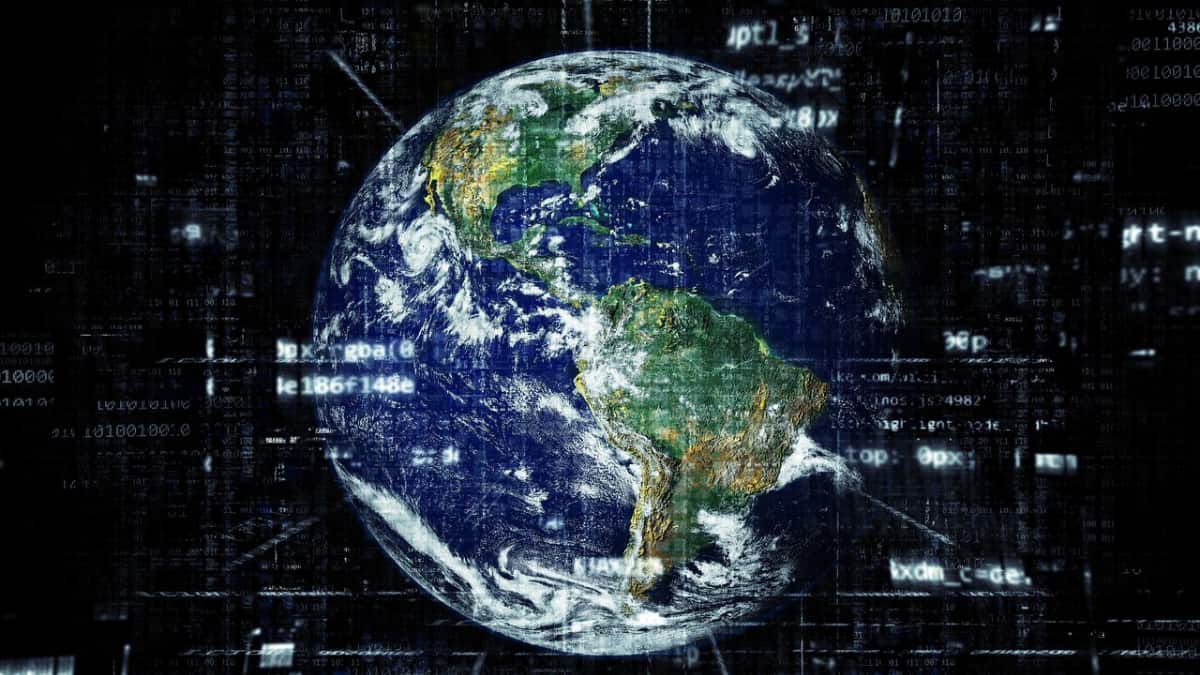
Earth
Elon Musk's Starlink satellites vaunt of their efficiency but it appears that the company is doing more harm to the planet than good. A former physicist associated with the National Aeronautics and Space Administration (NASA) claimed that Musk's company is exposing everyone on Earth to deadly cosmic rays.
SpaceX has launched multiple Starlink satellites into space over the past few years. The company says that its satellites operate in Low-Earth Orbit (LEO), claiming that it results in lower latency and faster data transfer rates. The company says it has over 5,500 Starlink satellites in orbit. Notably, Musk is planning to launch thousands more in the future.
But the physicist, Dr Sierra Solter-Hunt, warned that cheap satellite megaconstellations like Musk's Starlink could disrupt Earth's magnetosphere.
She mentioned in a study, submitted December 6, 2023, that as per estimates, Musk's space company is burning up over 2,755 lbs (1.3 tons) of wireless internet satellite junk into Earth's atmosphere per hour. This will lead to the formation of a metal layer known as "conductive particulate" in orbit.
The study mentioned that the mass of such particles left behind from the worldwide distribution of re-entry satellites is already billions of times greater than the mass of the Van Allen radiation belt, which is a zone of energetic charged particles.
Most of the particles originate from the solar wind, that are captured by and held around a planet by that planet's magnetosphere. Earth has two such belts, and sometimes others may be temporarily created.
The magnetic field holds Earth's atmosphere together. It also protects from harmful cosmic radiation and charged solar particles.
"I was very surprised. No one has given much research to the accumulation of metal dust from the space industry," Dr Solter-Hunt told Daily Mail.
The absence of a magnetic field is the reason why Mars is inhabitable. In her study, she said that the accumulation of highly conductive metal trash could lead to "atmospheric stripping". This is the phenomenon with Mars and Mercury.
According to Dr Solter-Hunt, there are around 10,000 satellites, and the number is likely to increase in 10 to 15 years. She warned, "By the time we get to 100,000 I think it could be too late."
The study said, "Satellite re-entries may create a global band of plasma dust with a charge higher than the rest of the magnetosphere. Therefore, perturbation of the magnetosphere from conductive satellites and their plasma dust layer should be expected and should be a field of intensive research."
The study added that human activity is not only impacting the atmosphere, it is clearly impacting the ionosphere.
This is not the first study which questioned Starlink satellites in orbit, another study published in the journal Astronomy and Astrophysics on August 10, 2023, claimed that the satellites are also creating a hurdle for humans to explore space.
(With inputs from agencies)