Earth to get a ‘second moon’ on Sep 29. Here is how to watch it

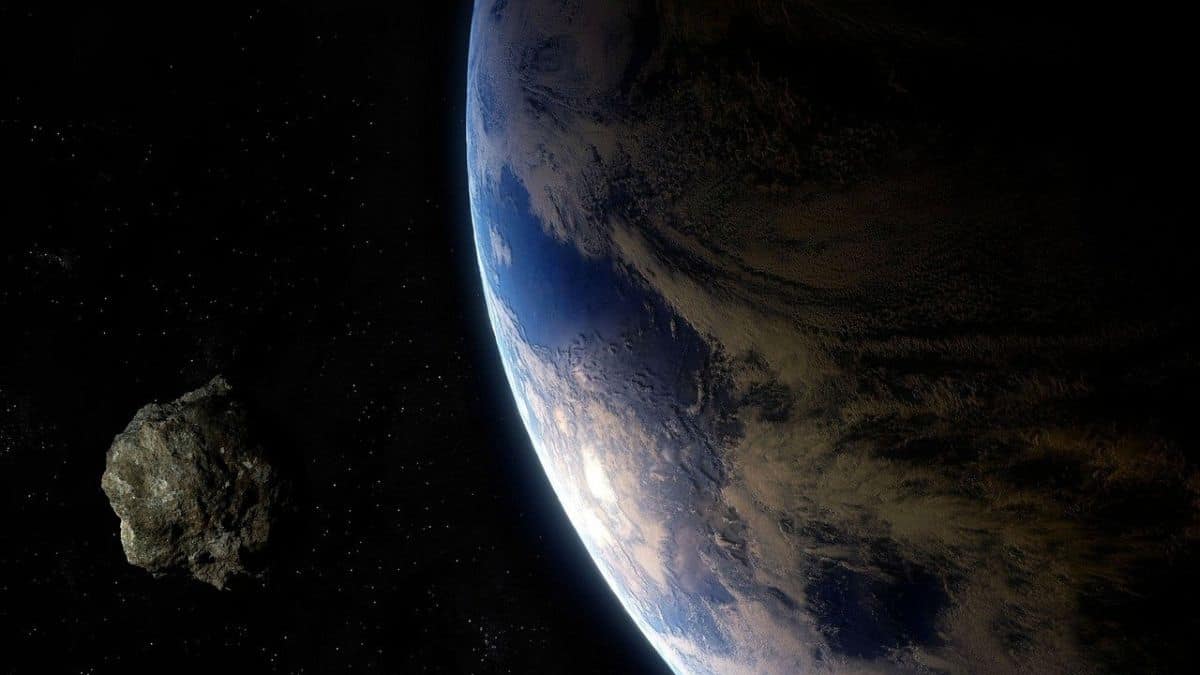
Representative image
In a spectacular cosmic event, Earth is about to get a "second moon" this fall. An asteroid passing through the Earth will be pulled by its gravitational force. This “second moon” will temporarily enter our planet’s orbit on September 29 and remain there for nearly two months.
What is the second moon?
First spotted by NASA’s Asteroid Terrestrial-Impact Last Alert System (ATLAS) on August 7, asteroid 2024 PT5 hails from the Arjuna asteroid belt, a group of asteroids in our solar system. These asteroids sometimes get as close as 2.8 million miles (4.5 million km) to Earth.
According to scientists involved in the study to determine its trajectory, an asteroid moving at a slower speed of about 2,200 mph (3,540 km/h) can be pulled by Earth’s gravitational field and trapped in an orbit temporarily, similar to 2024 PT5. The study was published in Research Notes of the American Astronomical Society.
The asteroid will enter the orbit on September 29 and is expected to leave on November 25, astronomer Dr Jennifer Millard told BBC.
"It's not going to complete a full revolution of our planet, it's just going to kind of have its orbit altered, just twisted slightly by our own planet and then it'll continue on its merry way," she said.
How to watch the second moon?
The asteroid is only about 10 metre (32 foot) long and is made of dull rock, making it impossible to view with the naked eye. It will also be difficult to spot with binoculars or home telescope as it is comparatively much smaller than the moon, which has a diameter of about 3,474 km.
"Professional telescopes, they'll be able to pick it up. So you'll be able to look out for lots of wonderful pictures online of this little dot kind of moving past the stars at great speed," said Dr Millard, who is also the host of the Awesome Astronomy podcast.
The best way to see the “mini-moon” would be to visit a space observatory that has public access.
Other asteroids that enter Earth’s orbit have been spotted before, while many others are likely to have gone unnoticed. The asteroid is likely to return to Earth’s orbit again in 2055.
(With inputs from agencies)

