European satellite to crash into Earth in six days. The exact place is eerily a mystery

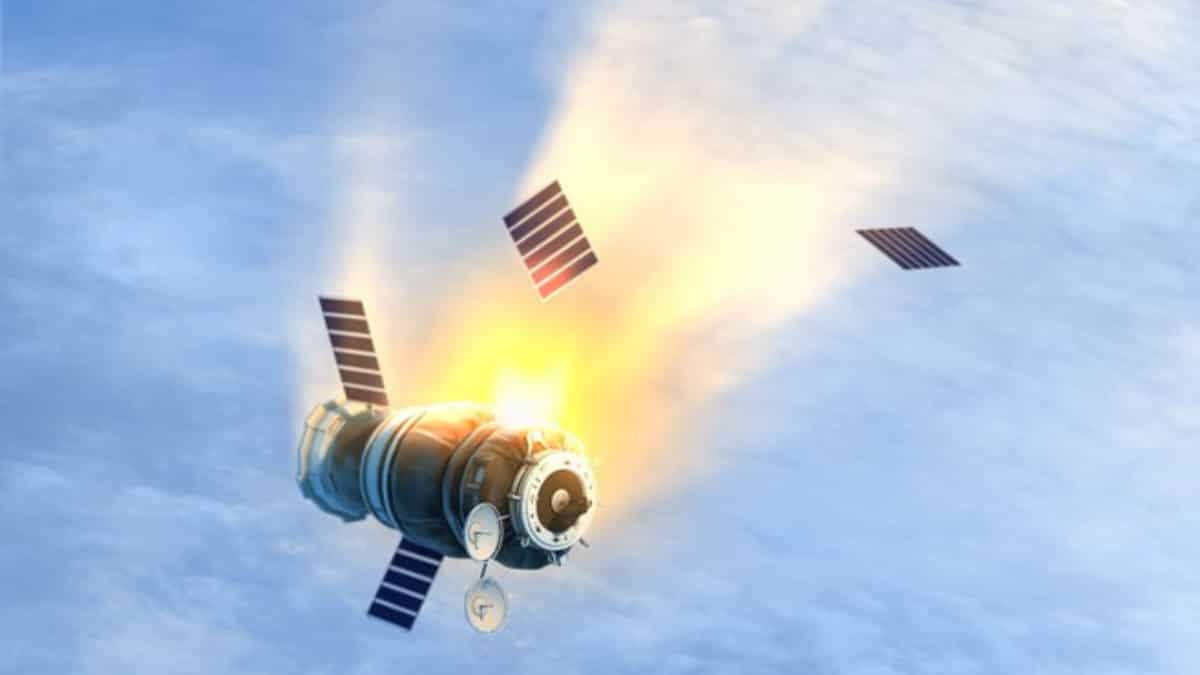
Image of European Space Agency's (ESA) satellite ERS-2 which fell uncontrollably to Earth
The European Space Agency has decided to crash a failed satellite, known as the European Remote Sensing 2 (ERS-2) satellite, back on Earth. However, the scientists are clueless about where exactly the satellite will fall.
In April 1995, the satellite was launched into low Earth orbit and its mission of observing our planet was finished in September 2011.
The satellite, along with its twin satellite ERS-1, collected valuable data from the land surfaces, oceans, and polar caps of the Earth.
This was also used for monitoring natural disasters like earthquakes or severe flooding in remote parts of the world.
Now, the tentative date and time of the ESA has been revealed, when it thinks the satellite will re-enter.
Based on the data, the ESA has calculated that the satellite will crash on the Earth at 5:26 pm ET on February 19. The ESA emphasised that the margin of error in the scientists' prediction is little more than 1.5 days – or plus or minus 38 hours.
This is mainly because of the solar activity's unpredictable influence "which affects the density of Earth’s atmosphere and therefore the drag experienced by the satellite," said the space agency.
Scientists started process of bringing back satellites in 2011
According to Live Science, the preparation for the end of ERS-2 started in the summer of 2011 when 66 reorbiting manoeuvres were performed by the ESA on it.
That process was aimed at using the remaining fuel of the satellite and decreasing its average altitude from 488 miles to nearly 356 miles. This helps decrease the satellite's risk of collision with space debris or other satellites.
The process also helps the orbit of the satellite deteriorate fast enough so that it can re-enter the atmosphere of Earth within 15 years.
Watch:India tests high-altitude pseudo-satellite vehicle HAPS | Boost to border surveillance
As per the ESA, the ERS-2 "was the most sophisticated Earth-observation spacecraft ever developed and launched by Europe."
When the satellite departed from Earth, it weighed only 5,547 pounds and now, without fuel, its weight is nearly 5,057 pounds.
Those manoeuvres "used up the satellite's remaining fuel and lowered its average altitude from 785 km [488 miles] to about 573 km [356 miles] to greatly reduce the risk of collision with other satellites or space debris and to ensure the satellite's orbit would decay fast enough for it to reenter Earth's atmosphere within the next 15 years," said ESA officials, in an FAQ regarding the reentry.
(With inputs from agencies)