

&imwidth=800&imheight=600&format=webp&quality=medium "Could brown bats hold the key to fighting human cancer? Scientists reveal shocking truth")
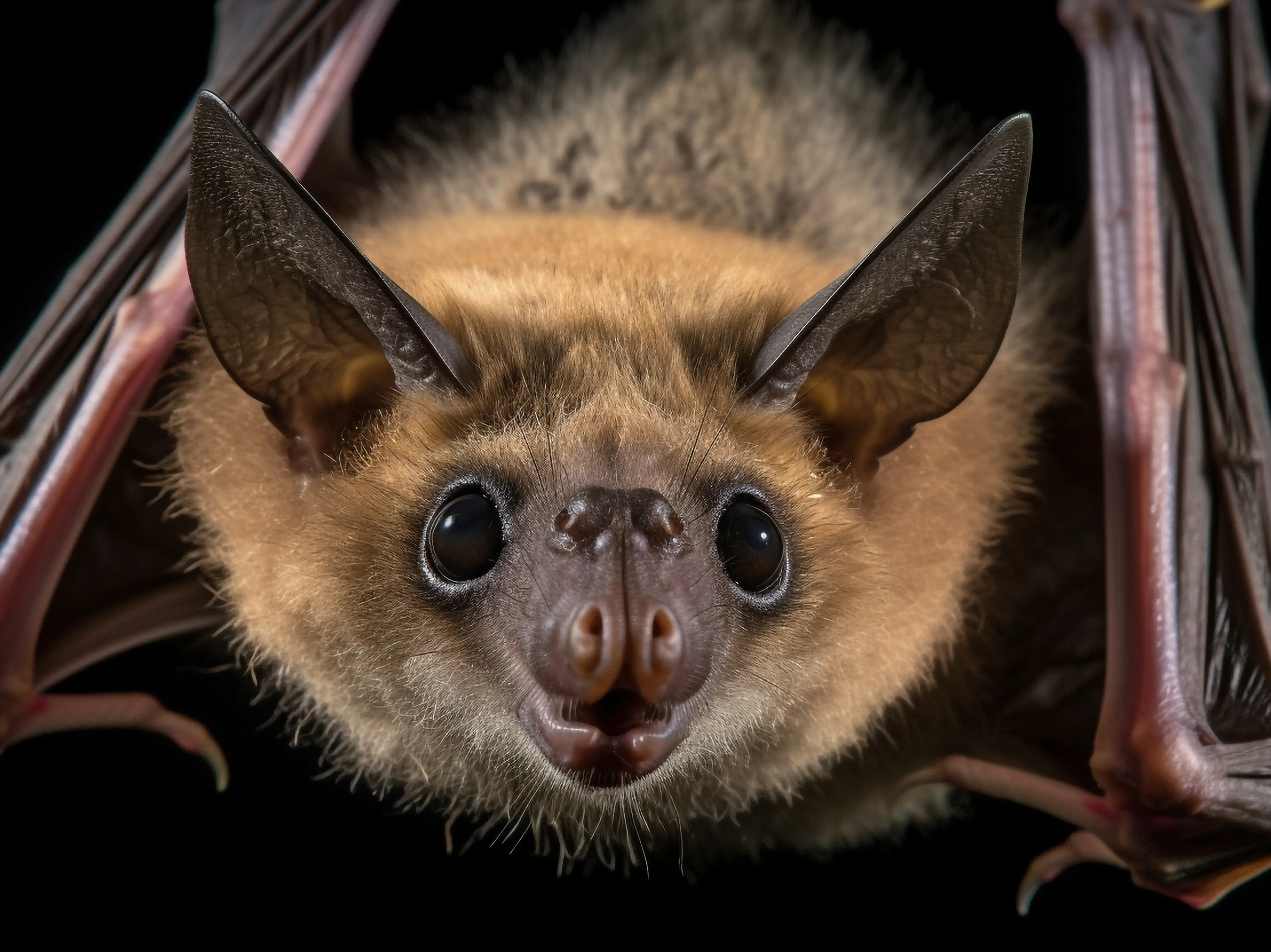
Researchers confirmed on Wednesday (August 26) that endangered little brown bats can adapt to cancer-causing cell damage in a unique pattern that could inform efforts to curb the disease that claims the lives of more than 600,000 Americans annually. The findings came after an experiment using tissue samples from the creatures disclosed that the interaction led to the genes that promoted cell death instead of DNA repair when the bats’ cells were tested against lethal chemicals.
“We found the literal opposite of what we expected if you treat the bats with a lethal dose of this chemical,” biologist Juan Manuel “Manny” Vazquez, an assistant professor at Penn State University and co-lead author of the related study, confirmed in a news release from the University of California, Berkeley.
“The longest-lived bat in North America decides ‘I can't save this ship’ and immediately switches gears to prioritise killing off the cells that are damaged. The elephant, another cancer-resistant species that is long-lived, has the exact same strategy: if you can't save the cell, kill the cell,” he continued. The University of Vermont confirmed that analysis of the bats’ DNA revealed another secret to their longevity and good immune function.
Multiple copies of immune gene
The scientists have found that the animals had multiple copies of an immune gene discovered in every mammal, known as “protein kinase r,” or PRK. Generally, Mammals have one copy of the gene, suggesting to Vazquez it could be responsible for protective effects. The study’s authors also assert that the findings could be applied to human research on longevity and disease.
“We can look at these bats and try to understand how, in the same way you can improve your immune system to fight off viruses, maybe you can improve your immune system so it doesn't decline in old age,” Vazquez said. “Or maybe bats can help us find ways to fight off tumours so our immune system doesn’t get tired, and that can also help us deal with other stresses of life and not exhaust our immunity.”
Trending Stories
&imwidth=180&imheight=135&format=webp&quality=medium)
1,500 drones illuminate Mumbai sky as Cordelia Cruises unveils second ship, Cordelia Sky
&imwidth=180&imheight=135&format=webp&quality=medium)
'Say no to Muse': Meta has no control over its own moderation AI while it forces a security nightmare on everyone
&imwidth=180&imheight=135&format=webp&quality=medium)
Delhi protest: CJI Surya Kant declines to meet India Bloc leaders
&imwidth=180&imheight=135&format=webp&quality=medium)
Top AI models flunked a test of inventing new AI research, so much for self-improving AI
&imwidth=180&imheight=135&format=webp&quality=medium)
'Ouch!!! That must hurt': Kangana Ranaut hails Kamal Haasan's sharp reply to Elon Musk over Starlink row
&imwidth=180&imheight=135&format=webp&quality=medium)
Delhi wakes up to heavy rain, thunderstorms; yellow alert in place; temperature drops
&imwidth=180&imheight=135&format=webp&quality=medium)
Prince Harry and Meghan Markle to spend Christmas away from royal family
&imwidth=180&imheight=135&format=webp&quality=medium)
Anthropic's AI invented a murder witness and sent the fake tip to Philadelphia police
&imwidth=180&imheight=135&format=webp&quality=medium)
UK school ditches technology, shifts from screen to pen and paper for learning
&imwidth=180&imheight=135&format=webp&quality=medium)
Meta's Muse AI could be a security nightmare for India's billion-plus users
&im=FitAndFill=(700,400)&imwidth=180&imheight=135&format=webp&quality=medium)
Is sending robots to Mars easier than sending humans?
&im=FitAndFill=(700,400)&imwidth=180&imheight=135&format=webp&quality=medium)
New OTT releases this week (October 12-18, 2026): Sacrifice, Koffee with Karan S9, Roadies Rebirth- 6 titles coming on Netflix, JioHotstar and more
&imwidth=180&imheight=135&format=webp&quality=medium)
Sidhu Moose Wala’s younger brother wins hearts by recreating late singer’s signature move at Toronto Hologram Show
&imwidth=180&imheight=135&format=webp&quality=medium)
Maharashtra appoints FDA commissioner Tukaram Mundhe as secretary of committee for MPSC overhaul amid stir
&im=FitAndFill=(700,400)&imwidth=180&imheight=135&format=webp&quality=medium)
Navratri 2026: 9 days, 9 forms of Goddess Durga and 9 colours- Check the complete list
&imwidth=180&imheight=135&format=webp&quality=medium)
McSweeney reveals how studying Virat Kohli’s YouTube clips helped Australia A conquer India
&imwidth=180&imheight=135&format=webp&quality=medium)
Portugal Federation confirms Cristiano Ronaldo’s return to national team despite suspension
&imwidth=180&imheight=135&format=webp&quality=medium)
iPhone Duo price index: Tracking Apple’s latest pricing trends
&imwidth=180&imheight=135&format=webp&quality=medium)
Wasim Jaffer blames Ajit Agarkar-led selection panel for Virat Kohli’s Test retirement
&imwidth=180&imheight=135&format=webp&quality=medium)
China imposes first-ever sanctions on ministers from Taiwan allies: What this means
&imwidth=180&imheight=135&format=webp&quality=medium)
Nana Patekar's cause of death confirmed; here's what his postmortem report says
&imwidth=180&imheight=135&format=webp&quality=medium)
Houthis claim Riyadh airport attacks, Aramco strikes; issue fresh warning to airlines, travellers and workers
&imwidth=180&imheight=135&format=webp&quality=medium)
Delhi protests: 'Court should not be dragged into political activity', says CJI Surya Kant
&imwidth=180&imheight=135&format=webp&quality=medium)
One Indian killed in Riyadh airport attack; 11 others injured : MEA
&imwidth=180&imheight=135&format=webp&quality=medium)
Telangana man allegedly recruited into Russian military dies near Ukraine border
&imwidth=180&imheight=135&format=webp&quality=medium)
'Turn approver, resign, we'll forgive you': Rahul Gandhi claims receiving messages from CEC Gyanesh Kumar
&imwidth=180&imheight=135&format=webp&quality=medium)
IND vs WI, 3rd T20I: Abhishek Sharma smashes 18-ball fifty, sets record for fastest to 2,000 T20I runs
&imwidth=180&imheight=135&format=webp&quality=medium)
Other Mommy leads North American box Office as Verity, Resident Evil round out top four
&imwidth=180&imheight=135&format=webp&quality=medium)
Microsoft's Nadella says treat every AI model as already hacked, and build an 'emergency brake'
&imwidth=180&imheight=135&format=webp&quality=medium)
Iran: US accepted some conditions, Clarity needed on others
&imwidth=180&imheight=135&format=webp&quality=medium)
A watchdog rated 'ChatGPT for Teens' an unacceptable risk and says keep under-18s off it
&imwidth=180&imheight=135&format=webp&quality=medium)
CJI Surya Kant declines INDIA bloc leaders’ request for meeting ahead of march to SC, asks them to file petition
&imwidth=180&imheight=135&format=webp&quality=medium)
'Just coincidence': Police mistakes protester as AISA chief Neha Bora, arrests her from site
Elise Lauterbur, an assistant professor of evolutionary biology at the University of Vermont and co-lead author of the study, explained, "Pathogen adaptation, longevity and cancer resistance- they are fundamentally linked.” That said, applying these adaptations to treat human disease remains a distant prospect.
So why study bats in the first place? For their size, they're remarkably long-lived among mammals, with some species surviving for decades. (Little brown bats face endangerment mainly due to white-nose syndrome, a lethal fungal disease.) Bats also lead highly active lives, flying nightly to hunt insects. Researchers suggest this level of fitness may contribute to stronger immune function and longer lifespan — a pattern also seen in humans.
“Bats have evolved this incredible fitness capacity, this incredible ability to deal with disease and this incredible ability to be able to prevent cancer,” Vazquez said. “That means that, by understanding how bats have evolved to do all these things that other mammals haven't, we can find completely new and unexpected ways of dealing with the normal things that cause human diseases.”

