Comet Nishimura is already visible to the naked eye. Here's where and when to watch

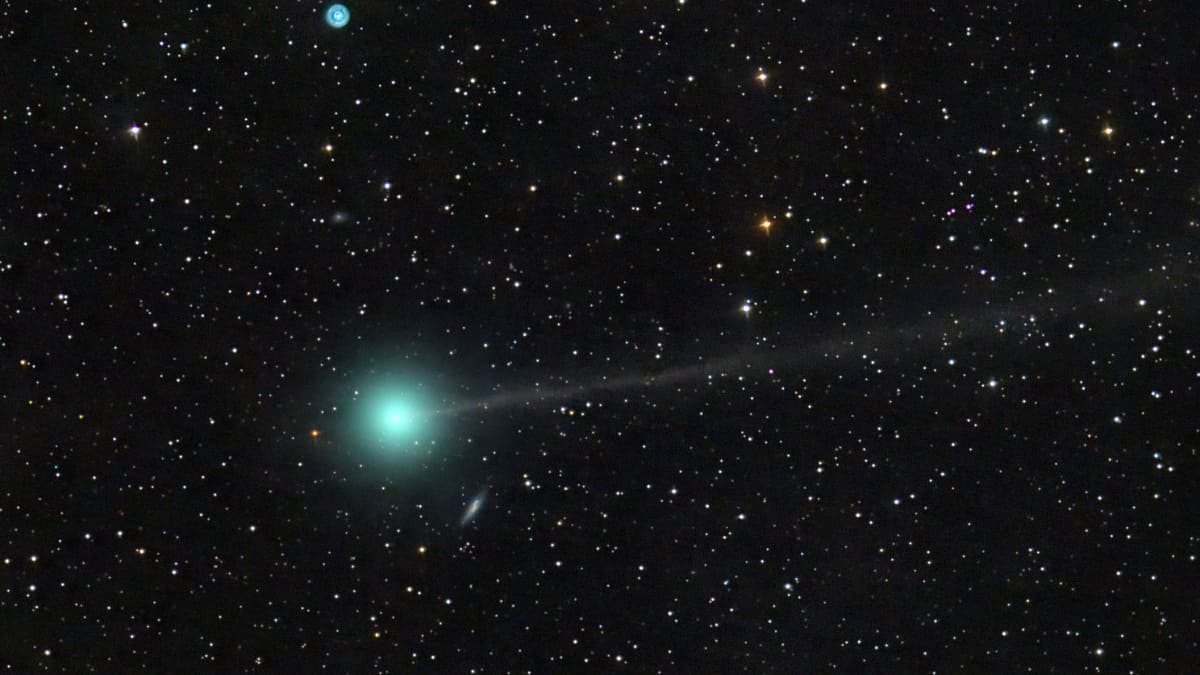
Comet Nishimura
Comet Nishimura can be viewed with the naked eye this month in what is being deemed a once-in-a-lifetime experience. Comet Nishimura, discovered just last August, will reach its closest approach to Earth on Tuesday, September 12, shortly before dawn.
Comet Nishimura is traveling at an astonishing speed of 386,000 km per hour. The comet is already visible without telescopes, Professor Brad Gibson, director of the E A Milne Centre for Astrophysics at the University of Hull in England confirmed.
Nishimura's visibility from Earth
Nishimura's current visibility window extends to the hour after sunset and the hour before dawn, requiring observers to gaze east-north-east, towards the crescent moon and Venus.
Professor Gibson spoke with the Evening Standard newspaper about the extraordinary nature of this event, as the comet's 500-year orbit contrasts with Earth's one-year orbit and the significantly longer orbits of outer planets of our solar system.
In comparison, the last noteworthy visit of Halley's Comet was in 1986, and it orbits the solar system every 76 years.
Also watch |Rare comet Neowise to be visible in India for next 20 days
Professor Gibson noted that Nishimura will be 78 million miles from Earth on September 12, providing the best opportunity to view it without a telescope. Such naked-eye comet sightings occur on average once a decade, making this event an exceptionaloccurrence in astrophysics.
About Nishimura comet
The comet is named after Japanese astrophotographer Hideo Nishimura, who discovered it while capturing long-exposure photographs on August 11, 2023.
It is set to make its closest approach to the sun on September 17, coming within 27 million miles of it. There is a concern that it may not survive this close encounter. Scientists are still estimating its size, which could range from a few hundred meters to potentially a mile or two in diameter.
Additionally, it is believed that the comet may be linked to an annual meteor shower known as the Sigma-Hydrids, occurring each December.
Professor Gibson told Evening Standard that these comets are remnants of ice and rock from the early formation of the solar system nearly five billion years ago.
As they approach the sun, the heat liberates icy gases, creating their distinctive tails.
These comets also release tiny particles of dust and rock when they pass near the sun, and every year, Earth intersects this debris, leading to meteor showers.
WATCH WION LIVE HERE
You can now write for wionews.com and be a part of the community. Share your stories and opinions with us here.