Cargo spacecraft SS Kalpana Chawla arrives at ISS

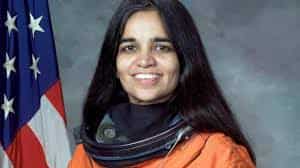
Kalpana Chawla
A commercial cargo spacecraft bound for the International Space Station (ISS) -- carrying the name of deceased NASA astronaut Kalpana Chawla -- arrived at the International Space Station for ‘rendezvous and capture’ on October 5.
Kalpana Chawla, the first Indian-born woman to enter space, has had the spacecraft named after her for her key contributions to human spaceflight.
The SS Kalpana Chawla, a Northrop Grumman Cygnus, was launched from the Mid-Atlantic Regional Spaceport (MARS) at NASA's Wallops Flight Facility in Virginia at 09:38 pm EDT.
On the NG-14 mission, the SS Kalpana Chawla will deliver approximately 3,630 kilograms of cargo to the station.
Research flying aboard the Cygnus includes the test of a biologic drug that could be used for the treatment of leukemia, a plant growth study that will cultivate radishes as a model for future crops in space, a compact toilet for astronauts to use on deep-space exploration missions and a 360-degree virtual reality camera that will be used to film during a spacewalk for an immersive cinematic production.
Northrop Grumman, an American global aerospace and defence technology company said that this mission is named after Chawla in memory of the mission specialist who died with her six crewmates aboard the space shuttle Columbia in 2003 Northrop Grumman stated that it is proud to celebrate the life of Kalpana Chawla and her dream of flying through the air and in space.
"It is the company's tradition to name each Cygnus after an individual who has played a pivotal role in human spaceflight," said Northrop Grumman.
Born in Haryana, India, Chawla moved to the United States to earn her master's and doctorate degrees in aerospace engineering from the University of Texas in 1984 and the University of Colorado in 1988, respectively.
She then began her career at NASA, conducting research in fluid dynamics at the Ames Research Center in California.
After becoming a naturalised US citizen, Chawla applied for and became a NASA astronaut as a member of "The Flying Escargot," NASA's 15th class of trainees. In 1997, she launched on STS-87, a 15-day shuttle mission that was dedicated to the science flying as part of the fourth United States Microgravity Payload (USMP-4).
Chawla's second spaceflight, STS-107, came to a tragic end on February 1, 2003, following 16 days of conducting science onboard the space shuttle Columbia. A small piece of foam that struck the orbiter's left wing during launch created a hole that went undetected during the mission.
Upon Columbia's return to Earth, hot plasma entered the wing, tearing it apart, and the resulting loss of control led to the vehicle disintegrating and the death of the crew.