Breakthrough black hole map reveals vast expanse of universe

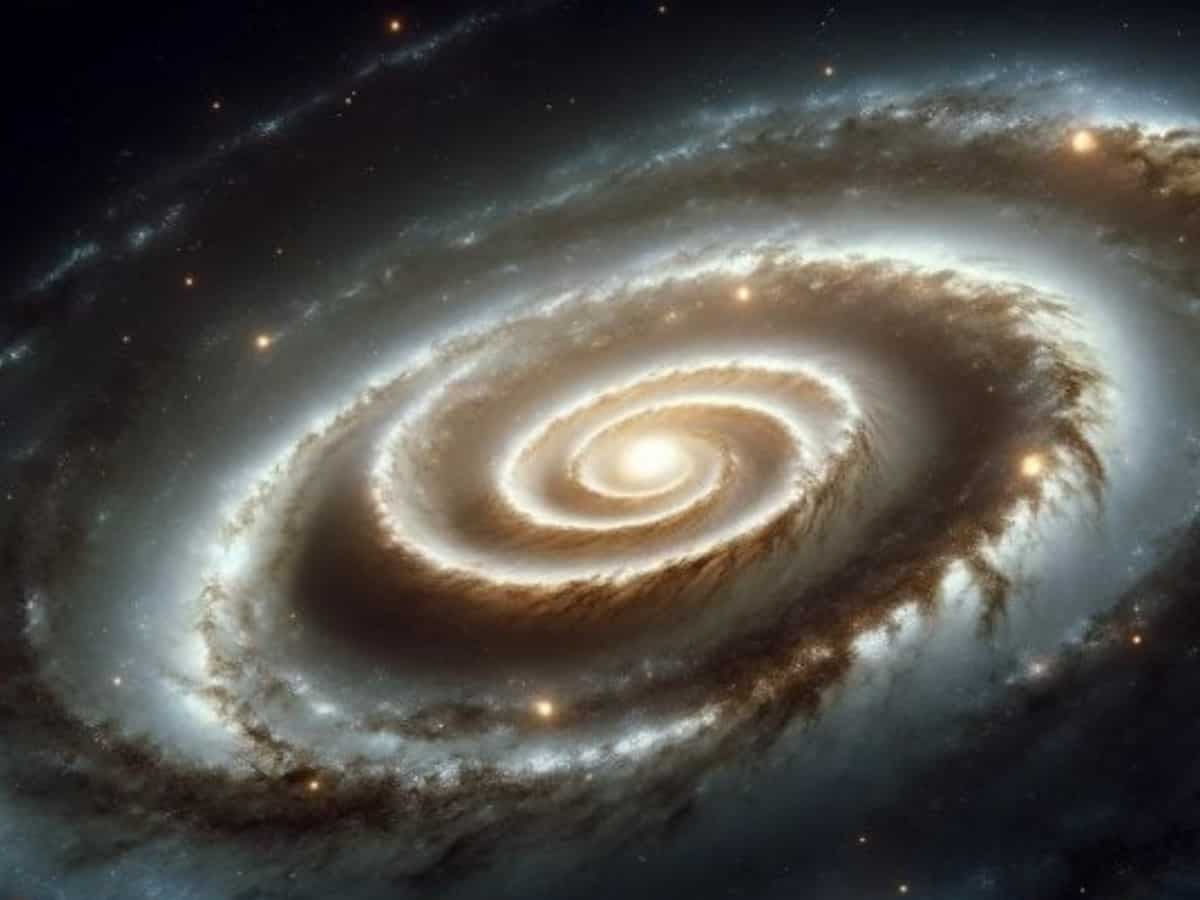
Spiral galaxy (Representative image)
Scientists have unveiled a remarkable map detailing approximately 1.3 million active supermassive black holes in three-dimensional space, offering an unprecedented glimpse into the "largest-ever volume of the universe."
Led by researchers at New York University in the US, this monumental achievement promises to revolutionise our understanding of the cosmos.
At the heart of galaxies, these supermassive black holes wield immense gravitational influence, voraciously consuming nearby gas and material. This cosmic feeding frenzy gives rise to luminous disks known as quasars and dazzling jets of light, observable by telescopes from afar.
Also Read |Is Vaping better than smoking? Study links e-cigarettes to cancer, changes to DNA as smokers
"We were able to make measurements of how matter clusters together in the early universe that are as precise as some of those from major international survey projects," remarked lead author Kate Storey-Fisher from the Department of Physics at New York University. It is "quite remarkable given that we got our data as a 'bonus' from the Milky Way-focused Gaia project,"Storey-Fisher added.
European Space Agency's Gaia space telescope, originally designed to map stars within the Milky Way, inadvertently captured data on objects beyond our galaxy's bounds, including quasars and distant galaxies.
Leveraging this unexpected treasure trove, scientists meticulously crafted a comprehensive catalogue of quasars, shedding light on the mysterious distribution of dark matter throughout the cosmos.
By comparing the quasar map with ancient light from the universe, scientists can discern the extent of matter's clustering, unveiling pivotal insights into cosmic evolution.
Using data from Gaia's third release, supplemented by NASA's Wide-Field Infrared Survey Explorer and the Sloan Digital Sky Survey, the team meticulously curated a precise map, expunging contaminants and pinpointing quasar distances with unprecedented accuracy.
Watch |Scientists claim they successfully eliminated HIV from infected cells
Moreover, the quasar map is proving to be an invaluable resource for astronomers worldwide, catalysing a wave of new discoveries and inquiries. By tracing the evolution of distant quasars and their host galaxies, researchers aim to unravel the cosmic narrative spanning billions of years.
(With inputs from agencies)