Artemis II can help India boost its own space sector, experts say

&imwidth=600&imheight=450&format=webp&quality=medium "Artemis II can help India boost its own space sector, experts say")
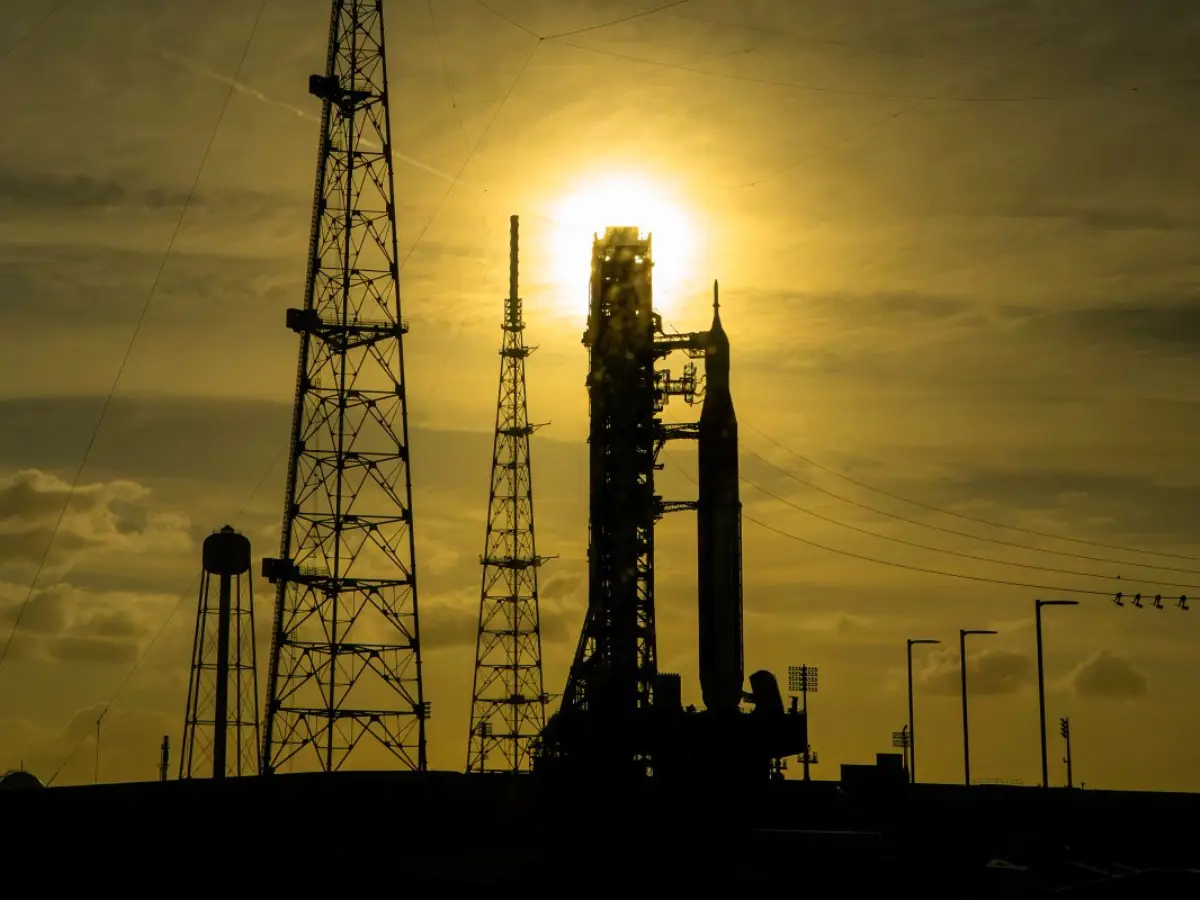
Artemis II can help India boost its space sector. Photograph: (AFP)
The Artemis II mission could help India grow its space sector and work on new systems that can work for future moon programs. India is a signatory to the Artemis Accords and this lets it work in collaboration with other countries.
NASA’s Artemis II could greatly benefit India, according to experts. Even though India is not directly involved in the moon mission, it is part of the Artemis Accords, a framework with a list of principles for lunar exploration, including cooperation, interoperability and data sharing. Kaushik Ray, a veteran defence and space expert, told SCMP that since India is a signatory to the Artemis Accords, the success of Artemis II “strengthens a framework in which India is now a stakeholder.” India can use this position to access the Artemis framework and develop systems compatible with global lunar infrastructure. This means it would not have to work on them entirely on its own and would have the support of NASA and other signatories. The Indian Space Research Organisation (ISRO) is making great strides in the field of space exploration. In 2023, Chandrayaan-3 became the world’s first to achieve a soft landing near the lunar south pole. ISRO is now aiming to launch its first crewed space flight programme, called Gaganyaan. Under it, Indian astronauts will be launched into a 400-km low-earth orbit for a three-day mission. It is currently scheduled for 2027.
Also Read: 'Not out of light...': NASA shares video compilation of far side of the Moon, riddled with pockmarks
India's future space missions
Ray said that “the experience and data” gathered by the Artemis II mission will prove “highly relevant for India’s Chandrayaan and Gaganyaan programmes”. Besides, it would also immensely help “ISRO’s future ambitions in long-duration human space flight.” Its position will allow it to enter “collaborative missions, shared research, and participation in lunar exploration initiatives”, he added. Chandrayaan-4 is also in the works, which aims to gather samples from the lunar surface and return them to Earth around 2028. ISRO is also working with the Japan Aerospace Exploration Agency on LUPEX, a joint project to explore the Moon’s South Pole.
After the Indian space sector was opened to private companies in 2023, it is projected to expand to a whopping US$44 billion annually by 2033, a fivefold increase from current figures, according to a joint report released by the Federation of Indian Chambers of Commerce and Industry. ISRO has a budget of US$1.6 billion for the 2026-2027 financial year. But the private sector could add immensely to its potential. The Indian National Space Promotion and Authorisation Centre was formed in 2020, and today the country has more than 400 space startups focusing on satellite manufacturing to launch vehicles.

