'World's loneliest' plant needs a partner, and AI is on duty to find one

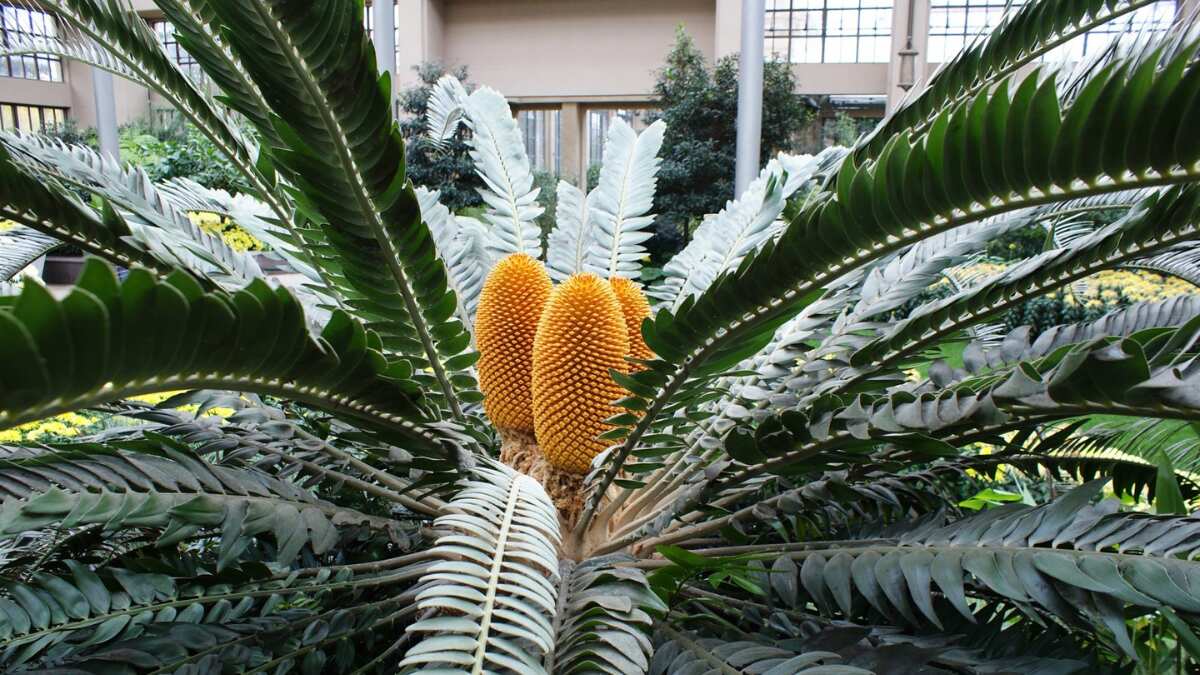
E. woodii
Artificial intelligence (AI) is being used to search a female partner for an endangered male plant, known as the ‘world's loneliest plant’,
E. woodii is a member of the cycads, the oldest existing seed-bearing planton Earth – they even pre-date the dinosaurs.
This species is sadly extinct in the wild, with the last one found in Ngoye Forest, South Africa.
However, it is managed not to go completely extinct because of continued propagation in botanical gardens.
Scientists are willing to build up the population again through natural reproduction, but the problem they are facing is that no one’s ever found a female plant.
A team of researchers have taken to search the Ngoye Forest, which has never been completely explored before, in order to find a female partner.
Despite the drone's advanced multispectral camera, searching the vast 10,000-acre forest remains a daunting task. A recent survey of only 195 acres yielded a staggering 15,780 images, hinting at the immense amount of data to be processed.
That’s a lot of pictures to go through, so the team has been analysing them with the help of AI.
“With AI, we are using an image recognition algorithm in order to recognise plants by shape,” explained Dr Laura Cinti, who is leading the project.
“We have generated images of plants and put them in different ecological settings, to train the model to recognise them,” she added.
A female plant hasn'tbeen found yet, although less than two percent of the forest has been searched – researchers are currently exploring the possibility of changing the sex of a male plant.
“There have been reports of sex change in other cycad species due to sudden environmental changes such as temperature, so we are hopeful we can induce sex change in the E. woodii too,” said Dr Cinti.
“I was very inspired by the story of the E. woodii, it mirrors a classic tale of unrequited love,
“I’m confident there is a female out there somewhere, after all there must have been at one time. It would be wonderful to bring this plant so close to extinction back through natural reproduction,” Dr Cinti added.
(With inputs from agencies)