
&imwidth=800&imheight=600&format=webp&quality=medium "The politics of fear: Trump, Netanyahu and the election-time power of crisis | The Verdict")
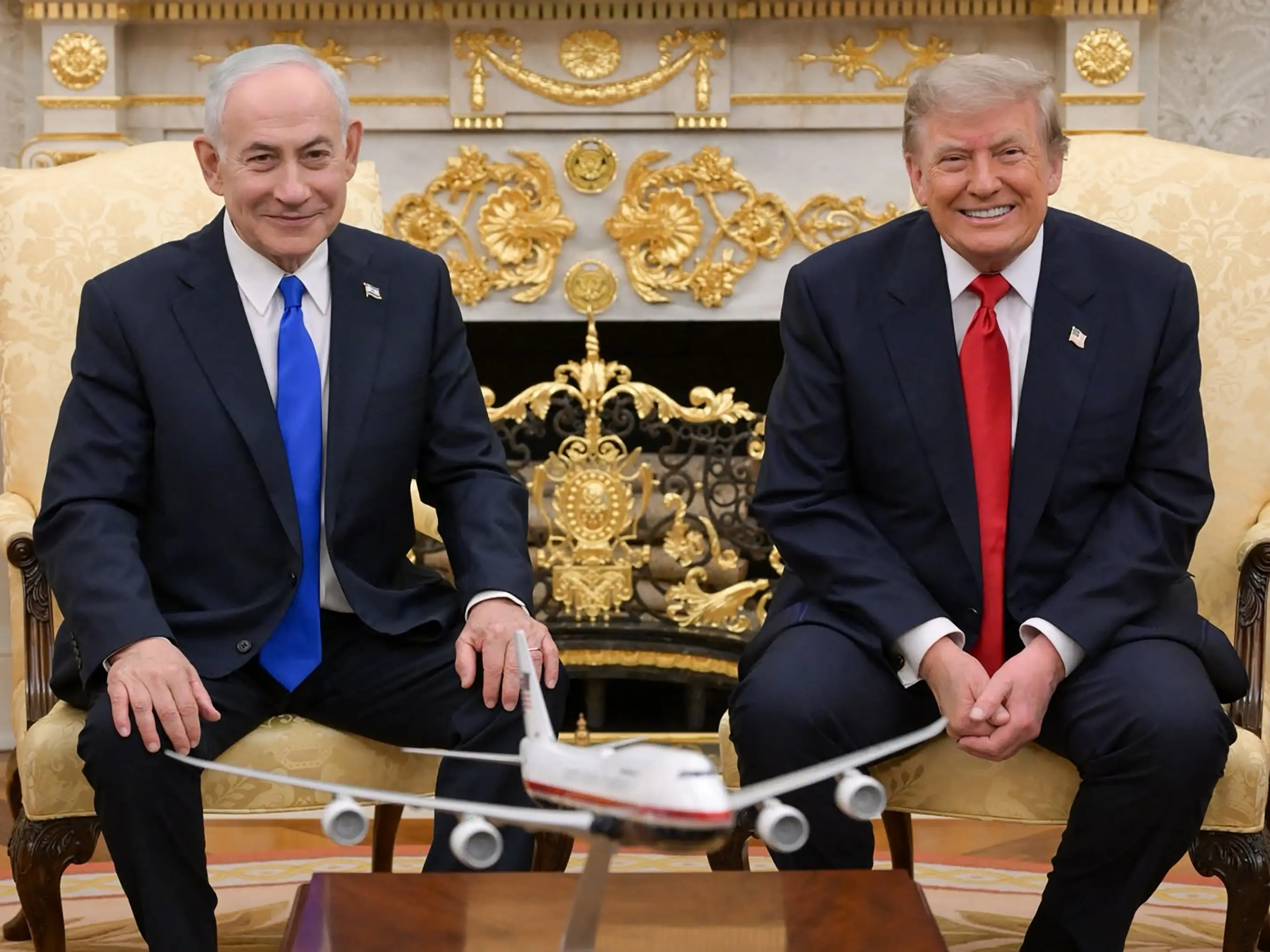
Donald Trump says the midterms do not dictate his decisions. Benjamin Netanyahu insists Israel faces genuine security threats as his country approaches an election.
Both propositions may be tested very soon.
The United States votes in its midterm elections on November 3, while Israelis head to the polls on October 27. The political circumstances are different, but both leaders are confronting an uncomfortable reality: elections approaching amid significant domestic pressure.
For Trump, the warning lights are increasingly economic.
An AP-NORC poll published October 1 found 65% of American adults saying unusually high prices were the result of Trump's policies. More strikingly, 52% of Republicans said his handling of the cost of living had been worse than they expected.
Trump acknowledged this week that he had done a “very bad job” communicating what he considers a strong economic record. Republicans, meanwhile, are fighting increasingly competitive races, and Trump and Vice-President JD Vance have begun an intensive campaign push, including in territory that ordinarily should be comfortable for the GOP.
That creates a contradiction.
Trump has repeatedly projected indifference towards electoral pressure. Yet the Republican political machine is behaving like an organisation acutely aware of it.
Trump-linked political groups are spending heavily. The president is campaigning aggressively. Republican officials are publicly stressing turnout and money.
Perhaps the midterms do matter after all.
Netanyahu and the politics of security
Thousands of kilometres away, Benjamin Netanyahu is confronting another electoral test.
Israel votes on October 27, and Netanyahu is again presenting himself as the leader best equipped to protect the country. Reuters described it as a familiar electoral strategy: Netanyahu projecting himself as Israel's indispensable security guardian even as the failures surrounding the October 7, 2023 Hamas attack remain central to the political debate.
Then came Flydubai flight FZ1073.
According to Israeli officials, a co-pilot stabbed the captain and attempted to crash the Dubai-to-Tel Aviv aircraft. Passengers and crew intervened before the aircraft was eventually landed safely in Saudi Arabia.
It was an extraordinary and frightening incident.
It also demands extraordinary caution.
The motive remains under investigation. Flydubai has explicitly urged against premature speculation. Netanyahu himself subsequently acknowledged that it was too early to determine who ultimately stood behind the incident.

Yet Netanyahu went on American television and raised questions about possible accomplices and whether Iran might have been involved. No evidence establishing Iranian involvement had been made public at the time.
That matters because only a day earlier Netanyahu had warned that Israel's enemies could attempt attacks ahead of the election.
Opposition leader Yair Lapid subsequently said that nothing resembling the Flydubai incident had been mentioned during the security briefing he received from Netanyahu the previous evening. Netanyahu's allies, however, argued that the incident demonstrated why his warnings should have been taken seriously.
That disagreement deserves scrutiny rather than assumption.
When crisis meets an election
There is no evidence that either Trump or Netanyahu manufactured these crises.
That is not the point.
The more important democratic question is what politicians do with crises once they arrive.
Every government has an obligation to protect its citizens. Every leader has the right to defend a security policy and every president has the right to campaign for his party.
But the line between informing citizens and politically exploiting their anxieties becomes especially important during an election.
Netanyahu's critics accuse him of using security warnings to reinforce his longstanding image as Israel's protector. His supporters argue that the threats Israel faces are real and that dismissing his warnings would itself be irresponsible.
Trump faces a different problem: voters worried about affordability, the economy and an overseas conflict while Republicans fight to retain congressional power.
Different countries. Different crises. Different political systems.
But one common temptation.
When domestic questions become uncomfortable, external danger can become politically powerful.
Fear simplifies politics.
It turns economic arguments into security arguments. It can transform criticism into questions of loyalty. And it can encourage voters to ask not “Are you better off?” but “Who will protect you?”
That is precisely why leaders must be challenged most rigorously when an election and a security crisis collide.
Investigate the Flydubai incident. Establish the motive. Determine whether accomplices existed. Follow the evidence wherever it leads.
But do not allow speculation to outrun evidence simply because an election is approaching.
And in America, Republicans ultimately must answer voters on prices, policy and performance — not merely personality, rallies or campaign spectacle.
Democracy works best when citizens vote on records rather than anxieties.
Because fear may be one of politics' oldest campaign tools.
That does not mean voters have to surrender to it.