
&imwidth=800&imheight=600&format=webp&quality=medium "Union Budget 2026: Three ‘Kartavyas’ drive Sunrise Industries and Energy Security – 5 must-know takeaways")
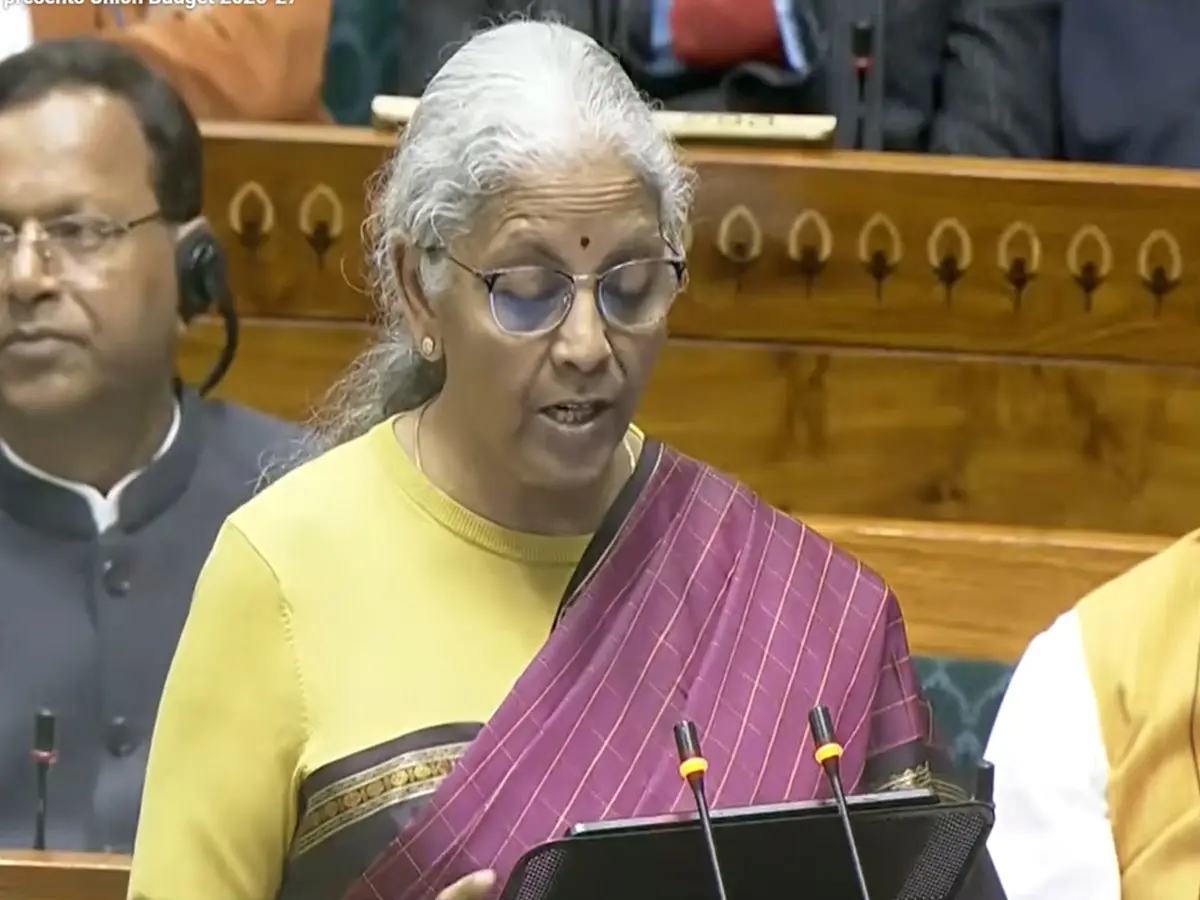
Delhi looked cloudy with chilling winds rattling around, but Sunday appeared warm when Finance Minister Nirmala Sitharaman presented her ninth consecutive Union Budget 2026 and brought blazing sunshine for “Sunrise Sectors”—rapidly growing technology-driven industries expected to elevate India to a USD 30 trillion economy, and set to add much-needed spin to PM Modi's Viksit Bharat mission. Renewable energy is a premier "Sunrise Sector" in India, characterized by high growth potential with rapid innovation. The Union Budget 2026 has rolled out strong backing to achieve 500 GW of non-fossil capacity by 2030. Wearing a handwoven Kancheepuram Silk Sari, honouring Tamil Nadu's age-old weaving legacy as well as underlining the significance of Kanyakumari Nuclear project advances, the Finance Minister has provided substantial allocations for the power and renewable energy sector, including continued support for coal-based generation alongside renewables, hydro and pumped storage, to balance energy security, grid stability and the clean energy transition, aiming at "Make in India" in the clean-tech sector, and reduce reliance on fossil fuels.
The Union Budget 2026, presented amid global economic uncertainties, lays out a clear roadmap for India's growth, with a sharp focus on the energy sector as a driver of progress. Here are five major key takeaways that underline how the budget supports economic resilience, green initiatives and national self-reliance.

- Three Kartavyas to Drive Economic Momentum: In her speech, Finance Minister Nirmala Sitharaman outlined three key Kartavyas to boost the economy, marking the first budget prepared at the Kartavya Bhavan. The first Kartavya aims to accelerate and sustain economic growth by enhancing productivity and competitiveness while building resilience against volatile global dynamics. The second Kartavya focuses on fulfilling the aspirations of people and building their capacity, making them strong partners in India's path to prosperity and Viksit Bharat. The third Kartavya aligns with PM Modi's vision of 'Sabka Saath Sabka Vikas', ensuring inclusive development. Across these priorities, the power and energy sector emerges as a pivotal force, enabling Aatmanirbhar Bharat and positioning India as a leader in the global supply chain. The budget aggressively advances the technology sector by launching India Semiconductor Mission (ISM) 2.0 with a Rs 40,000 crore outlay. This next phase shifts emphasis to end-to-end semiconductor manufacturing, including equipment and materials production, full-stack Indian intellectual property design, and fortified supply chains. It also integrates AI in public services and builds a skilled workforce through industry-led research and training centres, aiming to establish India as a global tech hub and reduce import dependence in critical electronics.
- Strong Push for Energy Transition and Security On energy transition and security, the budget extends the basic customs duty exemption for capital goods used in batteries and battery energy storage systems. The Finance Minister also proposed an outlay of Rs 20,000 crore over the next five years for Carbon Capture Utilization and Storage (CCUS) technologies to scale up and achieve higher readiness levels in end-use applications across five sectors, including power. This move will aid India's green and renewable energy mission by cutting emissions from hard-to-abate industries, promoting cleaner power generation and supporting the shift to low-carbon pathways. By investing in CCUS, the government aims to enhance energy efficiency, lower dependence on imported fuels and meet climate goals, paving the way for sustainable industrial growth.
- Long-Term Relief for Nuclear Power Projects: The budget extends the basic customs duty exemption on imports of goods required for nuclear power projects until 2035, covering all plants regardless of capacity. This step will bolster India's green energy mission and net-zero ambitions by providing policy stability, reducing project costs and encouraging investments in nuclear capacity. Nuclear power, as a clean and reliable source, will help diversify the energy mix, cut carbon emissions and ensure round-the-clock power supply, aligning with the 500 GW non-fossil target by 2030 and the broader goal of net-zero by 2070.
- Incentive for Biogas-Blended Fuels: Another key measure excludes the entire value of biogas while calculating the Central Excise duty payable on biogas-blended CNG. This incentive will aid India's green energy transition by making blended fuels more affordable, encouraging wider adoption in transport and industry. By promoting biogas blending, the budget supports waste-to-energy initiatives, reduces methane emissions from organic waste and cuts reliance on fossil fuels, contributing to cleaner air, rural job creation and a circular economy.
- Robust Support for Renewable and Green Energy Growth: The government has rolled out robust policies for green energy, with the renewable sector expanding from 76 GW in 2014 to over 250 GW by 2025. India now ranks fourth globally in wind, solar and overall renewable capacity, overtaking Japan as the world’s third-largest solar producer. Investments reached Rs 2 lakh crore in 2025 alone, and the renewable energy share in power generation is set to climb from 18 per cent in 2022 to 44 per cent by 2030. The Union Budget 2026-27 prioritizes green energy as a core area, with the Ministry of New and Renewable Energy's allocation rising significantly to Rs 265.49 billion. Emphasis remains on solar through schemes like PM Surya Ghar Muft Bijli Yojana and PM-KUSUM, alongside nuclear energy expansion, the SHANTI Bill for safe atomic integration and boosts to green manufacturing.
In essence, the Union Budget 2026 strikes a fine balance between immediate economic needs and long-term sustainability, with the energy sector at its heart. By backing renewables, nuclear and clean technologies, it not only drives growth but also cements India's role in the global fight against climate change. As the nation marches towards Viksit Bharat, these measures promise a brighter, greener future for all and signify India’s premier climate momentum of One Sun, One World and One Grid.