Coronavirus crisis: A lot needs to be done for the migrant labour

Pressure from within
COVID 19 has brought the problem of migrant labour in the public domain very forcefully for the first time in seventy years of India’s independence. Migrant labour includes people working in the informal structure of economy like cleaners, maids, drivers, construction workers security guards, garbage collectors, rickshaw pullers, pressers etc. They come to metro cities like Delhi, Mumbai, Chennai and Kolkata to earn their livelihood.
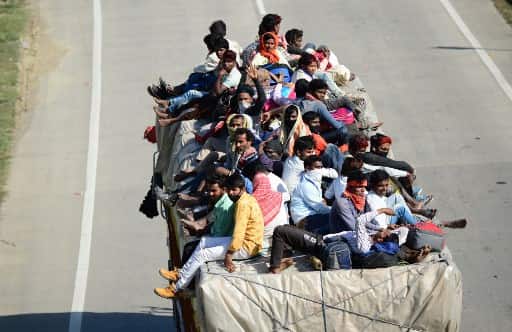
The problem of the formal domestic migrant labour has been a subject matter of development and policy planning and has been discussed at various governmental and nongovernmental platforms, however, the outpouring of migrant labour on the street and its visual representation throughout the digital and electronic media has exposed the dilemma of India new liberal economy which has been pursued since 1991.
The announcement of lockdown, to break down the infection cycle of COVID-19, did not take into consideration the problem of the labour force of the unorganised sector.
This was coincided by the sudden mobilisation of thousands of migrant labourers in almost all metropolis and megacities which caught the government totally unprepared.
The scene was certainly heart wrenching and many analysts and economists drew the attention of the government for a more compassionate role to address the problem of poor in the country.
However, from my point of view, the issue is not one of compassion, but it is of right, equity, justice in general and distributive justice in particular.
Analysts have pointed out that the government and civil society send direct money along with providing food materials, however, the basic question here is –why the government has asked everybody to stay at home, the same has been denied to the migrant labours. This explains why the migrant labourers were not looking for any government or civil society support but the right to free movement to reach their homes in villages and small towns by railways, trucks, buses or any other available means of transportation. For migrant labour, only home in villages or small towns can provide a place or space for successful social distancing or quarantine rather cramped room in a city where they live together in dozens.
This reality of Indian politics, economy and governance exposes the uneven, unequal process of development in the country.
Though the government has come out with a number of relief packages which together amounts to $23 billion economic stimulus plan that provides direct cash transfers and food security measures to help the poor to deal with this Pandemic. The government also aims to distribute 5 kilograms of wheat or rice for each person free of cost, with a kilogram of pulses for every low-income family, helping to feed about 800 million poor people over the next three months. The government also has announced to hand out free cooking-gas cylinders to 83 million poor families, a one-time cash transfer of $13.31 to 30 million senior citizens and $6.65 a month to about 200 million poor women for next three months.
However, for a country that is aspiring to become a global power, it is important that its governing elite must pay attention to reduce the soaring income inequality and strengthen the health infrastructure in the country.
(Disclaimer: The opinions expressed above are the personal views of the author and do not reflect the views of ZMCL)