Citizenship Amendment Act (CAA) and Hobbesian dystopia

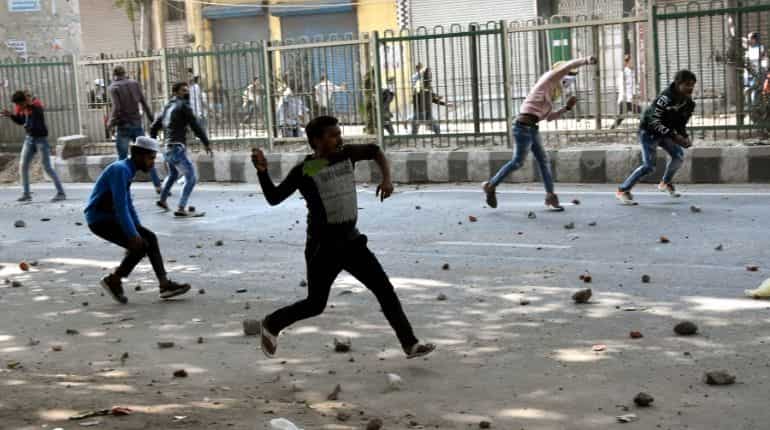
CAA protests in Delhi
The violence in Delhi in the garb of protest against Citizenship Amendment Act (CAA) reminds one of Thomas Hobbes a 17th-century philosopher who had analysed that society has a drive towards chaos and destruction.
However, many studies and analysis on crowd behaviour state that whenever people indulge in rioting, their collective behaviour is never mindless. It may often be criminal, but it is structured and coherent with meaning and conscious intent. To address the causes of such violence, we need to understand that there are actually important boundaries and limits that the crowd behaviour works on during riots which not only relate to what to do and what not, but also on who is going to be the target of such violence to leave a maximum impact.
Research and ‘Modern Crowd Theory’ suggest that these behavioural limits of crowd action relate in important ways to the limits of social identification.
Since the day the protest against Citizenship Amendment Act started at Shaheen Bagh there was extreme anger and hatred exhibited against the Central government. The announcements and the atmosphere at Shaheen Bagh was brimming with vitriolic comments against Prime Minister Narendra Modi, Home Minister Amit Shag and the Act. The Delhi Police being the force of central government was wrongly seen as an oppressor, hence, the force was the first to be challenged by protesters at Shaheen Bagh and later by mobs in the North-East Delhi.
It was the domino effect of 73 days of protests. The continuous verbal violence through inflammatory provocative speeches were enough to disturb communal harmony.
It has been observed in various studies on riots that 'Behavioural Contagion'also play a role in which the rioters are not seen as or behaving mindlessly, rather a 'group mind'works for them. According to this line of thinking, the behaviour is spread via a process of 'contagion', transmitted automatically from one person to another.
Throwing stones at cops become normative and widespread – 'a few bricks and stone went and then people closed the road and everybody starts doing it'.
Delhi police which was on the streets to control the violent mob, equipped with protective gear and only lathis, became the first target. The first day of violence saw the deputy commissioner of police being injured. There were several incidents where cops were surrounded, beaten and shot at by the rioters. Efforts were made to even kill them and their vehicles were also not spared. Acid was also thrown on the paramilitary forces.
Even firefighters were not spared and they got injured due to stone-pelting while five fire tenders were damaged, according to the official reports.
And after almost 72 hours of unrest that killed more than three dozen people and injured over 200, Delhi Police filed 18 FIRs and have arrested more than 100 persons in connection with the violence.
Normalcy seems to be returning with the deployment of 45 companies of paramilitary forces to contain violence and restore law and order situation.
The situation must be contained before it becomes Hobbesian Dystopia, where pre-emptive strikes occur between two communities due to an imaginative state of injustice.
(Disclaimer: The opinions expressed above are the personal views of the author and do not reflect the views of ZMCL)