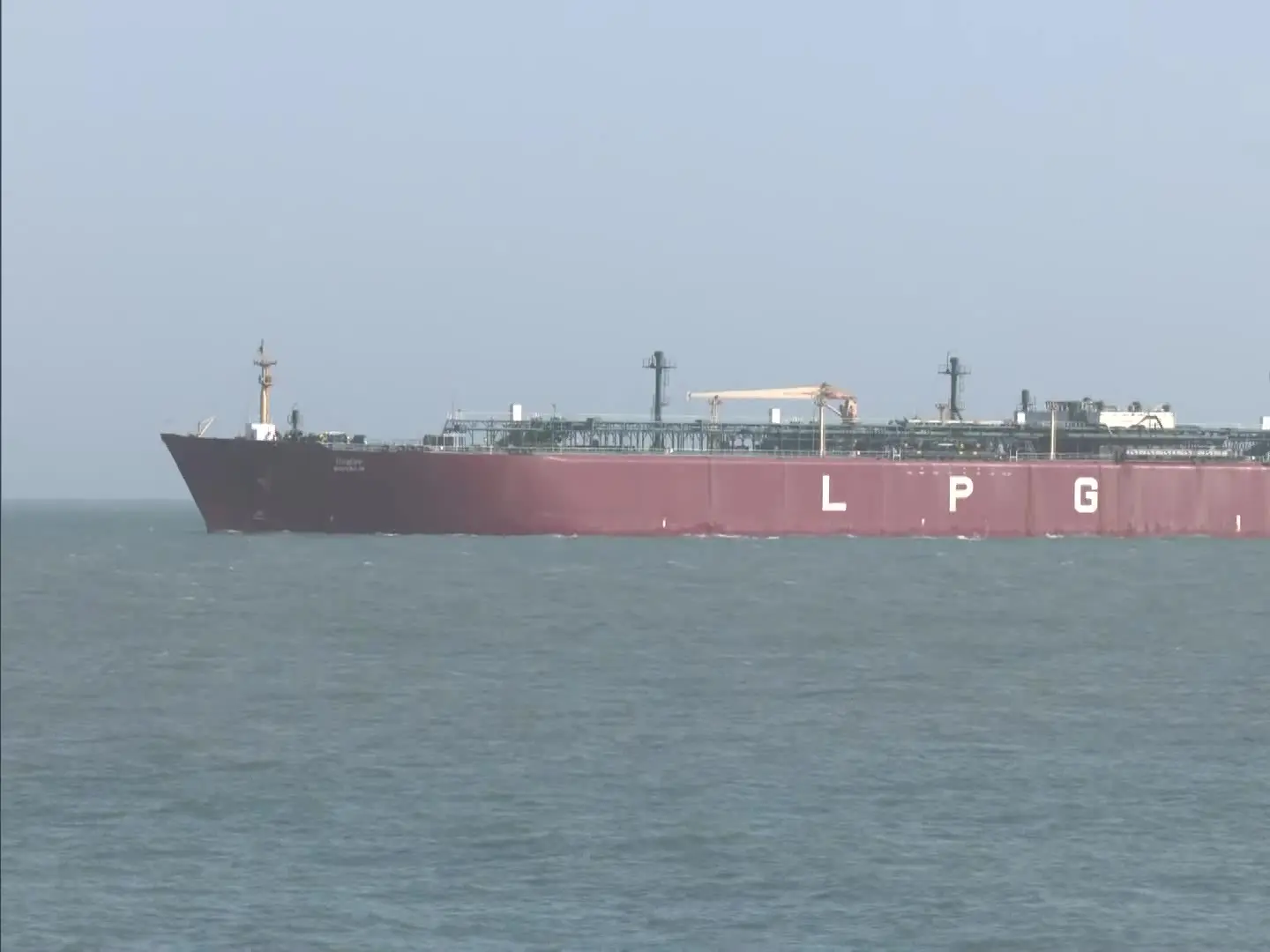
WATCH | Indian LPG tanker Shivalik arrives at Mundra Port after safe transit via Strait of Hormuz

&imwidth=600&imheight=450&format=webp&quality=medium "WATCH | Indian LPG tanker Shivalik arrives at Mundra Port after safe transit via Strait of Hormuz")
LPG tanker Shivalik, which crossed the Strait of Hormuz, arrives at the Mundra Port Photograph: (X (@ani))
Indian LPG tanker Shivalik arrived at Mundra after safely crossing the Strait of Hormuz, as India engages Iran to ensure energy supply routes remain open
The Liquefied Petroleum Gas (LPG) tanker Shivalik arrived at Mundra port in Gujarat on Monday (March 16) after safely crossing the Strait of Hormuz, amid ongoing tensions in West Asia. Two Indian-flagged LPG carriers, Shivalik and Nanda Devi, were granted transit through the strategic waterway by Iranian authorities. While Shivalik has reached Mundra, Nanda Devi is expected to arrive at Kandla port on March 17. Earlier, Rajesh Kumar Sinha, Special Secretary in the Shipping Ministry, had confirmed the vessels’ movement and the safety of Indian seafarers in the region.
“All Indian seafarers in the Persian Gulf region are safe, and no untoward incidents involving them have been reported over the last 24 hours. There were 24 Indian-flagged vessels in the Persian Gulf, situated to the west of the Strait of Hormuz. Among these, two vessels, the Shivalik and the Nanda Devi, are Indian-flagged vessels, both LPG carriers. They safely transited the Strait of Hormuz late last night/early this morning and are now proceeding towards India. These vessels are carrying approximately 92,700 metric tons of LPG; their ports of arrival will be Mundra and Kandla, with expected arrival dates of March 16 and March 17, respectively. Consequently, there are now 22 Indian-flagged vessels remaining in the Persian Gulf, carrying a total of 611 seafarers,” the secretary said.
Meanwhile, External Affairs Minister S Jaishankar highlighted India's diplomatic engagement with Iran to ensure continued maritime movement through the Strait of Hormuz. In an interview with the Financial Times UK, Jaishankar said India is directly engaging with Tehran to help reopen the vital shipping route that handles nearly 20 per cent of global oil trade. He noted that these discussions are "already yielding some results," suggesting that India finds it more effective to "reason and coordinate" with Tehran rather than disengage. “Certainly, from India's perspective, it is better that we reason and we coordinate and we get a solution than we don't. While this is a welcome development, there is continuing conversation because there is continued work on that,” Jaishankar said.
Watch the video here
The minister cited the passage of Shivalik and Nanda Devi as a practical example of the progress achieved through diplomatic engagement. However, Jaishankar clarified that a formal ‘blanket arrangement’ for all Indian-flagged ships has not yet been finalised, noting that vessel transit is currently being handled on a "case-by-case basis."
Meanwhile, Iran has also reassured that Indian ships will be allowed to pass through the strategically important Strait of Hormuz. The representative of Iran's Supreme Leader in India, Abdul Majid Hakeem Ilahi, reiterated Tehran’s position in an interview with news agency ANI. "Of course, of course. Yes," Ilahi said when asked whether Indian ships would be allowed to pass through the Strait. When asked to elaborate further, he added, “I heard that our embassy tried to provide an opportunity for some Indian ships to cross the Strait of Hormuz.” The development comes as India closely monitors maritime routes in the Persian Gulf region to safeguard its energy supplies and shipping interests.
Disclaimer: WION takes utmost care to accurately and responsibly report ongoing conflicts in West Asia involving Israel, Iran, the US, Gulf nations, and non-state actors like Hezbollah, Hamas, Houthis, Islamic State, and others. Claims and counterclaims, disinformation and misinformation are being made online and offline. Given this context, WION cannot independently verify the authenticity of all statements, social media posts, photos, and videos.

