US discussed missile defence cooperation with India: Pentagon

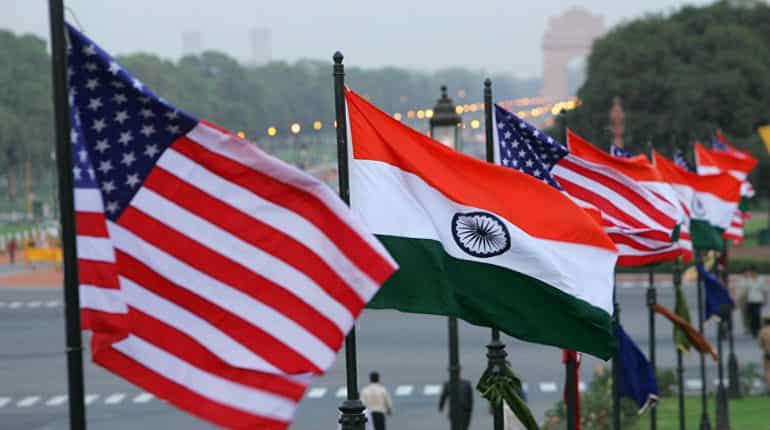
India-US-flag
Pentagon's missile defence review (MDR) 2019 has said the United States has discussed "potential missile defence cooperation" with India. The MDR 2019 said the discussion is part of "natural outgrowth" of India’s status as a major defence partner and "a key element of our Indo-Pacific Strategy." The talks between Washington and New Delhi happen even as "number of states in South Asia are developing an advanced and diverse range of ballistic and cruise missile capabilities," the review added.
MDR describes the policies, strategies, and capabilities that will guide the Pentagon's missile defence programs for the coming year.
The development comes months after India and Russia signed the S400 deal during President Putin's India visit last year.
The 108-page document talks about Washington's alliance in the Indo Pacific region adding that the cornerstone of "our security and diplomacy in Indo-Pacific region is our strong bilateral alliances with Japan, South Korea, and Australia, "and emerging security relationships with others such as India."
In 2018, US granted India Strategic Trade Authorisation-1 (STA-1). Both New Delhi and Washington signed the COMCASA (Communications Compatibility and Security Agreement).
India is the only South Asian country to get STA1 and third Asian country after Japan and South Korea. The status eases defence procurement from the US.
The COMCASA, is an India specific foundational legal arrangement which helps New Delhi get real-time classified information, especially on maritime development. It was signed in New Delhi during the maiden 2+2 dialogue between American and Indian Defence and foreign diplomats.
The review focused on China and Russia. On China, the review said Beijing "seeks to displace the United States in the Indo-Pacific region and reorder the region to its advantage."
"Offensive missiles play an increasingly prominent role in China’s military modernisation, its coercive threats, and efforts to counter US military capabilities in the Indo-Pacific." The review says China has "deployed 75-100 intercontinental ballistic missiles" and possesses 4 advanced JIN class ballistic missile submarines (SSBN).
On Russia, it said that the country is developing "S-500 as an even more modern and technologically advanced air and missile defence system," in addition to this, Moscow "has transferred missile defence technology to China and Iran" both of which are "expanding and modernizing mobile missile defence capabilities."
Russia and China are also developing Potential Adversary Missile Defense and Antisatellite (ASAT) capabilities that could "threaten US space-based assets."
Japan and South Korea are already working with the US to build missile defence systems that are interoperable with US defences. Australia participates in a trilateral discussion on missile defence with the United States and Japan. The United States and Australia meet annually to discuss bilateral missile defence cooperation.