

&imwidth=800&imheight=600&format=webp&quality=medium "Sri Lankans can now pay in India with QR scans")
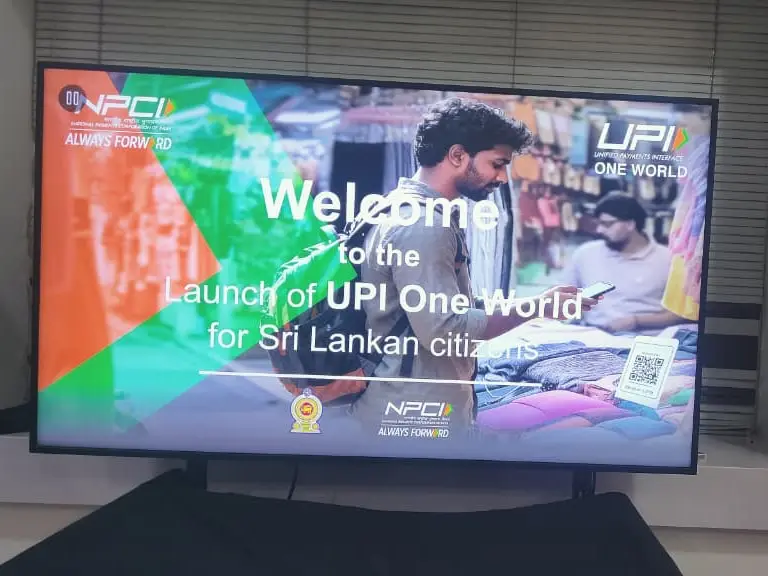
In a quiet ceremony at the Sri Lankan High Commission on Monday, India and Sri Lanka took another step toward stitching their economies closer together with the soft click of a QR-code scan. Sri Lankan nationals arriving in India can now download either the Cheqor Monyapp, complete a quick KYC using their passport and visa, and instantly load up to 2 lakh rupees ($2,400) into UPI One World wallet. From the chai stall outside Bodh Gaya to the private hospitals of Chennai, they can pay by flashing a phone at one of India’s 400 million UPI QR codes, one of the largest such networks any country has.
The service was extended after months of talks between the National Payments Corporation of India (NPCI) and the Reserve Bank of India, with the Central Bank of Sri Lanka giving its blessing for rupee-based trade settlement. UPI One World, a digital wallet service powered by India's Unified Payments Interface (UPI), is designed specifically for international travellers, Non-Resident Indians (NRIs), and foreign nationals visiting India. Launched by the National Payments Corporation of India (NPCI) it allows users to make seamless, real-time payments in Indian Rupees (INR) without needing an Indian bank account or mobile number.
Lakhsmendra Geshan Dissanayake, Minister Counsellor (Commercial) at the Sri Lankan High Commission in New Delhi said it will help the Sri Lankan tourists, pilgrims, and others. He said, “we are targeting pilgrims, for the places of interest for the Buddhist pilgrims". The pilot project began, he said, with Buddhist tour groups, many of them elderly devotees who trace the Buddha’s footsteps from Lumbini in Nepal to Kushinagar in Uttar Pradesh. Carrying wads of rupees or fumbling with credit cards that charge punishing forex markups has long been a headache. The new wallet removes both.
“We started it as a pilot, where pilgrims can make payment digitally,” Dissanayake continued. “In trade aspect, RBI and the Sri Lankan central bank have approved. It is not a problem. India-Sri Lanka traders can use INR to trade. It has the potential to cater for people who come to get treatment.” Medical tourism is the unspoken jackpot. Tens of thousands of Sri Lankans already cross the Palk Strait each year for cheaper cardiac surgeries, cancer care, and Ayurvedic treatment. A frictionless digital rupee in their phones could tip even more patients toward Indian hospitals.
For India, the move is part of a broader diplomatic push to make the rupee a preferred settlement currency in the neighbourhood and to cement UPI as the de facto standard for South Asian digital payments. For ordinary Sri Lankans, recovering from the 2022 economic meltdown, the convenience is immediate and tangible. In a region where ancient pilgrimage routes and modern hospital corridors increasingly overlap, the humblest QR code may turn out to be the newest bridge between two old civilisations.
