Pulwama attack 4th anniversary: When India raided birthplace of jihad in South Asia

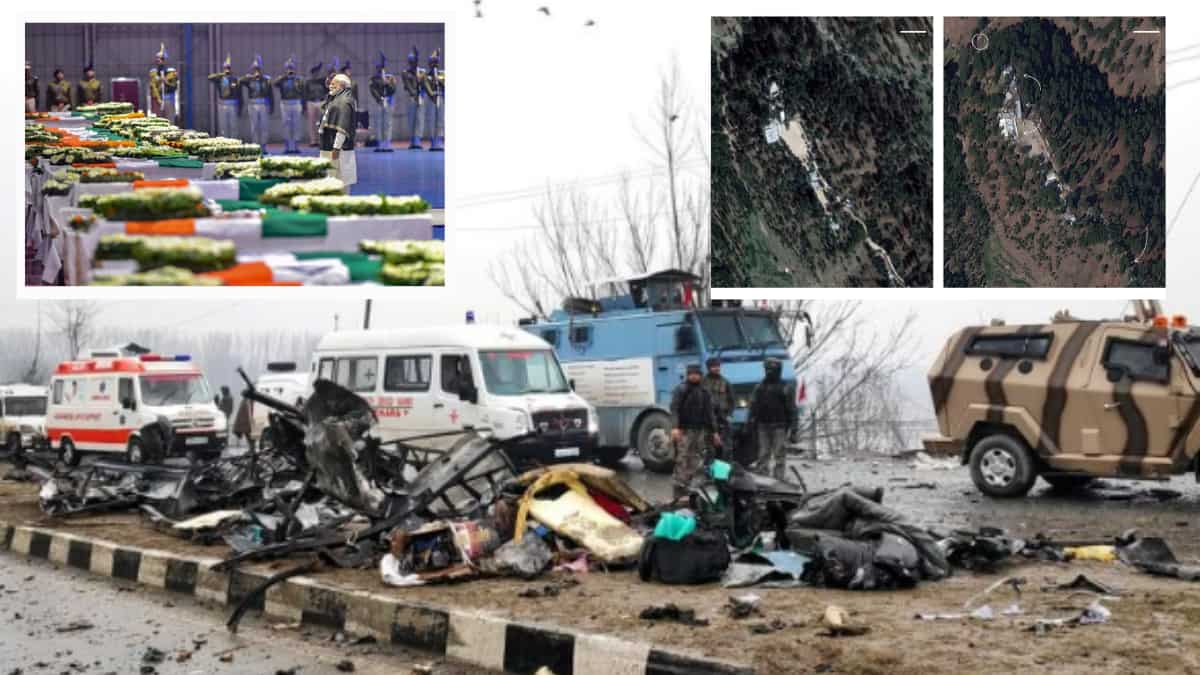
The attack was the deadliest on Indian forces in Jammu and Kashmir in decades
India on February 14th marked the fourth anniversary of the Pulwama attack, a terrorist attack carried out in the Pulwama district of Jammu and Kashmir in 2019 that resulted in the death of 40 Indian troops. India’s Prime Minister Narendra Modi and several others took to social media to remember the lives of Indian troops that were lost four years ago.
The suicide attack, carried out by Pakistan-sponsored Jaish-e-Mohammad, was executed by Adil Ahmed Dar, 22, who rammed his vehicle into a bus carrying India's Central Reserved Police Force (CRPF).
What happened immediately after Pulwama attack?
The attack led to the galvanisation of national public opinion to act against those responsible for the attack. Indian Prime Minister Narendra Modi's government, then in its first term in office, vowed to act against the perpetrators.
Two days after the attack, in a significant breakthrough, security forces gunned down top Jaish-e-Mohammed (JeM) commander Abdul Rasheed Ghazi alias Kamran, in a 12-hour-long encounter with multiple Jaish-e-Mohammed terrorists in Pulwama area.
Ghazi was a Pakistani national and the brain behind the Pulwama attack.
ALSO WATCH |Exclusive: WION examines Balakot air-strikes by Indian Air Force
On February 26, 2019, Indian forces conducted a bombing raid in Balakot in the Khyber Pakhtunkhwa province of Pakistan, targeting a set of Jaish-e-Mohammed terrorist camps. The operation resulted in the deaths of 200-300 terrorists, reports said. The exact number of terrorists killed in the raid was not specified.
The Balakot airstrikes added to the sequence of Indian strategic evolution of hitting terror at its origin that began in September 2016. In retaliation to the terrorist attack on an army base in Uri sector of Jammu and Kashmir on September 18, 2016 which led to the loss of lives of 19 Indian soldiers, India had conducted surgical strikes on Jaish-e-Mohammed terrorist camps across the Line of Control in Pakistan Occupied Kashmir (PoK). The operation inflicted "significant casualties" on terror infrastructure in the region.
Why are Balakot airstrikes so crucial?
Balakot is known as the birthplace of jihad ('holy fight') in South Asia. The first notable jihad occurred in 1831 in Balakot, in which a man named Sayyid Ahmad led hundreds of his followers against Maharaja Ranjit Singh's forces. Ahmad's forces lost but he was promptly declared a martyr. According to American journalist Declan Walsh's book 'The Nine Lives of Pakistan', to date, Sayyid Ahmad's grave is a shrine to many who come to Balakot to pay their respects. "The lush hills around Balakot are dotted with secretive training camps where modern-day Pakistani jihadis train for battle against Indian forces in Kashmir," Walsh writes.
The Balakot airstrikes were as much symbolic as they were strategic.
India went after the nucleus of terrorism in the region with its diplomatic overdrive focusing more on its fight against terrorism than on just hyphenating itself with Pakistan, the country which sponsored Pulwama terrorist attack.
In May 2019, Pakistan-based terrorist Masood Azhar was designated a global terrorist by the United Nations Security Council, a move cited as a major diplomatic win for India.
WATCH WION LIVE HERE
You can now write for wionews.com and be a part of the community. Share your stories and opinions with us here.