
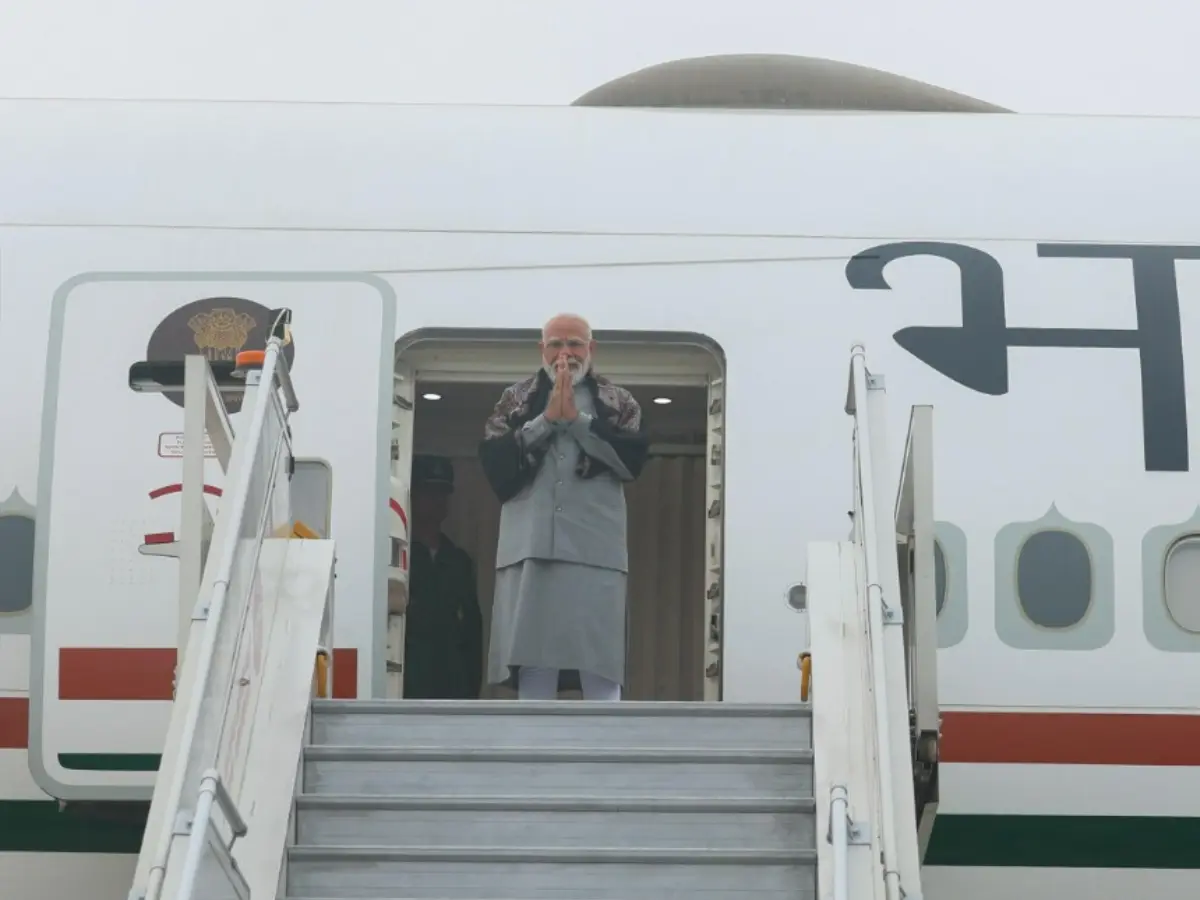
&imwidth=800&imheight=600&format=webp&quality=medium "India's PM Modi begins key diplomatic tour of Jordan, Ethiopia and Oman")
Prime Minister Narendra Modi has embarked on a four-day visit to Jordan, Ethiopia and Oman, with focus on bolstering India's ties in West Asia and Africa, amid regional challenges and economic prospects. In his departure statement, PM said: "Today, I am embarking on a three-nation visit to the Hashemite Kingdom of Jordan, the Federal Democratic Republic of Ethiopia and the Sultanate of Oman, three nations with which India shares both age-old civilisational ties, as well as extensive contemporary bilateral relations."
The itinerary starts in Jordan (15-16 December), marking 75 years of diplomatic relations. In Amman, he will hold detailed discussions with King Abdullah II, Prime Minister Jafar Hassan, and Crown Prince Al Hussein bin Abdullah II, besides meeting the Indian community. Jordan is viewed as a bulwark against radicalisation, extremism and terrorism in West Asia, with shared views on countering terrorism globally. It plays a key role in regional peace efforts and is vital for India's food security through fertiliser imports and investments in potash and phosphate sectors.
From Amman,PM Modi proceeds to Ethiopia (16-17 December) for his first visit, at the invitation of Prime Minister Abiy Ahmed Ali. Addis Ababa hosts the African Union headquarters, & India championed its permanent G20 membership in 2023. He will hold talks with PM Abiy, address a joint parliamentary session, and meet the diaspora. "I eagerly look forward to sharing my thoughts on India’s journey as the 'Mother of Democracy' and the value that the India–Ethiopia partnership can bring to the Global South," Indian PM stated. Ethiopia is a key BRICS and Global South partner, with the visit strengthening historical ties and India's development partnerships in Africa ahead of a planned India-Africa Summit.

The tour concludes in Oman (17-18 December), commemorating 70 years of ties. Discussions with the Sultan will focus on "strengthening our Strategic Partnership as well as our strong commercial and economic relationship." A major highlight is the anticipated signing of a Comprehensive Economic Partnership Agreement (CEPA) to promote trade, create jobs, and expand opportunities in trade, investment, energy, defence, technology, agriculture, culture and people-to-people ties. Addressing the diaspora will be another key focus.
This is an important week for India's West Asia diplomacy. External Affairs Minister S Jaishankar, after participating in the Sir Bani Yas Forum, will co-chair the 16th Joint Commission and 5th Strategic Dialogue with UAE counterpart Sheikh Abdullah bin Zayed Al Nahyan in Abu Dhabi, before visiting Israel for consultations with Foreign Minister Gideon Sa’ar.
