Opinion: Harsh reality drives Patidar's demand for reservation

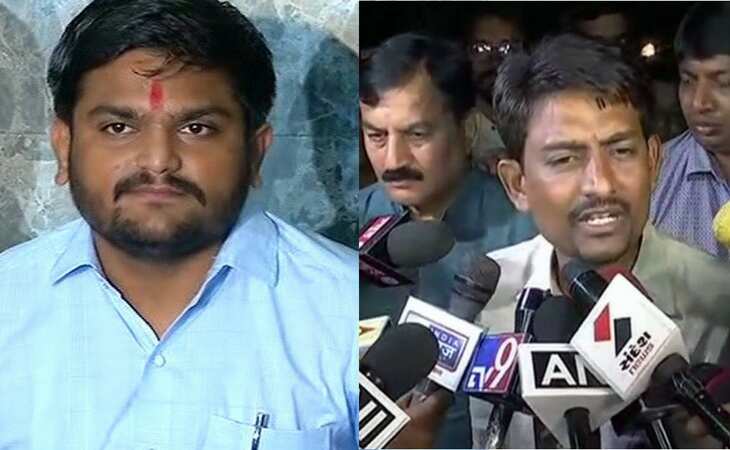
Rahul Gandhi and Hardik Patel
Once spearheading the anti-reservation movement of the 1980s, and now faced with the challenges thrown up by the ?merit? imperative in an unequal social order, the demand for reservations seem to be the sole way out for the Patidar community.
In the post-independence period, Patidars became the social force behind Gujarat’s industrial push. By the 1960s and ‘70s, they dominated large sectors of agricultural, industrial and commercial activities.
Patidars consolidated their economic and social standing through affiliating with ruling political parties, first the Congress and then the BJP. The Patidars in sum were the mascots of success in Gujarat and the ‘prosperous Patel’ became a familiar figure in popular culture and national imagination.
The Patidars in sum were the mascots of success in Gujarat and the ‘prosperous Patel’ became a familiar figure in popular culture and national imagination.
Yet for all this picture of success, it has to be noted that more than a third of the Patidars are still small and marginal farmers, often inhabiting the less fertile regions of north Gujarat. As the sociologist, Ghanshyam Shah, observed in one of his interviews to the magazine Frontline, that with the onset of a phase of agricultural distress in Gujarat induced by a steep increase in input cost for cultivation most of these poor farmers no longer have resources to access to timely credit for investment.
With agriculture becoming difficult and un-remunerative, the young Patidars are forced to find alternative employment in urban areas. It is here that they encounter the deep disconnect between their abilities and their expectations. In Prof Shah’ words, “it is this lot that forms the spine of the Patidar agitation.”
This is a complex situation within a community that’s aspirational but structurally disadvantaged not by its caste position, but by a neo-liberal economic order that offers them little recourse to cope with the demands of the job market or look to the state for protection. Once spearheading the anti-reservation movement of the 1980s and now faced with the challenges thrown up by the ‘merit’ imperative in an unequal social order, the demand for reservations seem to be the sole way out.
The demand for reservations is less for jobs than for opportunities in higher education, particularly in engineering and medicine.
Yet, as the political scientist Amit Dholakia argues, the demand for reservations is less for jobs than for opportunities in higher education, particularly in engineering and medicine. With the large-scale privatisation of higher education and the proliferation of deemed universities and colleges often demanding high capitation fees and offering a quality of education that rarely meets market demands, the younger Patidars rearing to move out of farming and small enterprise, feel deeply betrayed.
Hemmed in by a lack of educational and social capital and the difficulties of access to the modern sectors of employment, this section of the young Patidars, unlike an older generation, are also finding it increasingly hard to emigrate or seek opportunities in the west. Little wonder then that a 2012 film titled “Kevi rite jaish?” or “How do I go?” spoofing the Patel aspiration to emigrate resonated with the predicament of the Gujarati youth and became one the most successful regional language films made in recent times.
Alice Tilche a young researcher studying the problems of Patidar discontent makes the astute observation that the problems of Patidar youth have much in common with young people in the newly depleted economies of southern Europe where expectations driven by the promise of education and emigration have been belied by the tightening of international borders and the increasing demands for skilled migrants.
Their demand for reservations within the Other Backward Class category is a poignant statement of their willingness to be marked ‘down’ in order to ‘move up’.
The villages of Gujarat she concluded have become dismal “waiting rooms” for a generation of young people who are Patels, but not quite. Their demand for reservations within the Other Backward Class category is a poignant statement of their willingness to be marked ‘down’ in order to ‘move up’.
Hardik’s supporters who are bent on defeating the BJP this time constantly remind us that the policemen deployed to brutalise them on the night of his arrest 2015 belonged to the OBCs. They feel that the reservations for caste groups ‘lower’ than they have left them both deprived and vulnerable.It’s a perception that makes their alliance with the OBCs and the Congress a particularly troubled one.
It is likely that the BJP will win the elections and subdue the angry Patidars, but it remains to be seen if it can sustain Gujarat’s developmental model in its existing form. The angry young men from the OBC, Dalit and Patidar communities have a compelling story to tell about the social strains, the human costs and economic limits of a market-led model of economic growth. Any party that wins these elections may be well advised to heed these stories and craft an alternative and more genuinely humane model of development for Gujarat.
(Disclaimer: The author writes here in a personal capacity).