More lifting-power for Indian rockets: ISRO test-fires India's most powerful rocket engine

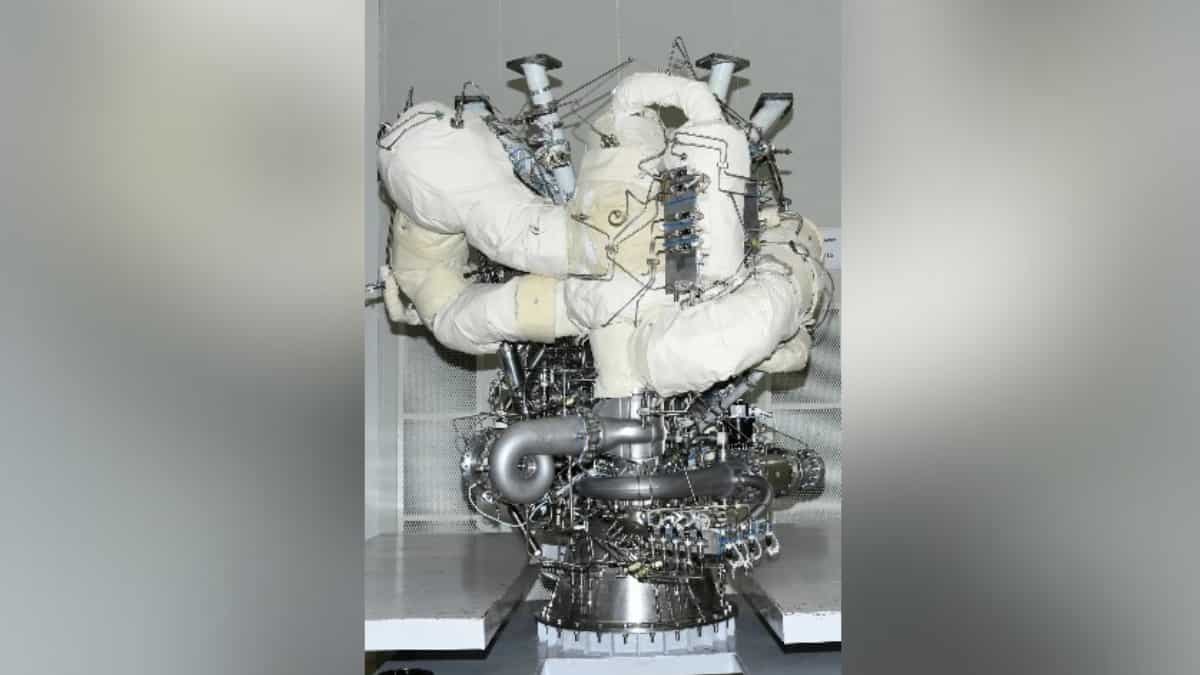
ISRO landmark development
In a major technological breakthrough that will eventually add more lifting-power to Indian rockets, the Indian Space Research Organisation (ISRO) successfully test-fired its most powerful-yet rocket engine. Chairman ISRO Dr. S. Somanath confirmed the development to WION. The test firing was conducted at the ISRO Propulsion Complex(IPRC) in Mahendragiri, Tamil Nadu.
Known as a semi-cryogenic engine, this is a type of propulsion technologythat is powered by special refined kerosene(dubbed as 'ISROsene') and super-cooled liquid oxygen.
This semi-cryo engine is designed and developed byISRO's Liquid Propulsion Systems Centre (LPSC), Valimala, Thiruvananthapuram and has also roped in Indian industry to take part in the efforts.
After a series of further tests are conducted and this engine is fully qualified, this 2000kN thrust engine and its stage(associated components, fuel tanks etc.) will be replacing the current L110(liquid-fuel core stage) of India's largest rocket - Launch Vehicle Mark 3 (LVM3).
The IPRC facility in Southern Indiais capable of testing semi-cryogenic engines up to 2600 kN thrust and will support the subsequent testing and qualification of the fully integrated Semi-cryogenic engine and stage.
In May this year,ISRO had commenced tests on the Pressure Head Test Article (PHTA), a setup that comprises all engine systems except the thrust chamber. "The test is the first of a series of tests planned to validate the design of the propellant feed system, including the low-pressure and high-pressure turbo-pumps, the gas generator, and control components," ISRO had said back then.
Also watch |India: ISRO Rocket Launch | 36 satellites on board lifts off
During the earlier test, the parameters that led up to the engine start were checked and validated. "After the chill down of the LOX circuit, the feed circuit of kerosene was filled, and LOX was admitted into the gas generator by opening the injection valve. Successful performance of the test article helps derive the sequence of operations for further tests" ISRO had said in May.
WATCH WION LIVE HERE
