Met Dept announces onset of Northeast monsoon, withdrawal of Southwest monsoon

&imwidth=600&imheight=450&format=webp&quality=medium "Met Dept announces onset of Northeast monsoon, withdrawal of Southwest monsoon")
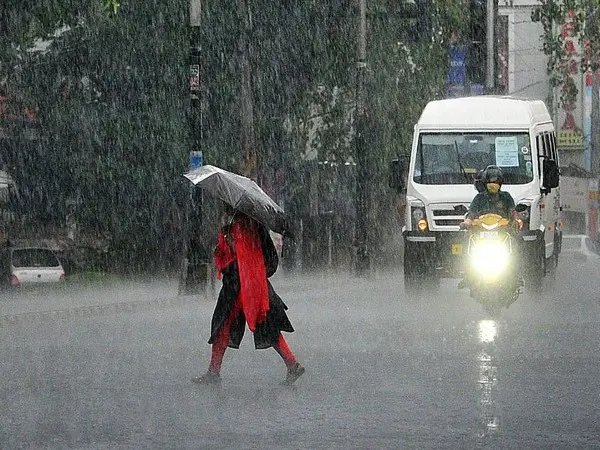
Met Dept announces onset of Northeast monsoon, withdrawal of Southwest monsoon Photograph: (Credit: ANI/ Representative image)
The Northeast monsoon caters for about 50% or more of the annual rainfall in Tamil Nadu and coastal Andhra Pradesh.
The Indian Meteorological Department (IMD) announced on Thursday, 16th October, that the Southwest monsoon has withdrawn from the entire country. Simultaneously, the Northeast Monsoon rainfall activity has commenced over the Southeastern coastal region, including Tamil Nadu, Puducherry & Karaikal, Coastal Andhra Pradesh, Rayalaseema, and Western regions such as South Interior Karnataka and Kerala-Mahe.
Further, the IMD said that an upper air cyclonic circulation lies over the Indian mainland's southern tip, and adjoining regions. It was added that fairly widespread rainfall occurred over Tamil Nadu, Puducherry & Karaikal and the adjoining area of south coastal Andhra Pradesh and Kerala over the past 24 hours. Isolated heavy to very heavy rainfall occurred over Tamil Nadu during the same period.
Active between June and September, the southwest monsoon brings in the vast majority of India's annual rainfall. Likewise, the Northeast monsoon brings rains across parts of southeastern coast of India, in the final three months of the year. Also known as the retreating monsoon, the Northeast monsoon is the second major rainfall season in India, and is crucial for large parts of Tamil Nadu, Andhra Pradesh, and Puducherry.
The two are related in such a way that the Northeast monsoon occurs when the Southwest monsoon withdrawal, and the wind direction reverses. The Northeast monsoon sets in around mid-October and goes on till mid-December.
The Northeast monsoon caters for about 50% or more of the annual rainfall in Tamil Nadu and coastal Andhra Pradesh. This season is known for cyclonic storms, or weather systems that form in the Bay of Bengal, which can lead to very heavy rainfall and potential flooding in parts of Tamil Nadu and coastal Andhra Pradesh. These rains are also crucial for recharging the water table and the reservoirs.