

&imwidth=800&imheight=600&format=webp&quality=medium "Indian Navy gets its 2nd woman chopper pilot—Sub Lt Siddhi Dubey")
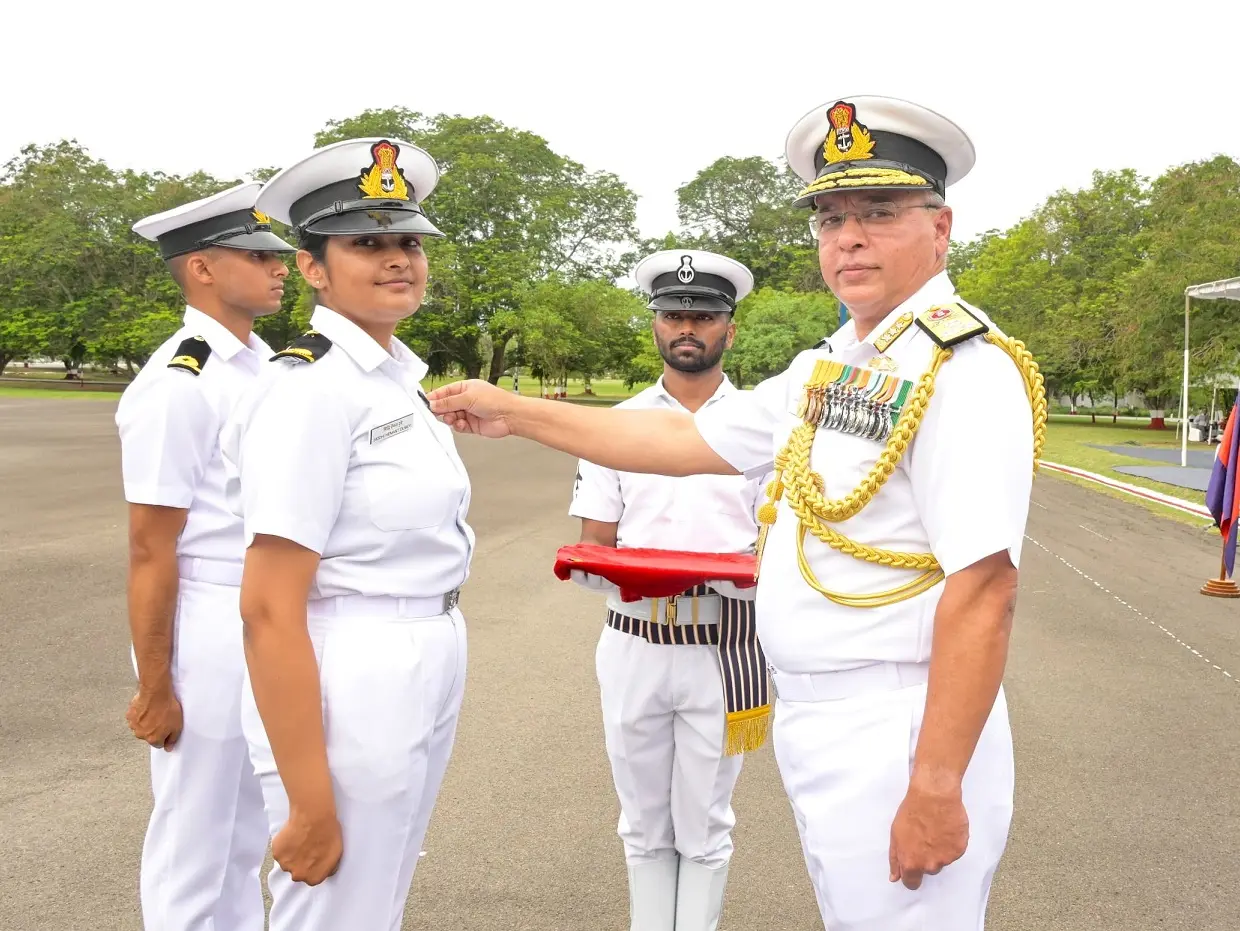
Eighteen Indian Navy officers, including one woman, graduated as pilots from the Helicopter Training School at INS Rajali, near Chennai, on Monday, 9th June. Their Passing Out Parade marked the successful completion of their 22-week-long intensive flying and ground training at the Indian Naval Air Squadron-561, the largest helicopter squadron of the Indian Navy. Among those passing out and earning their ceremonial golden wings was Sub Lieutenant Siddhi Hemant Dubey, the second woman helicopter pilot of the Indian Navy. The coveted ‘golden wings’ symbolises a naval pilot’s ultimate transition from training to frontline operational readiness.
During her training period at INS Rajali, speaking to WION’s Sidharth.M.P, Sub Lieutenant Siddhi Dubey said, “Being a pilot was a childhood dream... and being a pilot, doing something different led me to opt for aviation in the Indian Navy. I’m extremely fortunate to be part of Helicopter Training School, INS Rajali, which is the alma mater of all naval helicopter pilots.”
Looking back at her father’s service in the Indian Air Force, Dubey said that she had grown up with aircraft all around her and flying was a long-held desire. Dubey’s father was a senior non-commissioned officer in the Air Force.
The pilots who graduated from the Helicopter Training School will now be deployed at frontline units of the Indian Navy, undertaking vital roles in reconnaissance, surveillance, Search and Rescue, and anti-piracy operations. Notably, the Indian Navy operates a diverse fleet of European, Russian, American, and Indian-origin helicopters.
Vice Admiral Rajesh Pendharkar, Flag Officer Commanding-in-Chief, Eastern Naval Command was the Reviewing Officer of the parade. In his address, he emphasised that the new helicopter pilots have learned not just how to fly, but how to fly with purpose.
He told the graduating pilots that they wear the wings of gold, not as decoration, but as proof of discipline, of focus, and of the relentless pursuit of excellence, adding that those wings are not a reward, but symbolise responsibility. The golden wings represent the Navy’s faith in them, and are a sign that they are now a part of a rich naval legacy, he stated.
Vice Admiral Rajesh Pendharkar said Indian naval aviation has always stood for professionalism, precision, and pride. Whether it’s flying from the decks of the ships, or from the base to the shore, whether in support of operational missions, or participating in joint exercises with foreign navies or for search and rescue, or Humanitarian Aid and Disaster Relief, our aviation assets have made a commendable contribution in every mission or task, he said.
The Indian Naval Air squadron 561(Helicopter Training School) is the alma mater of each and every helicopter pilot of the Indian Navy. Upholding its mission statement ‘On Time, Every Time,’ the helicopter training school has trained 866 Pilots from the Indian Navy, Indian Coast Guard and friendly foreign nations over the past five decades and continues to provide helicopter flying training of the highest standards.
