India: States can’t claim all private properties for public good, says Supreme Court

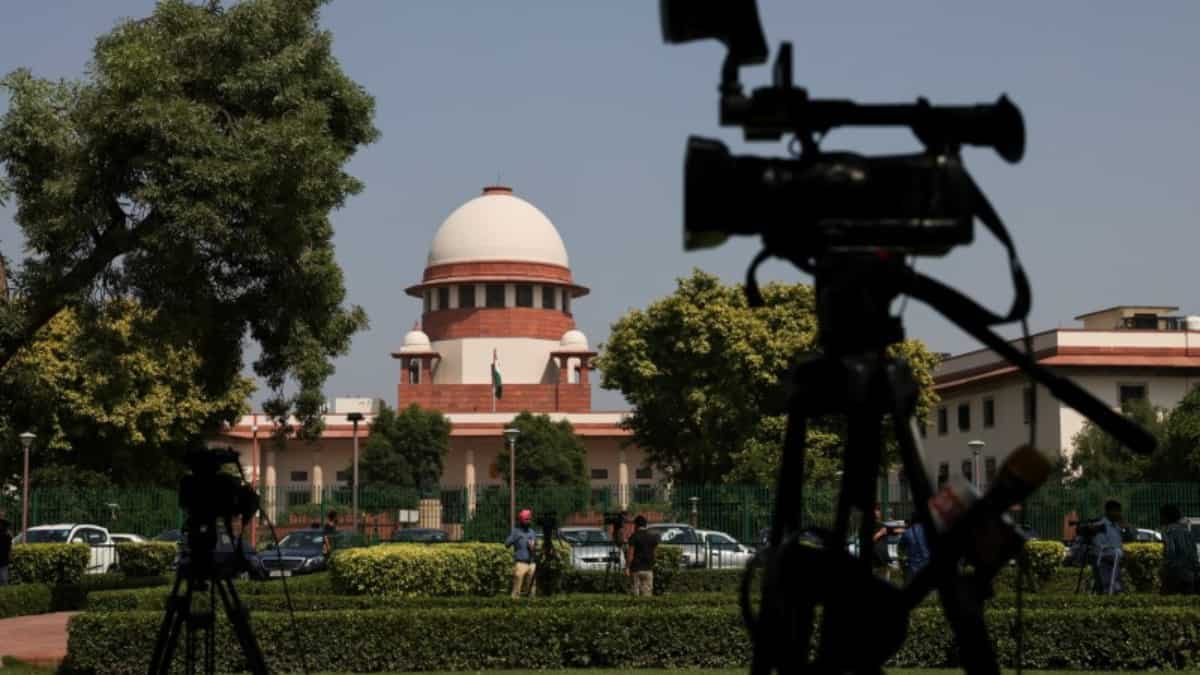
File photo of the Indian Supreme Court.
In a majority 7:2 ruling, the Supreme Court on Tuesday held that states are not empowered under the Constitution to take over all privately-owned resources for distribution to serve the "common good".
A nine-judge bench headed by Chief Justice DY Chandrachud, however, said states can stake claim over private properties in certain cases.
The majority verdict pronounced by the CJI overruled Justice Krishna Iyer's previous ruling that all privately owned resources can be acquired by the State for distribution under Article 39(b) of the Constitution.
The CJI wrote for himself and six other judges on the bench which decided the vexed legal question on whether private properties can be considered "material resources of the community" under Article 39(b) and taken over by State authorities for distribution to subserve the "common good".
It overturned several verdicts that had adopted the socialist theme and ruled that states can take over all private properties for common good.
Justice BV Nagarathna partially disagreed with the majority judgement penned by the CJI, while Justice Sudhanshu Dhulia dissented on all aspects.
The top court had, in the Minerva Mills case of 1980, declared two provisions of the 42nd Amendment, which prevented any constitutional amendment from being "called in question in any court on any ground" and accorded precedence to the Directive Principles of State Policy over the fundamental rights of individuals, as unconstitutional.
Article 31C protects a law made under Articles 39(b) and (c) empowering the State to take over material resources of the community, including private properties, for distribution to subserve the common good.
The top court had heard 16 petitions, including the lead petition filed by the Mumbai-based Property Owners' Association (POA) in 1992.
The POA has opposed Chapter VIII-A of the Maharashtra Housing and Area Development Authority (MHADA) Act. Inserted in 1986, the chapter empowers State authorities to acquire cessed buildings and the land on which those are built if 70 per cent of the occupants make such a request for restoration purposes.
The MHADA Act was enacted in pursuance of Article 39(b), which is part of the Directive Principles of State Policy and makes it obligatory for the State to create a policy towards securing "that the ownership and control of the material resources of the community are so distributed as best to subserve the common good".
Disclaimer: This story has been published from a news agency feed with minimal edits to adhere to WION's style guide. The headline may have been changed to better reflect the content of the story or to make it more suitable for WION audience.
