

&imwidth=800&imheight=600&format=webp&quality=medium "India rolls out new e-passports for its citizens. Check details")
In a quiet but major shift, India has been rolling out e-passports for its nationals, which aim to keep data secure and protect against identity theft. Since May 2025, every new Indian passport rolling off the presses, whether at home or at consulates abroad, has been an e-passport embedded with a contactless RFID or Radio Frequency Identification chip. So far, 80 lakh (8 million) have been issued domestically, with another 62,000 handed out by Indian missions overseas.
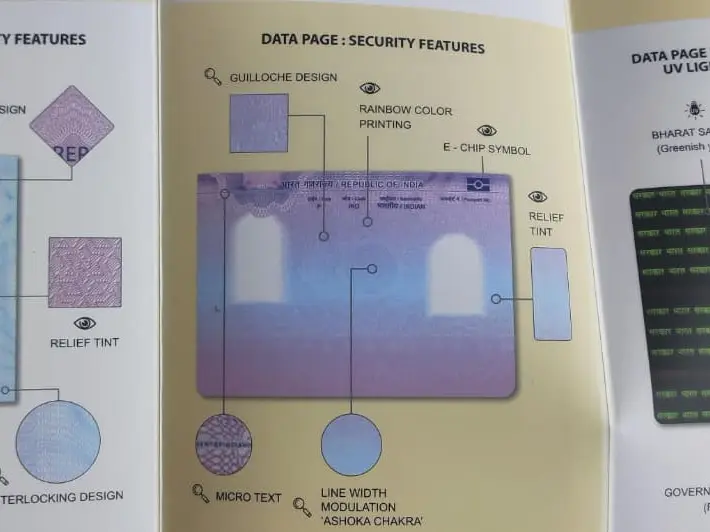
“Moving from an old passport to an e-passport is like moving from 3G to 5G,” one senior official told reporters. The heart of the upgrade is a homegrown operating system and a tamper-proof chip that stores the holder’s facial image, demographic details, and a digital certificate guaranteeing the authenticity and integrity of the data. Cryptographic protocols and public key infrastructure (PKI) shield the information from cloning or alteration, meeting the International Civil Aviation Organisation (ICAO) standards used by several countries.
Officials say the new design dramatically raises the bar for would-be fraudsters. “It prevents others from impersonating you. It is evolution,” an official close to the project said. “Anyone fraudulently getting an Indian passport will be reduced.” The enhanced security has come at a price, but that won't impact the people. “The input cost of passports has increased,” an official admitted, “but at this moment, there are no changes in the cost of passports. We are absorbing all cost increases.”
Privacy worries have been briskly dismissed. “Your data will be safe,” officials at the Ministry of External Affairs (MEA) insisted. Under the contract with Tata Consultancy Services (TCS), which operates the system, the MEA retains full ownership of all data and infrastructure. Old paper passports remain valid until 2035, giving citizens a decade-long runway. But for the millions renewing or applying for the first time, the future has already arrived in the form of a slim booklet, and a chip that officials believe makes it one of the hardest travel documents in the world to forge.

