India: IIT-M team develops Zinc-air batteries that could power E-scooters, without risk of fire

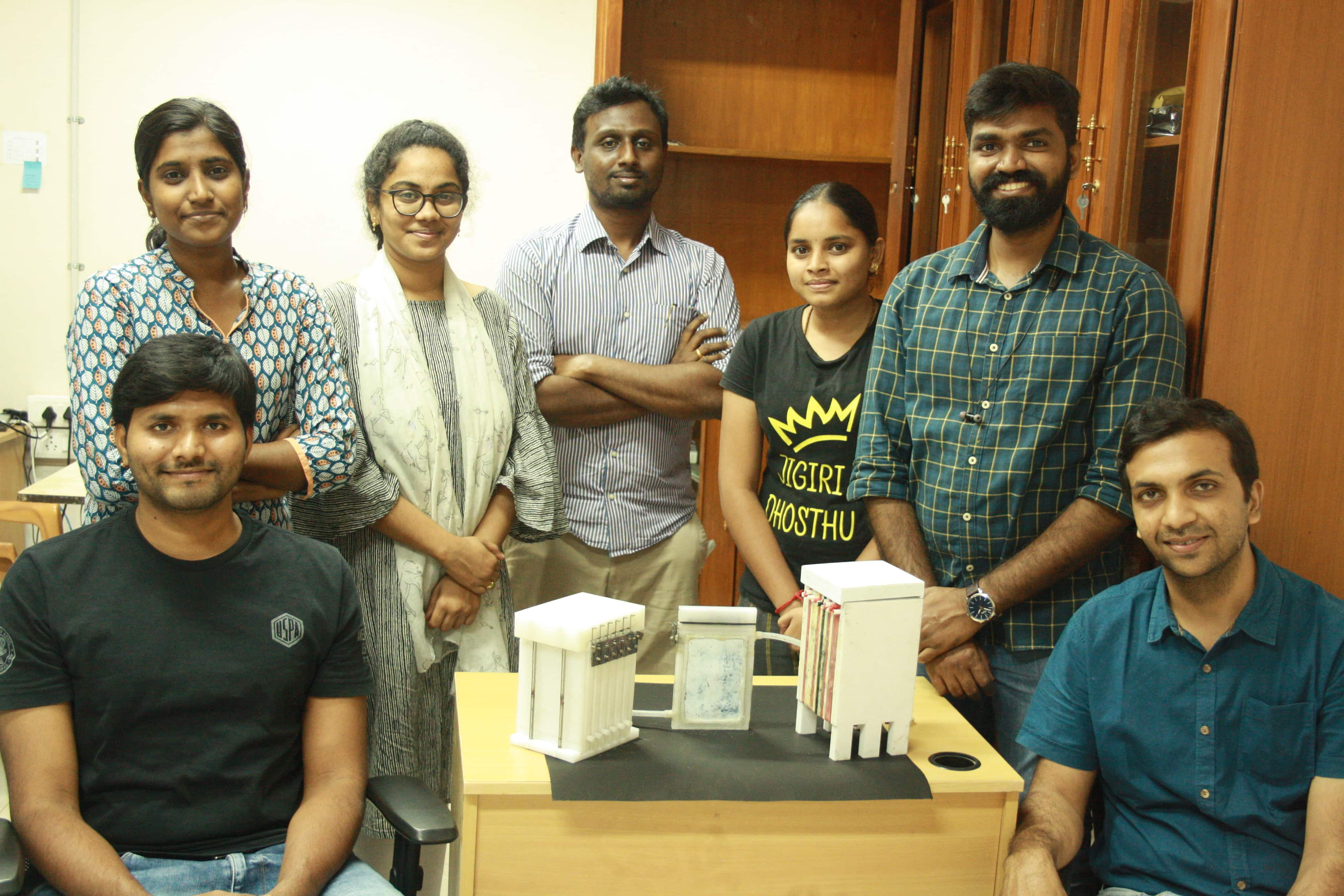
Dr. Aravind Kumar Chandiran (Centre), Asst Professor, IIT Madras, and the research team
At a time when concerns are being raised in India over the safety record of electric scooters amid countless instances of vehicles catching fire, an indigenous solution is in the works. This gets to the root of the issue and is an attempt to replace the Lithium-ion batteries (which power contemporary EVs) with made-in-India Zinc-air batteries, which have considerable advantages over the former.
WION spoke to Dr Aravind Kumar Chandiran, Assistant Professor, Dept. of Chemical Engineering, IIT Madras, whose team is behind this Zinc-air battery prototype.
According to him, when compared to Lithium-ion batteries, the Zinc-air batteries are more environmentally friendly, costs less, provide similar mileage as Li-ion batteries, are easier to manufacture and maintain and can easily be mass-produced in India, given how the country has abundant resources of Zinc.
"Zinc is actually a nutrient found in our food and is safer when compared to lithium. In Zinc-air batteries one electrode is zinc and another is oxygen (derived from the air) and this setup sits in an aqueous electrolyte. This makes it water-based and hence can fully prevent any possibility of fire. The worst-case scenario in case of a failure or malfunction is that the battery won't deliver power" he explained.
While Lithium-ion batteries have to be swapped (discharged battery replaced with a fully charged one), Zinc-air ones don't need a total replacement. Only a small component of the battery, such as its 'Zinc cassette' (anode) has to be replaced. In layman's terms, the Zinc cassette replacement can be compared to how a memory card is removed and replaced from a gadget.
However, it has to be performed at dedicated Zinc cassette replacement facilities or charging stations(similar to fuel stations or EV charging stations). This process is also said to be sustainable, as the spent Zinc oxide cassette can be removed and converted back to Zinc. The process of replacing the Zinc cassette could safely be carried out at home by a layperson, with basic training on the procedure.
With Lithium-ion batteries used in Electric vehicles and other devices majorly being imported from China, the Researchers from IIT-M feel that further work on Zinc-air batteries can provide a home-grown solution for India. India being home to large Zinc reserves also helps accelerate the large-scale manufacturing of such batteries, it is said. The team is also in talks with automobile OEMs to integrate these new-age batteries into the vehicles, in about a year's time.
Queried about the power holding capacity of their batteries, Dr Chandiran said, "We have built batteries that can store up to 1.3-2.6Kilo Watt Hour(KWh) and this is sufficient as most E-scooters use 2KWh batteries. The Zinc-air batteries that we have developed are far simpler to manufacture and the process can be done even in a normal room with ambient conditions and standard machines. This is in contrast to Li-ion batteries that require special ultradry conditions and high pure chemicals at the manufacturing facility.
However, there is one technical aspect where these Zinc-ion batteries fall significantly behind their Lithium-ion counterparts. "Such batteries can only be used in two or three-wheelers and not cars, as cars require high power and these batteries can't cater to that need. Simply put, these Zinc-air batteries are capable of storing high amounts of energy(on par with Li-ion ones), but cannot deliver power as rapidly as Li-ion" Dr Chandiran explained.
