Ram Mandir consecration: AI surveillance likely to be introduced to protect temple

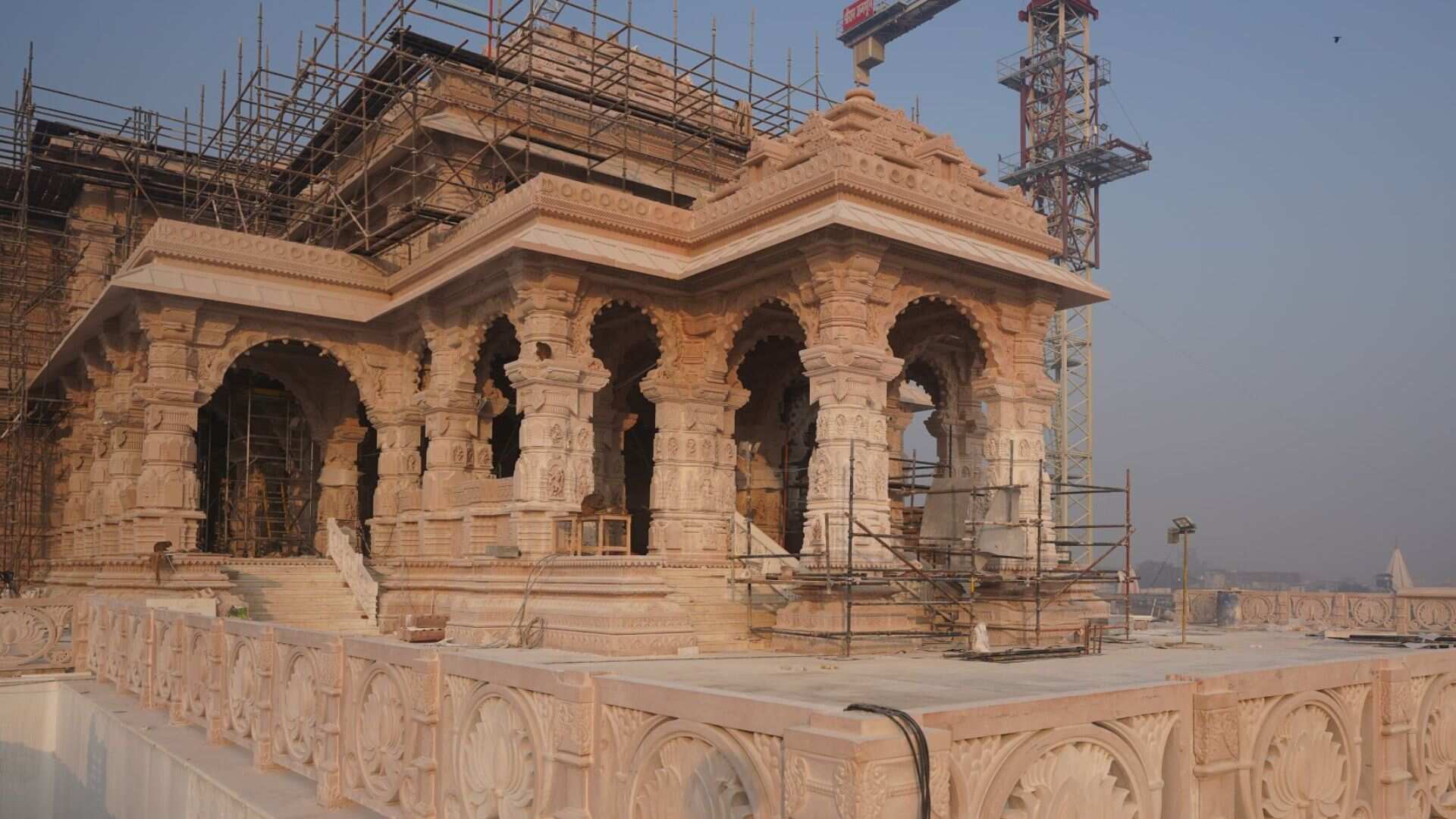
Ayodhya temple
In an attempt to fortify the temple town of Ayodhya housing the soon-to-be consecrated Ram Mandir, security agencies are planning to introduce Artificial Intelligence (AI) for surveillance, according to media reports.
The temple is expected to witness record footfall once it is opened to the public after the consecration ceremony planned for January 22.
“The pilot project of AI surveillance is likely to be launched for Ayodhya. After some time, if found feasible, it could be made an integral part of the security and surveillance drill,” a senior police official was quoted as saying by Hindustan Times.
The AI tool could be used to detect suspicious trends within the temple premises, such as frequent visitors or any other common trend followed by unruly elements.
“The threat perception of Ram temple is high. So, we need to keep a tight vigil on all movements in Ayodhya,” the official added.
Apart from AI surveillance, 11,000 state police and paramilitary forces are likely to be deployed in the city to ensure nothing untoward happens on the day of the ceremony and afterwards.
Although the final security scheme for January 22 is yet to be finalised, themanual as well as video surveillance is already in place. The security official informed that about 38 officers of the local intelligence unit have been deployed in the red zone where Ram Mandir is located.
Currently, nine companies of the UP Special Security Force (UPSSF), six companies of the Central Reserve Police Force (CRPF),three companies of the Provincial Armed Constabulary (PAC) and304 civil police personnel are on the ground in the red zone.
Watch |Ram Mandir trustees divides over the colour of Ram Lalla idol
Ram temple consecration ceremony
After years of court cases and several controversies, the Indian Supreme Court in 2019 granted the land to the Hindu side to build the temple. PM Modi laid the foundation stone (Bhumi puja) in August 2020 and after over three years, he will be there to attend the consecration ceremony later this month.
The temple is central to the beliefs of Hindus and the entire complex has been built in the traditional Nagara style. Upon completion, the temple will be 380 feet long (east-west direction), 250 feet wide and 161 feet high. Each floor of the temple will be 20 ft high with a total of 392 pillars and 44 gates.
(With inputs from agencies)