India approves $3.5 billion scheme to boost clean fuel vehicles

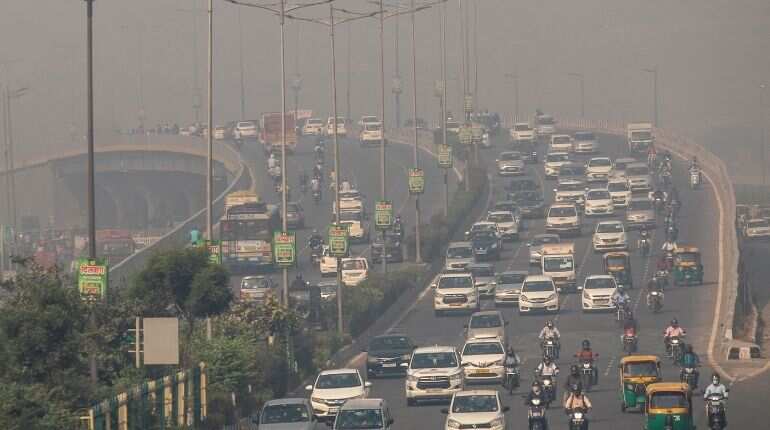
Traffic, New Delhi
India's cabinet on Wednesday (September 15) approved an incentiveschemefor the automobile sector aimed atboosting production of electric and hydrogenfuel-poweredvehiclesand promoting the manufacture of drones.
The government will give about $3.5billion in incentives to auto companies and drone manufacturers over a five-year period, Anurag Thakur, minister of information and broadcasting, told reporters.
"The incentiveschemehas been designed to helpIndiabecome a global player in the automobile sector," Thakur said, adding it would alsoboostlocal manufacturing.
The proposal comes at a time when annual car sales inIndiahave fallen to their lowest in a decade due to the pandemic which followed an economic slowdown in 2019. Sales of electricvehicles(EVs) make up a fraction of the total.
Several years ago,Indiawas tipped to become the world's third-largest car market by 2020, after China and the United States, with sales of 5 million a year. Instead, car sales stagnated at around 3 million a year even before the pandemic.
Ford Motor Co last week joined General Motors and Harley Davidson in retreating fromIndia, where it has accumulated losses of $2billion. The USautomaker said it would stop making cars inIndia, taking a further $2billionhit.
The government said in a statement the incentiveschemewas expected to help attract new investment of about 425billionrupees in the auto sector.
The incentives will range from 8% to 18% of the sales value of thevehiclesor components, and will be given to companies if they meet certain conditions such as a minimum investment over five years and 10% growth in sales each year.
Carmakers, for instance, would need to invest 20billionrupees over the period, while auto parts companies must invest 2.5billionrupees, the government said.
The original plan was to spend $8billionto incentivise auto and auto part makers to build mainly gasolinevehiclesand their components for domestic sale and export, with some added benefit for EVs.
However, thescheme's focus was redrawnto incentivisecleanfuelvehiclesas Tesla Inc gears up to enterIndia.
Auto parts makers will get incentives to produce components forcleancars as well as for investing in advanced technologies like sensors and radars used in connected cars, automatic transmission, cruise control and other electronics.
Sunjay Kapur, president of the Automotive Component Manufacturers Association ofIndia(ACMA), said that with global economies de-risking their supply chains, theschemewill help develop the country into "an attractive alternative source of high-end auto components".
Indiaseescleanauto technology as central to its strategy to reduce oil dependence and cut debilitating air pollution in its major cities, while also meeting its emissions commitment under the Paris Climate Accord.
Domestic automaker Tata Motors is the largest seller of electric cars inIndia, with rival Mahindra & Mahindra and motor-bike maker TVS Motor firming up their EV plans.India's biggest carmaker Maruti Suzuki, however, has no near-term plan to launch EVs.
Girish Wagh, executive director at Tata Motors, said in a statement theschemewould accelerate "the country's progress towards green mobility" and help attract foreign investment.