India@71: First-of-its-kind tech achievements

hyperloop-one-afp
Here's a look back at the technological strides India has taken after getting independence.
India is celebrating its 72nd Independence Day today. In these decades, while the country is still grappling with some basic issues, it has made great strides in other fields, especially technology.
India has achieved a lot of technological breakthroughs in these decades. So, today, we take a look at India's greatest and first-of-its-kind tech achievements.
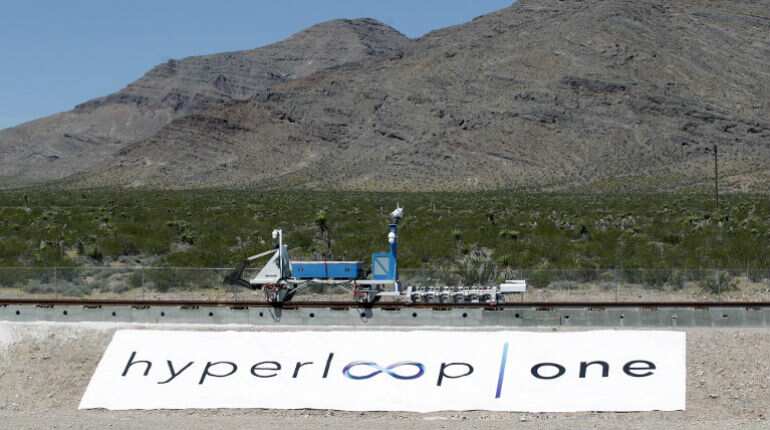
Hyperloop: The face of Indian transportation will soon undergo a major shift, thanks to the Hyperloop - a concept that aims to cut travel time from hours to minutes. And like other countries, India too is aggressively working on running the hyperloop in India. The first hyperloop India is likely to run between Vijayawada and Amaravati in the Indian state of Andhra Pradesh. It will cover a distance of around 35 kilometres in 5 minutes. Travelling between these two places by road usually takes up to an hour. And not just Andhra Pradesh, there is also a plan to run a hyperloop between Mumbai and Pune. Richard Branson's Virgin Hyperloop One has already partnered with the Maharashtra government for this. It is expected to be ready by 2024, changing the way India travels.
Bullet train: Bullet train, unarguably, is one of the safest and fastest ways to travel, and interestingly, India has started work on its first such train between Ahmedabad and Mumbai. The bullet train will reduce the travel time from eight hours to three hours. It will cover the 508-kilometre-long stretch between Mumbai and Ahmedabad in 2 hours and 58 minutes, if it stops at 10 stations. But it will take around two hours if it stops at only four stations. The bullet train will connect Mumbai and Ahmedabad with a total of 12 stations. It will stop for 165 seconds at every station. Initially, the train will have 10 coaches with a total seating capacity of 750 passengers. Later, it is proposed to have 16 coaches with a seating capacity of 1,250 passengers. India's first bullet train is expected to hit the track in less than five years. The Indian government aims to launch operations on August 15, 2022 - the day India completes 75 years of independence.
GPS: In the year 1999, when the Kargil conflict was taking place, India was tracking Pakistani infiltrators who took positions high up in the hills. The GPS data of the area was what the Indian military needed. India approached the US for the data, but was denied access. That was when India felt the need for its own GPS system. And two decades later, India has its own GPS technology. It's called NAVIC - which stands for Navigation with Indian Constellation. In Sanskrit, it means sailor or navigator. NAVIC is more accurate than decades-old American GPS. While the American system has a position accuracy of 20-30 metres, India's NAVIC will provide users with the position accuracy of five metres. It will cover India and its surroundings, within 1,500 kilometres from the border. Our desi GPS is in the final stages of launch, which means soon we won't be dependent on the US's GPS technology for location-based services such as Google maps or app-based taxi services.
India's first internet calling service: You can now make calls without using a SIM card, thanks to the state-owned telecom firm BSNL which has unveiled India's first-ever telephony service app called Wings. The app allows BSNL users to dial any telephone number - from other mobile networks to even landlines in India - using internet connections. The service also includes video-calling but the catch is that the functionality is only supported between two Wings users. This service is targeted at people living in suburban areas where cellular network is patchy but there is a good Wi-Fi connection available. While other internet calling apps such as WhatsApp are already quite popular in the country, BSNL plans to beat the competition.
Drone: State-run aerospace and defence company Hindustan Aeronautics Limited (HAL) and IIT-Kanpur have joined hands to develop a rotary helicopter-like drone, which recently flew for the first time in Bengaluru. It is powered by a two-stroke petrol engine and has a twin blade main rotor and tail rotor. The 10kg drone can carry a 2.5-kg payload, including a video camera for live streaming. It can be airborne for an hour and travel for up to 10 kilometres. The test flight lasted for about 10 minutes during which various modes were tested - a fine example of India's quest to become self-reliant in the field of drone technology.