In the name of the goddess: Music and crackers

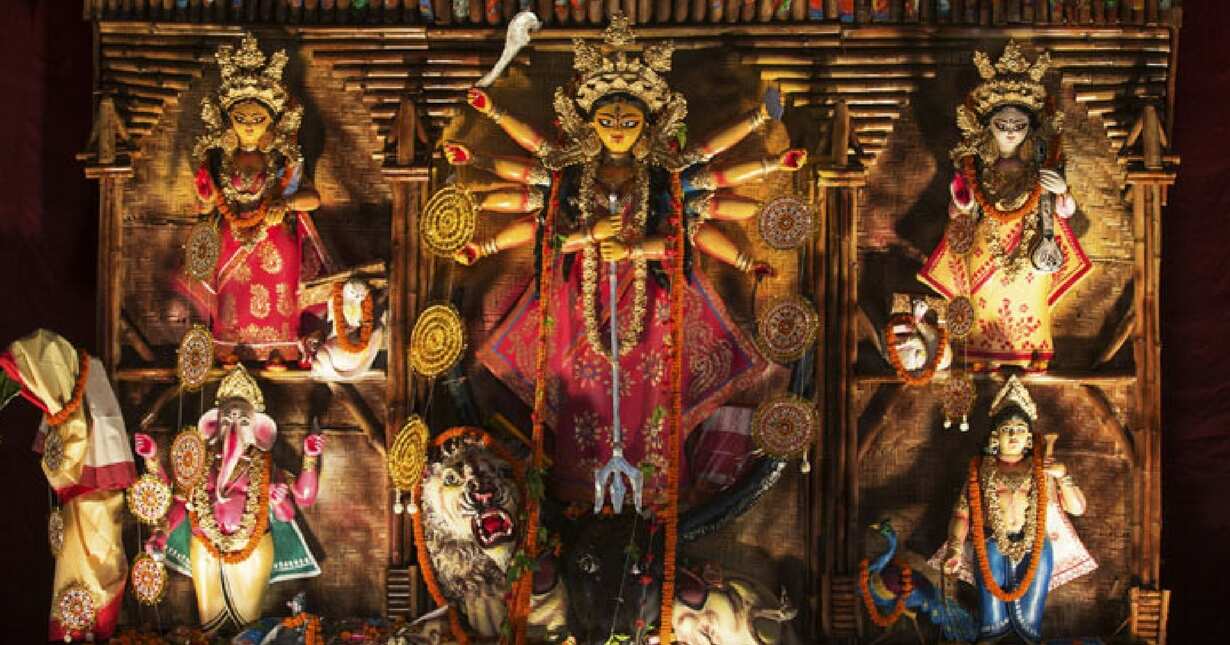
In the name of the goddess: music and crackers
Cultural practices and celebration during festivals, give a boost to regional and ancient music
Diwali and Kali Puja are celebrated with equal enthusiasm in virtually every part of India. The deity invoked may be different, but the occasion is almost always accompanied by revelry, feasting and sound, generally in the form of crackers. Music really has little place in these celebrations, quite unlike the occasion of Navratri when in many states, there is a public and private display of music and dance.
In Southern India, we even have the instance of specific Navratri compositions sung in the name of the goddess in all her myriad facets, the Navaratri songs of the composer Swathi Thirunal being an instance in point. In fact, music on display was part of the courtly investment in public celebrations of Navratri whether it was eighteenth-century Travancore or nineteenth century Mysore.
Blaring of songs through loudspeakers is common, with organisers having easy access to the repertoire of what is commonly known as shyama sangeet.
Diwali, on the other hand, is not conventionally associated with singing or a genre, even in Bengal with its rich traditions of shyama sangeet initiated by the eighteenth-century poet Ramprasad Sen, the celebration of Kali pujo has little to do with music as a feature in ritualistic terms. Admittedly in the public worship of Kali (as the sarbojanik utsav or community festival), the blaring of songs through loudspeakers is common, with organisers having easy access to the repertoire of what is commonly known as shyama sangeet.
The core of the repertoire is the mystical poetry of Ramprasad Sen and Kamalakanta Bhattacharya who lived in the Nadia and Burdwan zamindaris respectively in the late eighteenth century. They produced numerous Sakta songs that became part of a living tradition. However, we do not know how they were sung or when they were standardised.
What we do know is that these songs were published in anthologies and circulated in the world of print from the later decades of the nineteenth century. How they were sung or set to tune is not something that we can easily recover. The style that we now associate with shyama sangeet was in all probability put together by early twentieth century artists such as twentieth-century artists such as Pannalal Bhattacharya and his brother Dhananjay Bhattacharya both of whom were ardent devotees themselves.
Radio and subsequently cassette recordings played a key role in popularising the corpus of songs that made up shyama sangeet as a genre and in defining a prominent skein in the music-cultural identity of Bengal.
Radio and subsequently cassette recordings played a key role in popularising the corpus of songs that made up shyama sangeet as a genre and in defining a prominent skein in the music-cultural identity of Bengal.
The musical features of this genre are at once simple and straightforward, eminently reproducible and capable of making a quick and enduring impression acoustically. With simple lyrics that address the benign maternal force of the goddess, the tunes are sharp and clear and resonate with theatre music. The melodies are simple, lilting and make a quick impact and thanks to particular modes of accessorisation adopted by later day comperes and radio presenters (Jagnannath Bose of Kali katha fane on FM being an excellent case in point).
The way these songs are sung and presented helps produce a particular register of effect which is extended by mass consumption during festive occasions such as Kali pujo and then becomes an audible marker of identity. The role of FM in this in contemporary times is especially marked, some early morning channels have devotional programmes such as Kali katha with its staple of shyama sangeet rendered by old and new artists, while others combine a judicious mix of Vaishnab keertan, sakta sangeet and adhunik thus making up a distinct Bengali musical profile which is easy to access by listeners.
It is interesting to reflect on the accessibility and comparability of Sakti imagery and tunes especially in relation to Nazrul Geeti or Atulprasadi in Bengal. That the poet Nazrul was deeply moved by the figure of the benign mother and set his own songs to tunes that were informed by raga music is well known and requires no elaboration.
The regional register in the reception and adaptation of classical music idioms and style and its deployment in the rendering of more local songs and musical expression to carve a distinct musical identity.
What is striking is the regional register in the reception and adaptation of classical music idioms and style and its deployment in the rendering of more local songs and musical expression to carve a distinct musical identity. One can find this especially in the case of Tamil compositions that were popularised in the twentieth century when the political urgency of Tamil nationalism made it imperative to carve a tradition and practice that set it apart from the mainstream Carnatic repertoire.
In the case of Bengal, the articulation of genres and styles such as atulprasadi or nazrulgeeti or indeed shyama sangeet was not as explicitly identified with either language nationalism or caste politics. But in any case, the intervention of mass media consumption and the use of cultural practices such as music during public ritual occasions - secular and otherwise - gave all these genres and forms a new currency that has helped in the consolidation of an aural public that Ramprasad Sen may never have envisaged or foreseen.