In CJI Chandrachud's presence, Bengal CM Mamata calls for judiciary free of political bias

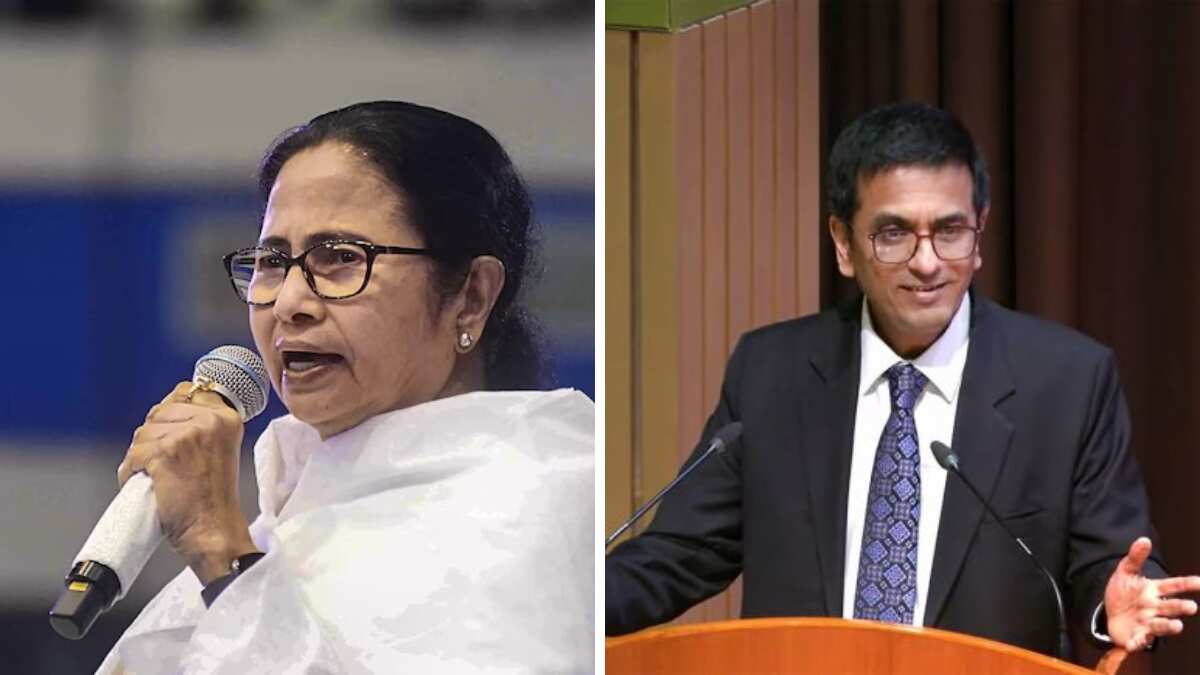
File photos of Mamata Banerjee (left) and DY Chandrachud (right).
West Bengal Chief Minister Mamata Banerjee on Saturday (June 29) called for an Indian judiciaryfree of any political bias, and said it should be pure and honest. Addressing aconference on Contemporary Judicial Developments in Kolkata in the presence of Chief Justice of India (CJI) DY Chandrachud, Chief Minister Banerjee said, "...All those who are in the judiciary are an asset to the country and the world..."
"It is not my intention to humiliate anyone but my kind submission, please see that there is no political bias in the judiciary. It must be pure, honest, sacred and people should worship it..." Banerjee added and described the judiciary as an important temple for citizens.
“It is like a mandir, masjid, gurudwara and girja (church). The judiciary is of the people, by the people and for the people... and the last frontier for getting justice and upholding constitutional rights," she further said and hailed CJI Chandrachud for initiating digitisation and e-laws in courts.
'Judges are servants, not masters of Constitution'
Addressing the event, CJI Chandrachudinsisted on the commitment of courts to ensure diversity, inclusion, and tolerance. Heelaborated on the notion of ‘Constitutional Morality’ as a restraining factor on the State that should derive from the Preambular values of the Constitution.
Underlining the country’s federal structure that’s “marked by a great deal of diversity”, Chandrachud focussed on the role of judges in “preserving the diversity of India.”
“I am reticent when people call courts a temple of justice. Because that would mean the judges are deities which they are not. They are instead servers of the people, who deliver justice with compassion and empathy,” he added.
Callingjudges “servants and not masters of the Constitution”, the CJI warned the judiciary of the pitfalls of personal values and belief systems of judges interfering with judgments that are opposed to values enshrined in the Constitution.
“We could be masters of Constitutional interpretation, but a just society is established with the court’s vision of Constitutional Morality,” he added.
(With inputs from agencies)