Gyanvapi case: What does archaeologist James Prinsep's 200-yr-old map reveal about the disputed Indian site?

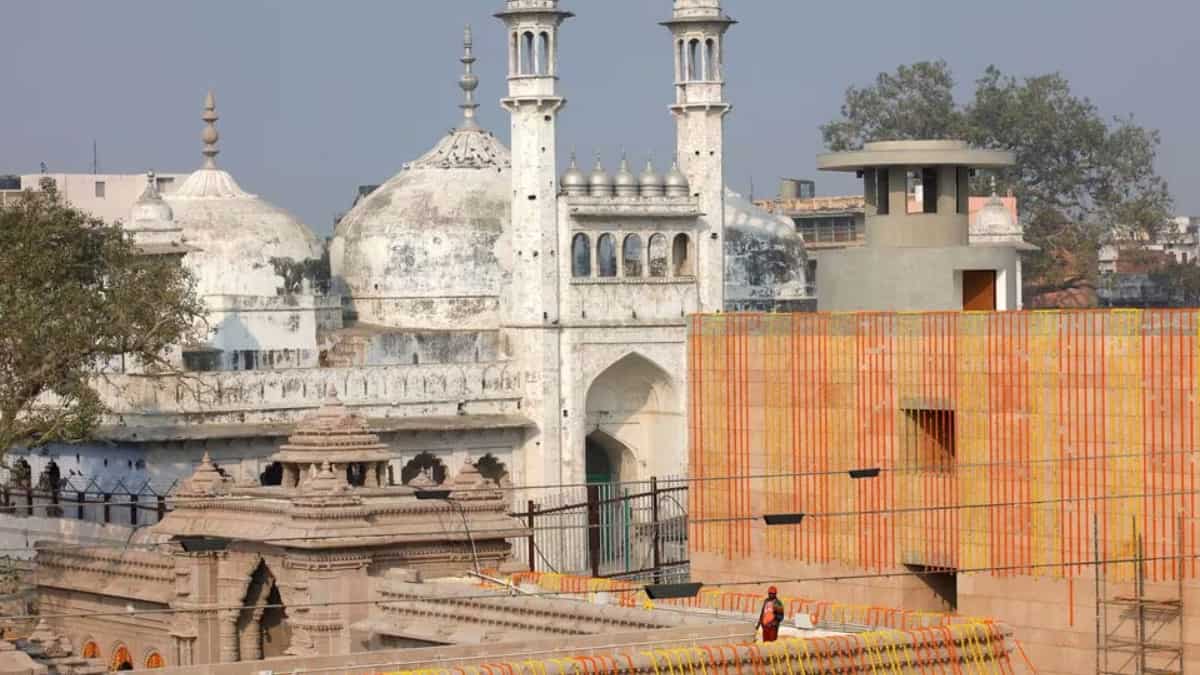
File photo of the Gyanvapi mosque in UP's Varanasi.
British archaeologist James Prinsep has significantly contributed to India's historiography. Prinsep, who arrived in India more than two centuries ago, is best remembered for deciphering ancient India's Kharosthi and Brahmi scripts. But now, a map drawn by Prinsephas emerged as key evidence in the ongoing Gyanvapi case in India, media reports said on Wednesday (Feb 7).
According to a report by India Today, Prinsep drew the map of the old Kashi Vishwanath temple and showed how the Gyanvapi mosque stood on it. Prinsep lived in Uttar Varanasi (where the Gyanvapi site is located) from 1820 to 1830. The Kashi Vishwanath temple was dedicated to the Hindu God Shiva, who has been worshipped for centuries as Vishwanatha or Vishweshwara.
Also watch |Gyanvapi mosque: Allahabad HC refuses Muslim side's plea against Hindu prayers inside 'Vyas ji Ka Tehkhana'
In Varanasi, Prinsep built the city's underground sewage system, which is operational, and restored the Alamgir Mosque which was built by Mughal emperor Aurangzeb in 1669. The archaeologist also drew Varanasi's maps.
A book, and map which will be used as key evidence
He wrote a book ‘Benares Illustrated, A Series of Drawings’ in 1831. The India Today report said that the book and the map would be used as part of evidence by the Hindu side in the ongoing case of the Gyanvapi complex.
In the book, Prinsep discussed the architecture of the temple and how the original place of worship was converted to the present mosque. The British archaeologist mentioned how materials from the demolished temple were repurposed for the mosque's construction.
“The bigotry of Aurungzeb did not allow many vestiges of this more ancient style to remain. In 1660, for some trifling resistance to the imposition of a capitation tax, he took occasion to demolish the principal Shiwalas and constructed mosques with the same materials and upon the same foundations, leaving portions of the ancient walls exposed here and there as evidence of the indignity to which the Hindoo religion had been subjected," he wrote.
The map showed that the temple had eight mandaps. "The principal lingam of Mahadeo stood in an ornamented reservoir in the centre, having a drain below to carry off the Ganges water continually poured over it by day and night," Prinsepwrote in his book.
The Gyanvapi case
The Gyanvapi case has been going on for more than 30 years. Some believe that the Gyanvapi mosque was built on the remains of the Kashi Vishwanath temple, while various other petitions in courts, including the Supreme Court have discussed different angles of the case. Last week, the Hindu side in the case filed an application in the Supreme Court, seeking the de-sealing of the 'wazukhana',which is an ablution pond where worshippers wash themselves before they pray at the mosque, the news agency ANI reported.
Also watch |Gyanvapi mosque: Hindu devotees offer prayers inside mosque complex
The wazukhana was sealed in 2022 following a Supreme Court order. The Hindu side has said that the fountain-like structure in the Gyanvapimosque's wazukhana is a "Shivling".
In its application, the Hindu side asked the apex court to allow the Archeological Survey of India (ASI) to carry out another comprehensive survey in the area without harming the Shivling.
Speaking to India Today on Wednesday, BR Mani, Director General of the National Museum, said, "Prinsep has shown the place of Vishweshwar or Mahadev in the centre of the temple and indicates that the principal lingam was located in a water reservoir and that could be the so-called fountain in the wazukhana, which could have been originally the ornamented reservoir having the lingam."
(With inputs from agencies)