Firecracker traders take on government this Diwali with 'GST Bomb'

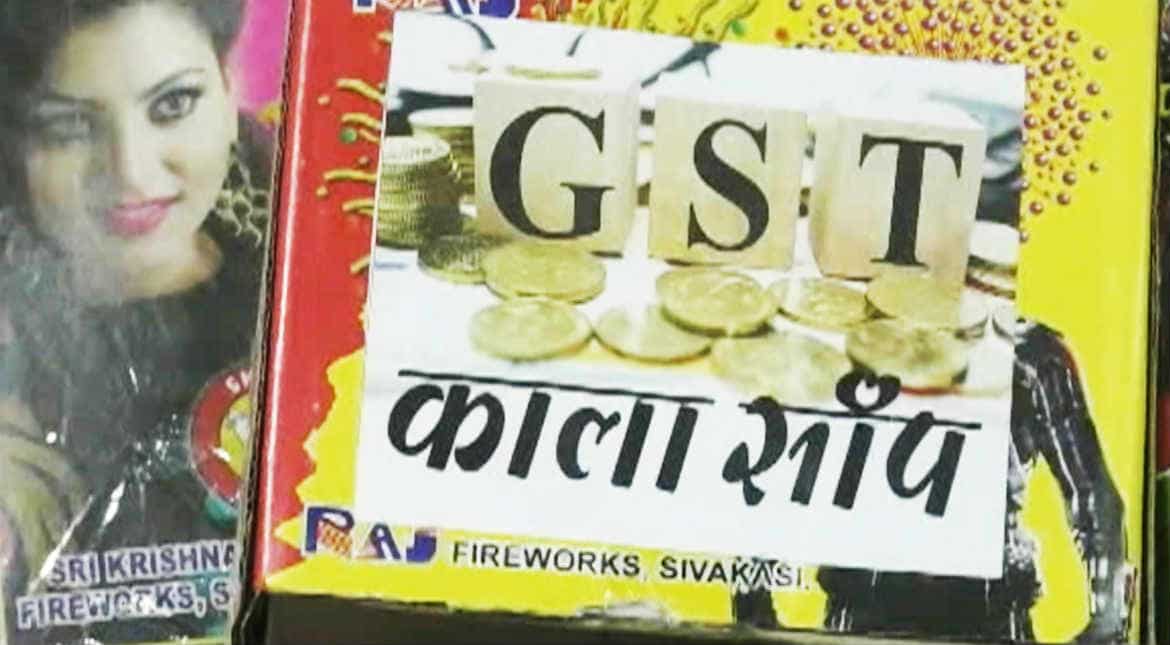
GST-bomb
The government launched the Goods and Services Tax (GST) in July this year after much resistance from opposition and some sections of public. But the heat has still not subsided.
The government launched the Goods and Services Tax (GST) in July this year after much resistance from opposition and some sections of public. But the heat has still not subsided; this year, traders in Allahabad are selling Diwali firecrackers with a message condemning theGST pasted on the boxesto express their unhappiness with the government’s decision.
"We have launched 'GST Bomb'to increase our sales. All these firecrackers are of good quality," said Kadir, a trader in Allahabad.
But there is more. A range of 'anar' (flower pots), one of the most popular Diwali firecrackers, has been named 'notebandi (note ban)' -ajibe at government’s decision last year to replace the old Rs 500 and 1000 notes with new currency.
These items are a hit in Allahabad market. They are scaling new peaks as far as the sale is concerned, much higher than personality-based firecrackers like 'Yogi crackers', 'Modi rocket' and 'Rahul Anar', launched in the market keeping in view elections in Gujarat and Himachal Pradesh.
"You can seethe photos of many politiciansonfirecracker boxes here. I am here to buy firecrackers, and I'm thrilled to see all this, how they capitalise on politicians' names during election season," said Poonam, a resident of Allahabad.
The government has been claiming that GST will usher in a new unified tax regimeand make it easier for companies to transact across state borders.
But many are finding that doing business is more complicated than ever.
Ambiguous rules under the new, multi-rate sales tax that went into effect on July 1 have left firms confused on how to price their products. The tax’s complex structure - four main rates ranging from 5 to 28 per cent - has hurt sales and risks denting economic growth and government revenues in the months ahead.
Since the launch of the GST, there has been several meetings of the GST Council - a government panel headed by the finance minister - to revise the tax slabs. But traders aren’t happy.
"People are either overcharging or undercharging for their work,"said Surinder Paul, who runs one workshop in South Delhi.
Billed as India’s biggest tax reform since independence in 1947, the GST replaced more than a dozen federal and state levies and was meant to unify the country into a single market.
While teething troubles were expected, the ensuing chaos has some officials worrying about the repercussions for Asia’s third-largest economy. Annual growth slowed in the July-September quarter to 5.7 per cent, its weakest pace in more than two years.
(With inputs from Reuters)